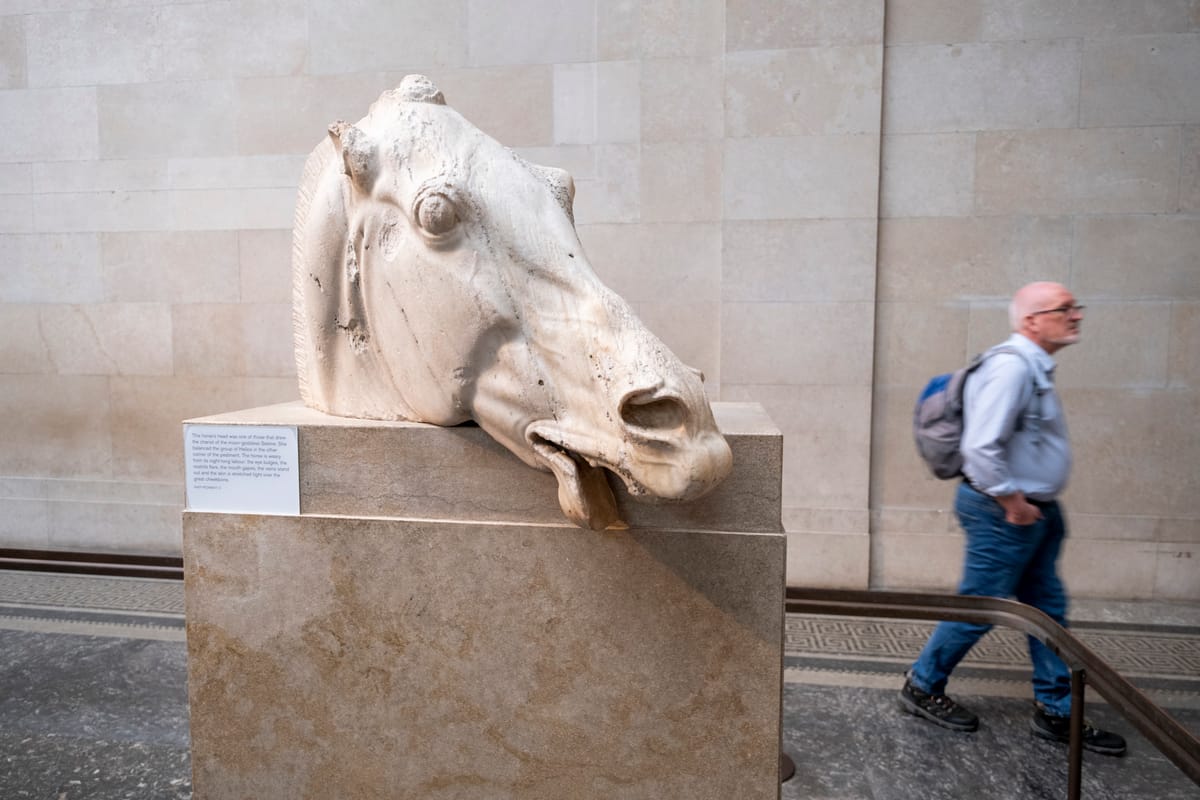
Imagine your car is stolen and you discover it years later being used by someone else. When you demand its return, the current user imposes conditions, offering you a loan of your own car instead. This scenario mirrors the British Museum’s approach to cultural artifacts. Despite pressure for repatriation, the museum uses the British Museum Act of 1963 as a legal shield, claiming to act for the ‘public good’ while retaining looted artifacts.
The museum’s loan policy is equally paradoxical, refusing to lend to exhibitions with stolen items but demanding guarantees for the return of its own loans. This irony highlights the institution’s reluctance to repatriate cultural objects. Consequently, the British Museum faces global criticism, symbolizing imperial privilege where looted artifacts from around the world are displayed, offering visitors a sense of ‘home.’
Recently, the museum introduced a ‘decolonizing’ long-term loans program, hailed as ‘innovative’ by director Nicholas Cullinan. The first loan sent 80 Greek and Egyptian artifacts to Mumbai’s CSMVS museum. Cullinan emphasized collaboration over a ‘zero-sum’ approach. However, critics argue this is mere rebranding, maintaining colonial dynamics under the guise of progress.
Cullinan advocates for ‘cultural diplomacy’ without admitting national wrongdoing. Yet, long-term loans are not restitution and do not address historical injustices or restore agency to source communities. Instead, they reinforce the museum’s control over artifacts, requiring former colonies to accept conditions for temporary access to their heritage.
True decolonization requires legislative change and equal collaboration with origin communities, prioritizing their voices in heritage decisions. The museum must shift its mission towards transparency, shared decision-making, and justice, moving beyond symbolic gestures. Without confronting restitution, the British Museum’s progress claims remain a façade masking unresolved colonial issues.