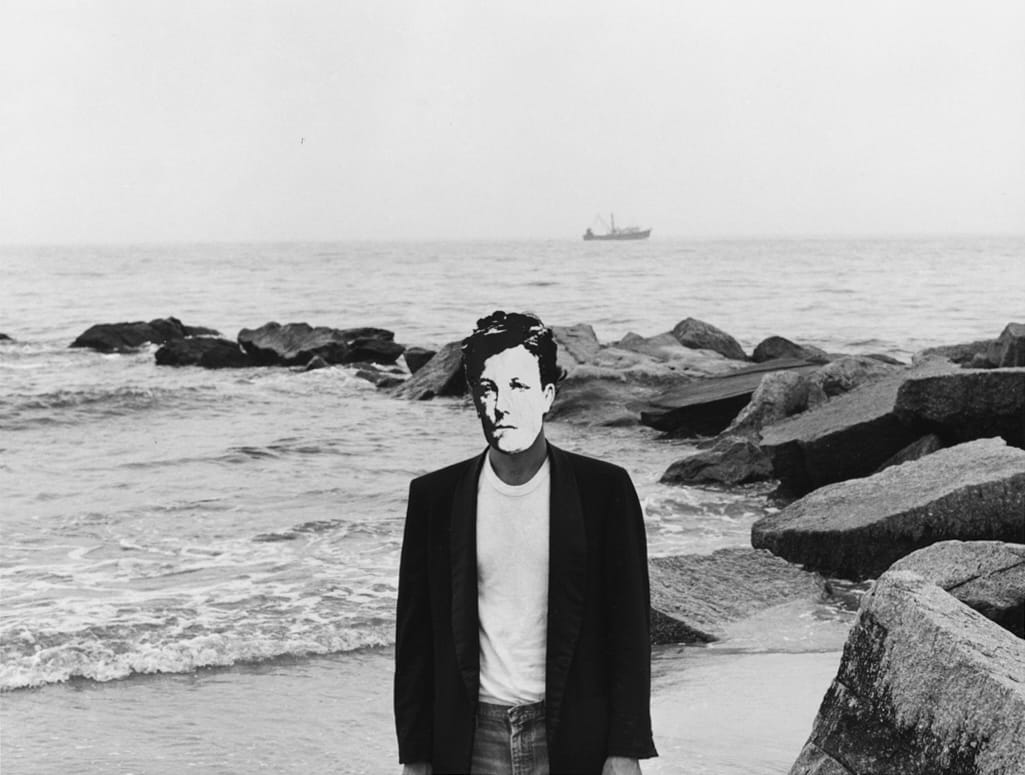
Between 1978 and 1980, David Wojnarowicz captured a series of photographs wearing a paper mask of Arthur Rimbaud, the French poet turned punk symbol who passed away nearly a century earlier. These images take Rimbaud on a tour of New York City, from Coney Island to the adult theaters of Times Square. Wojnarowicz, renowned as a visual and performance artist, writer, and influential queer activist during the AIDS crisis, is the focus of a new catalog by the Leslie-Lohman Museum. This catalog, linked to their exhibition of Wojnarowicz’s extensive Arthur Rimbaud in New York project, resonates powerfully today amidst rising authoritarianism.
This fall, masked federal immigration agents conducted an unexpected raid in Lower Manhattan, not far from the museum itself. The emergence of ‘stealth wear,’ designed to thwart surveillance by government and corporations, has become a new fashion trend in recent years. Rimbaud, who died in 1891, found renewed appreciation decades later within the New York Downtown arts scene and among disillusioned youth, revered for his radical poetry. Dennis Cooper, a writer and artist, even organized a Rimbaud ‘live-alike’ contest. Wojnarowicz, as noted by critic Craig Dworkin in his catalog essay ‘On the Riverbank,’ employed Rimbaud as a sweeping symbol of protest against global conditions, not just corporate or state entities.
Antonio Sergio Bessa, the exhibition’s curator, suggests Wojnarowicz transformed Rimbaud into a universal symbol of youthful rebellion, inviting viewers to connect with the subject by metaphorically stepping out of the frame. In today’s political landscape, this concept of self-removal as resistance is more pertinent than ever. Wojnarowicz’s strategy challenges those resisting oppressive power to consider ‘removal’ as a form of defiance, advocating for disengagement from energy-draining scenarios. Artists like Jenny Odell argue that even inactivity can resist repression, requiring creative approaches.
Anna Vitale, in her essay ‘Our Rimbaud Mask,’ observes that Wojnarowicz’s Rimbaud simultaneously represents and disrupts reflection. This duality captures the zeitgeist of Wojnarowicz’s era, which pushed formal boundaries and championed LGBTQ+ rights. His use of the mask both reflects and confounds, merging viewer and subject. In a world where surveillance intertwines, Wojnarowicz prompts us to innovate in our resistance, whether through traditional protest, preemptive action against raids, or art creation amidst institutional challenges. It’s likely that both Wojnarowicz and Rimbaud would endorse such acts of resistance.
The book ‘David Wojnarowicz: Arthur Rimbaud in New York (2025),’ edited by Antonio Sergio Bessa, is available for purchase online and in bookstores. The exhibition continues at the Leslie-Lohman Museum of Art (26 Wooster Street, Soho, Manhattan) until January 18.