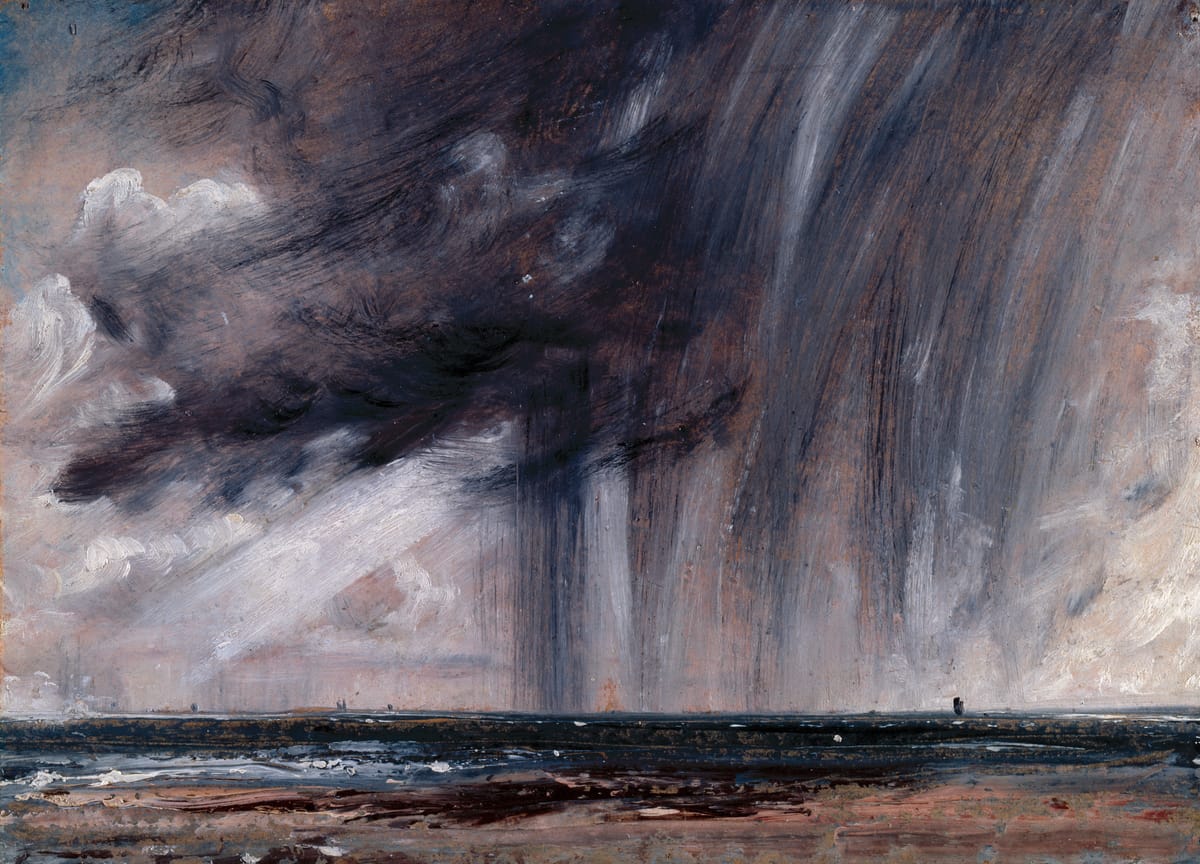
LONDON — Does the title Turner & Constable: Rivals & Originals at Tate Britain suggest a competitive edge to entice curiosity? Is there any validity to this rivalry, or is it merely a promotional strategy to draw attendees? The exhibition spans an impressive 12 galleries. Turner and Constable encapsulate much of English art’s essence at the dawn of the 19th century. J.M.W. Turner’s grandiose vision is juxtaposed with the more modestly grounded works of John Constable, who sought authentic depictions of Dedham Vale and the Stour Valley. Though Constable explored beyond his native landscapes, they remained a perpetual source of inspiration.
Unlike Constable, Turner lacked a singular place of inspiration, constantly pursuing new experiences and historical recreations. His youthful ambition led him to seek out the dramatic landscapes of Europe, despite the challenges posed by Napoleon’s protracted conflicts. Both artists were born within a year of each other—Turner in 1775 and Constable in 1776. Turner’s early career was marked by rapid success, becoming a full academician at the Royal Academy in 1802. Constable achieved this status much later, in 1829. Turner’s works were more widely disseminated through prints, with around 900 known, compared to Constable’s 57.
Their youthful portraits in Gallery One offer insight into their contrasting characters. Turner’s self-portrait reflects a daring and ambitious spirit. In contrast, Constable’s portrait reveals a smooth, prosperous demeanor with a hint of introspection and resilience. While Constable resisted his father’s wishes to join the family business, Turner’s father proudly displayed his son’s art in his barber shop.
Constable realized that the small scale of his paintings limited his success, prompting him to create larger works to compete with the emotionally impactful pieces of Turner. This change necessitated a new studio in London for his six-foot canvases, seen as a strategic move to rival Turner. These works included both finished pieces and preparatory sketches, capturing dynamic scenes of rural life.
Constable’s ambitious painting of Salisbury Cathedral from the meadows placed him in direct competition with Turner. However, the Bishop of Salisbury, who commissioned the work, objected to the gloomy sky depicted. This clash between the patron’s expectations and the artist’s vision highlighted the tension inherent in their rivalry.
Turner & Constable: Rivals & Originals is open at Tate Britain (Millbank, London, England) until April 12, 2026. The exhibition is curated by Amy Concannon, with Nicole Cochrane and Bethany Husband contributing.