On a chilly Saturday in San Francisco, the bustling streets are filled with eager shoppers. After snagging a pair of jeans at half price, I find myself in a store dedicated solely to Christmas decor. As I navigate through artificial trees and Santas, a peculiar ornament catches my eye.
Nestled in a golden box is a Trevi Fountain ornament, complete with a ‘complimentary papal blessing.’ Its rough details might seem mundane, if not for the glitter covering it, which transforms the piece into a radiant miniature of Baroque architecture under the store lights.
Glitter, often seen during the holiday season, pervades various aspects of life, from cosmetics to credit cards, and significantly, contemporary art. Its origins are distinctly American, tracing back to the late 1930s when Henry Ruschmann devised a machine that produced glossy cellulose scraps, leading to the creation of glitter. Today, his company offers numerous varieties, including biodegradable options to address environmental concerns.
Hans Sedlmayr’s 1979 essay, “Light in its Artistic Manifestations,” mentions eras defined by luminous materials, yet omits glitter, which flattens surfaces into a sparkling veneer. Andy Warhol’s use of diamond dust, akin to glitter, reflects the glamorous, mass-produced nature of American consumerism.
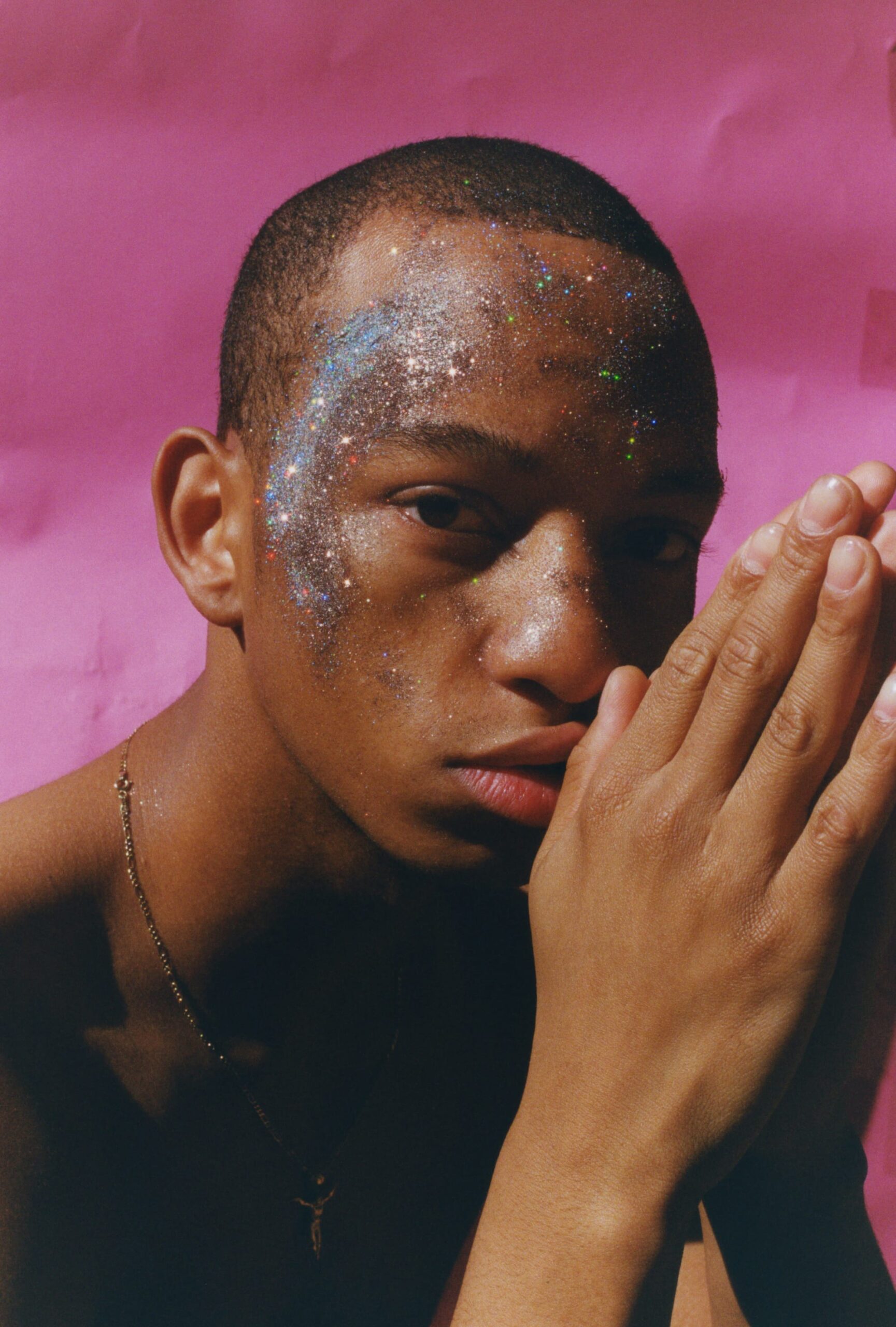
Despite being labeled frivolous, as Nicole Seymour highlights in her 2022 book, glitter is linked to marginalized identities such as LGBTQ+ communities and people of color. In the arts, Thomas Lanigan-Schmidt uses glitter to transform mundane materials into spiritual and queer expressions, while Quil Lemons’s GLITTERBOY series challenges stereotypes by showcasing young Black men adorned in glitter.
Glitter’s association with ‘lower’ art forms may explain its tepid reception in the art market. At Art Basel Miami, few pieces featured glitter, such as works by Lucio Muñoz and Mickalene Thomas, whose canvas shimmered with rhinestones. Later, in a hotel lobby turned art fair, glittery art was prevalent, presenting a defiant democratization of light, challenging the contemporary art world’s acceptance.