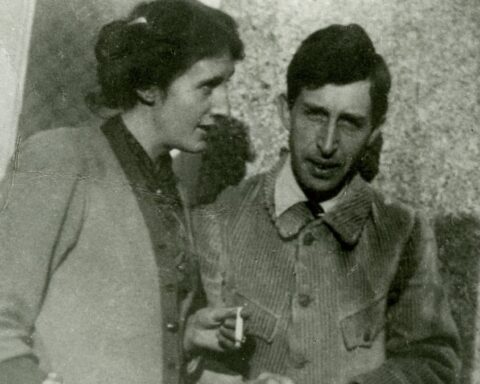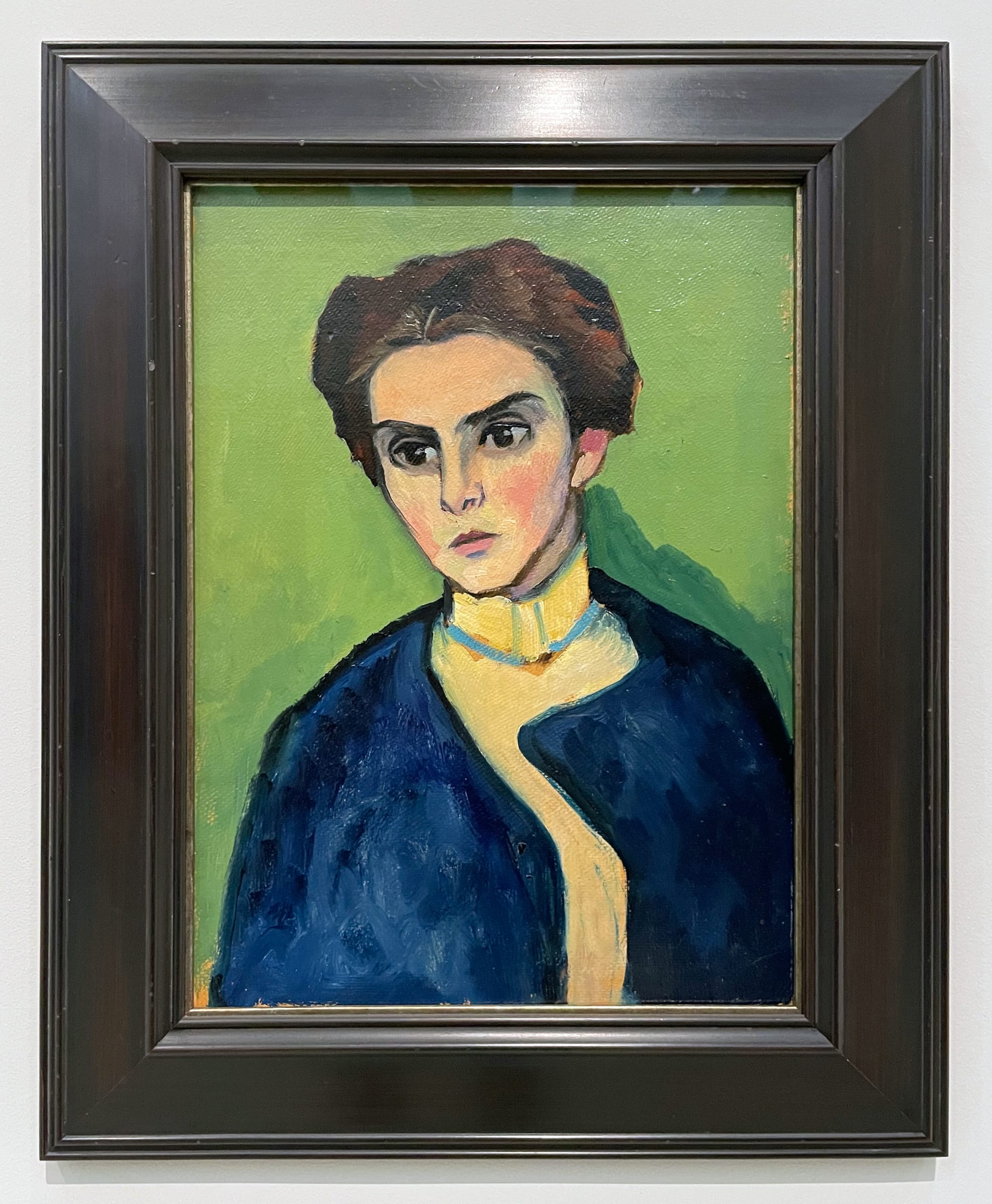
In the art world, the contributions of women often get overshadowed by their male counterparts. This is evident in the case of Gabriele Münter, the Berlin-born modernist who co-founded the German Expressionist group The Blue Rider (Der Blaue Reiter) in 1911. While Münter has been recognized with several institutional exhibits and her former home in Murnau, Germany, has been converted into a museum, her name remains less known in the United States compared to figures like her partner of a decade, Wassily Kandinsky.
At the Guggenheim’s current Münter retrospective, Contours of a World, Kandinsky’s influence looms large. He is present not only in her paintings but also in the museum’s founding collection, which includes over 150 of his works and just one of hers—a donation rather than a purchase. This oversight can be attributed to Solomon R. Guggenheim, who failed to recognize her talent.
During my visit to Contours of a World, I overheard comments comparing her to her male peers. However, Münter’s contributions to The Blue Rider group and her timeless artistic prowess arguably surpass the formal innovations of her contemporaries. Her statement on her work process—’The forms gather in outlines, the colors become fields, and contours—images—of the world emerge’—captures her unique vision. Münter’s art goes beyond mere subject matter; it presents a dynamic view of the world that invites the viewer to continuously engage and reevaluate.
One standout piece, ‘Breakfast of the Birds’ (1934), showcases Münter’s ability to blend intimacy and warmth. The painting features a figure seated at a table with a wintery view outside, drawing the viewer into a serene, yet vibrant scene. Unlike Romanticism’s grandeur, Münter layers elements to create depth, engaging the museum-goer as part of the scene. Her landscapes, like ‘House with Fir Trees in the Snow’ (c. 1938), challenge perception with their vertiginous compositions and layered elements.
Münter’s vibrant use of color and her dynamic compositions are often likened to the Fauves and Nabis, influenced by her time in France. Yet, her earlier black and white photographs from a trip to the United States reveal a foundational visual logic that later informed her paintings. ‘The Letter’ (1930) exemplifies her ability to fuse photographic immediacy with painterly elegance, capturing transient moments in time. The exhibition, running at the Guggenheim Museum until April 26, curated by Megan Fontanella and featuring photography by Victoria Horrocks, offers a profound insight into Münter’s world.