Do you recall brat summer? It appears New York City is set to embrace a Duchamp spring as Gagosian gallery reveals that its debut exhibition in the new Uptown premises will spotlight the conceptual artist’s renowned ‘readymades.’ This includes a series of replicas first shown at the same venue over sixty years ago.
Launching on April 25, the exhibition will coincide with the artist’s first U.S. retrospective in over five decades at the Museum of Modern Art. Gagosian’s show will feature several of Duchamp’s most famous readymades—ordinary, mass-produced items that the artist transformed into works of art.
This exhibition marks a fresh start at the original site for both the high-profile gallery and the artist. After opening its first New York City location at 980 Madison Avenue in 1989, Gagosian recently had to leave its multi-level base when Bloomberg Philanthropies acquired the building in 2024. However, art dealer Larry Gagosian was committed to maintaining a presence at the 35-year flagship location and secured a ground-floor space at the same address.
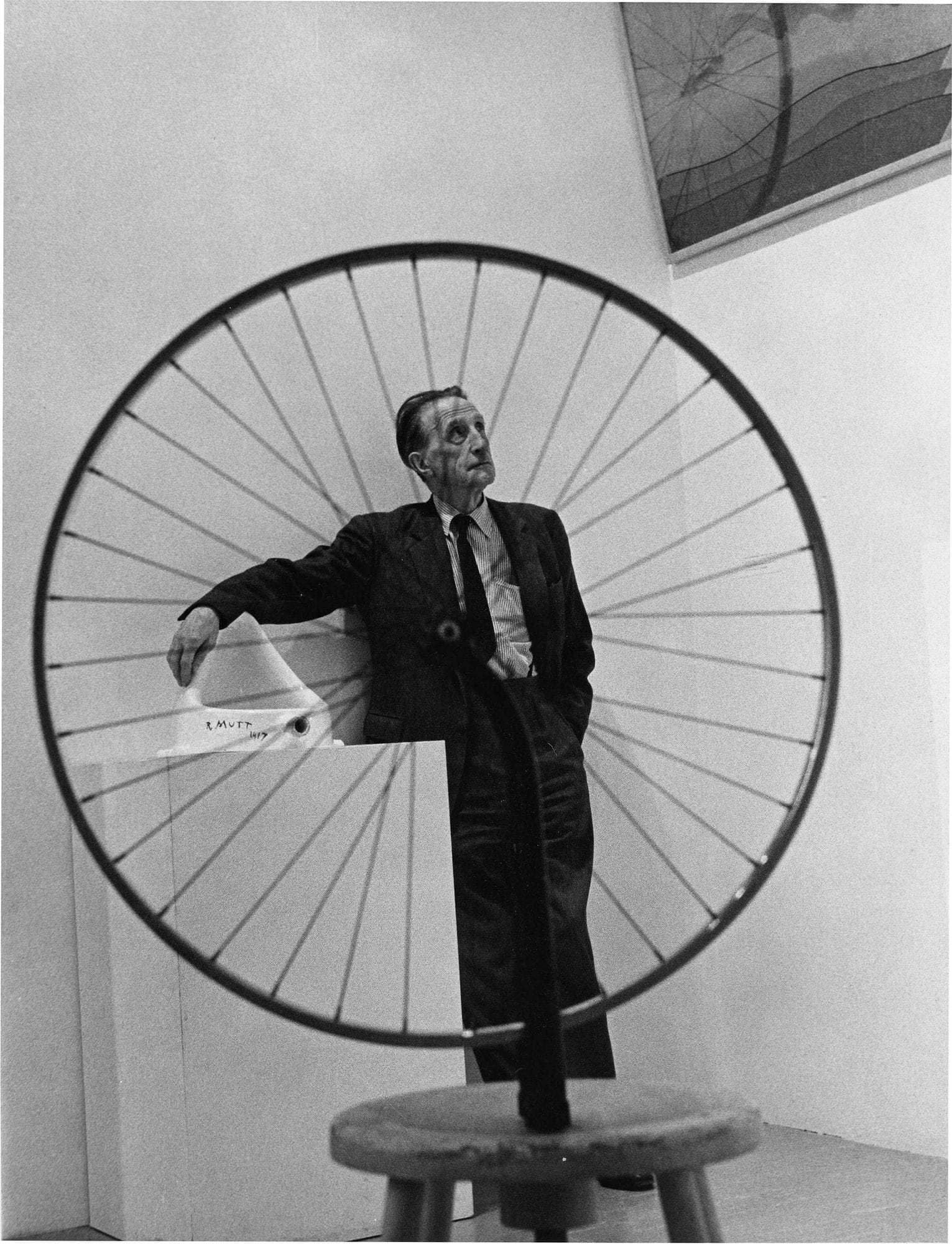
In 1964, Duchamp and his dealer, Arturo Schwarz, celebrated the 50th anniversary of the artist’s initial readymade, ‘Bicycle Wheel’ (1913), by producing a limited edition of 14 authorized replicas of lost original pieces. This set first appeared in the U.S. in a 1965 exhibition at Cordier & Ekstrom Gallery, previously located in the same Upper East Side building.
Duchamp’s readymades have sparked debate about the definition and authority of art for more than a century. The infamous ‘Fountain’ (1917), a signed urinal submitted to a New York exhibition by the Society of Independent Artists, was pulled from the main show, prompting Duchamp to leave the Society. The controversy continued in the Dadaist journal Blind Man, which defended ‘Fountain.’
In addition to replicas of ‘Fountain’ and ‘Bicycle Wheel,’ the upcoming exhibit at Gagosian will feature ‘L.H.O.O.Q.’ (1964, after 1919 original), ‘Porte-bouteilles (Bottle Dryer)’ (1964, after 1914 lost original), and ‘Boîte-en-valise’ (1935–49; contents 1935–41). A gallery representative informed Hyperallergic that more details on the artworks and new gallery setup will be shared closer to the opening.