What is the appropriate way to credit an artist when a common object is transformed into a universally recognized symbol? Elina Chauvet, a Mexican artist celebrated for her public art installation “Zapatos Rojos (Red Shoes)” (2009–), which highlights femicide and gender-based violence in Mexico, asserts that her work was replicated in Bucharest last month without her consent or acknowledgment.
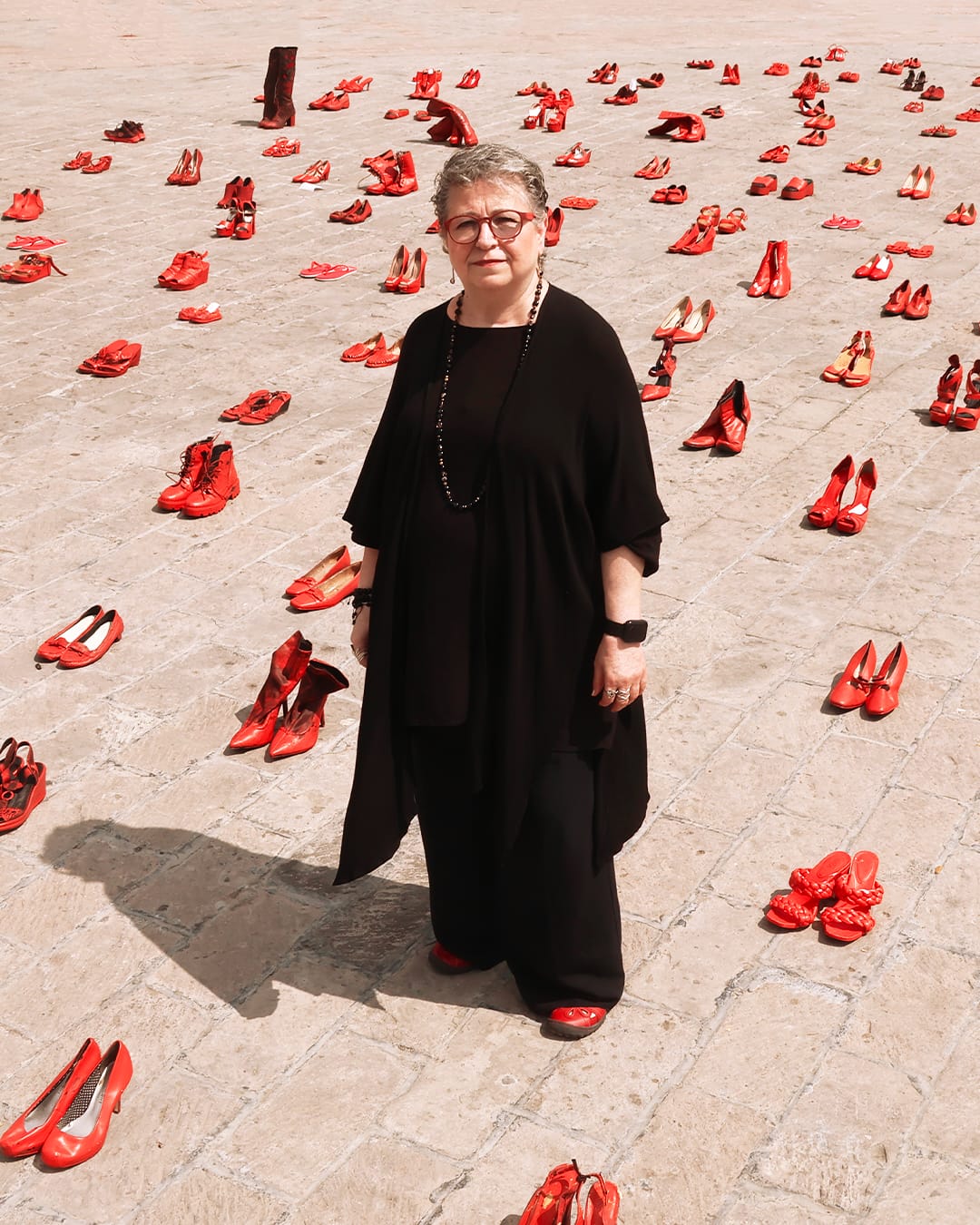
The “Zapatos Rojos” installation comprises numerous pairs of red shoes arranged in specific public spaces. Each pair symbolizes a missing woman or a victim of femicide. Chauvet initiated this collaborative project in Ciudad Juárez, a Mexican border city notorious for femicide since the 1990s, and has since recreated it across Central and North America and various European nations over the past 16 years.
On March 31, Romanian broadcaster Alessandra Stoicescu orchestrated a public event named “Dragostea poartă pantofii roșii” (Romanian for “Love wears Red Shoes”) outside the Romanian Athenaeum. This was in response to the parliament’s recent femicide legislation. Organized through her feminist campaign, Shero, and in partnership with the Mereu Aproape Foundation, the event aimed to discuss domestic and intimate violence and femicide. However, marketing materials and promotional posts omitted any reference to Chauvet.
Despite prior communication with Stoicescu in 2018 regarding the erasure of her authorship, Chauvet claims that the red shoe motif was once again used without her knowledge or credit. After discovering Stoicescu’s event, Chauvet requested acknowledgment through comments on Instagram posts and issued a statement on April 6, asserting that “Zapatos Rojos” is copyrighted and requires her authorization for reproduction.
Chauvet collaborates with local communities to present “Zapatos Rojos,” involving residents in the process of shoe donation, painting, and installation assembly. The project, inspired by the artist’s personal loss when her sister was killed by her husband in 1993, deeply engages with collective suffering from femicide. Chauvet ensures that these installations adhere to her guidelines to maintain the project’s integrity.
Since raising her concerns publicly, Stoicescu has revised Instagram captions and a Shero website entry to credit Chauvet. However, she has not communicated directly with the artist. Chauvet emphasizes the enduring nature of her work, stating, “Zapatos Rojos is not a movement, it’s an artwork. Movements end, but art continues.”