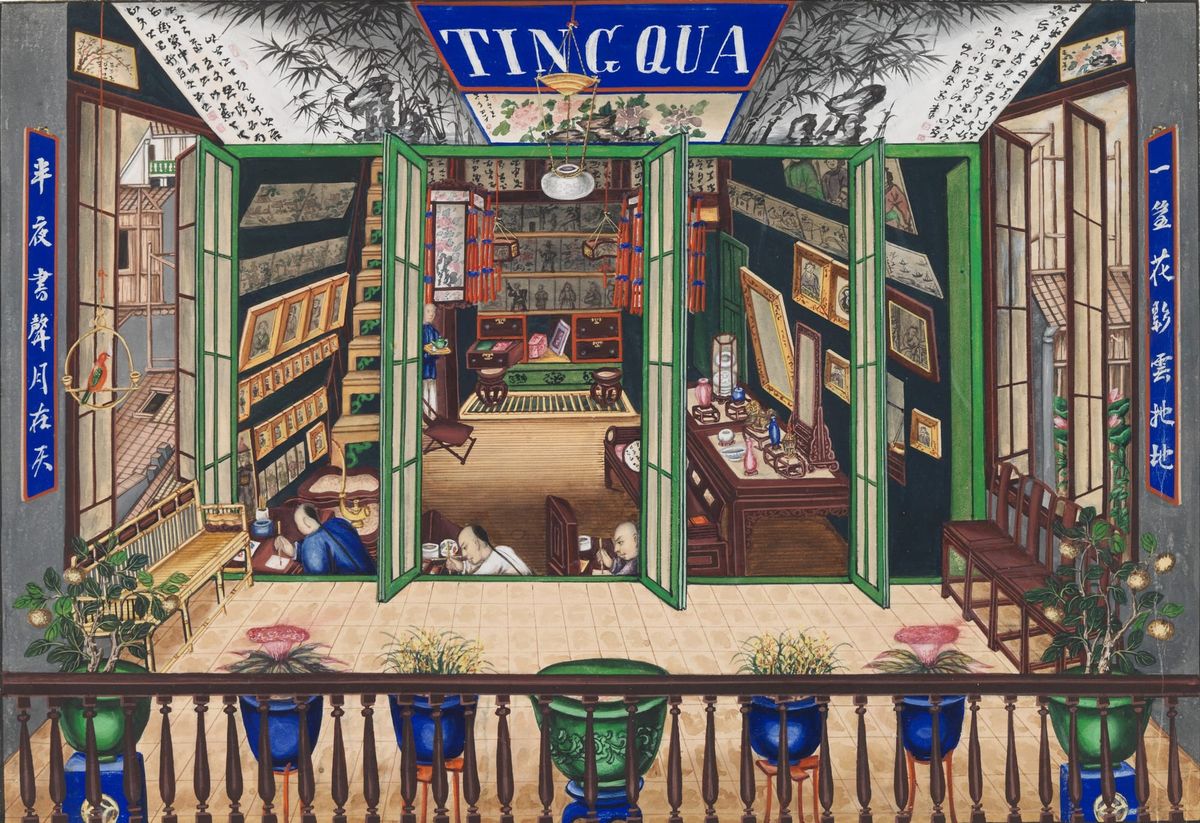
While art museums rely on categorization, their systems often fail to capture the fluid and multifaceted lives of artists. Museum labels, or ‘tombstones,’ fixate on names and dates, yet these can mislead by suggesting intentionality. Winnie Wong’s The Many Names of Anonymity: Portraitists of the Canton Trade (2026) delves into the complexities of naming and agency among southern Chinese artists who catered to foreign clients in the 18th and 19th centuries.
Wong’s book examines figural portraits from the Canton system period, where trade was confined to Guangzhou by Qing dynasty regulations. The term ‘Asian export art’ has historically distorted perceptions, separating these works from ‘Chinese art.’ Wong suggests ‘Canton trade painting’ as a more fitting term, emphasizing the unique exchange atmosphere rather than market constraints.
The notion of ‘Asian export art’ has perpetuated stereotypes of Chinese artisans as mere imitators. Observations like those of M. Charles Hubert Lavollée in 1843 dismissed their creativity. Despite this, Canton artists were prolific, crafting enigmatic works such as reverse glass paintings and detailed clay sculptures, blurring the lines between reality and fiction.
Wong’s research highlights the fluidity of artistic identities, with pidgin names like Chit Qua and Lam Qua appearing in varied forms, complicating efforts to pin down individual narratives. She encourages a shift from Western conventions of naming, advocating for a deeper understanding of self-representation among these artists.
In her forensic archival work, Wong navigates an array of historical documents, revealing unreliable narratives and translation errors. She challenges preconceived ideas within the field, showing that attempts to construct fixed artistic identities often reflect biases rather than true historical experiences. Her approach, which builds on her previous work, emphasizes the interconnectedness of East and West in art history, challenging traditional media hierarchies.
The Many Names of Anonymity is not merely about recovering lost voices; it invites a reconsideration of our pursuit of authenticity and singularity. By embracing the mutability of images and identities, Wong offers a more dynamic perspective on art history, where refusal and duplication are celebrated as creative acts. The book is available from the University of Chicago Press.