The totemic form captivated post-war creators like Louise Nevelson and Joan Miró, who crafted figures from found materials, mirroring Indigenous monuments. Recently, Simone Leigh has reexamined these forms through a decolonial lens, exploring their symbolism to challenge imperial histories. In ‘Do Not Be Afraid’ at Parent Company, Leonardo Madriz introduces five sculptures that extend this tradition with his intricately knotted and elongated works.
Madriz imbues each piece with the persona of a protector, integrating rope, resin, and found objects into a coherent narrative. The poetic interplay of these materials and the knots binding them, such as in ‘Sentinel Adorned in the Leavers’ Wake’ (2025), where gold-coated rebar connects to resin-cast street debris using knots like the manger’s hitch and surgeon’s loop, defines their identity and purpose.
His fascination with the weight of everyday items and the use of knots echoes Arthur Simms’s wire-and-rope assemblies. Simms combines personal objects within a resin-coated wire or rope lattice, which he describes as a ‘see-through skin.’ Unlike Simms’s protective layer, Madriz’s ropes and wires act more like a spine, weaving a narrative that is visually perceptible.
Madriz’s works exude a sense of fatigue. Unlike the collaborative ascent seen in Miró and Nevelson’s pieces, Madriz’s sculptures are burdened by the resin casts and debris. In ‘Sentinel of Colloidal Gates’ (2026), the sculpture stretches to support a chain-link fence encasing a resin iPhone, while an attached meat hook drags with used IV bags into a dirt pile. ‘Down Is the New Up (Möbius Recalibrates)’ (2025) vividly captures the downward pull on the working class amid an upward pursuit of wealth, highlighting the precarious balance sustaining American life.
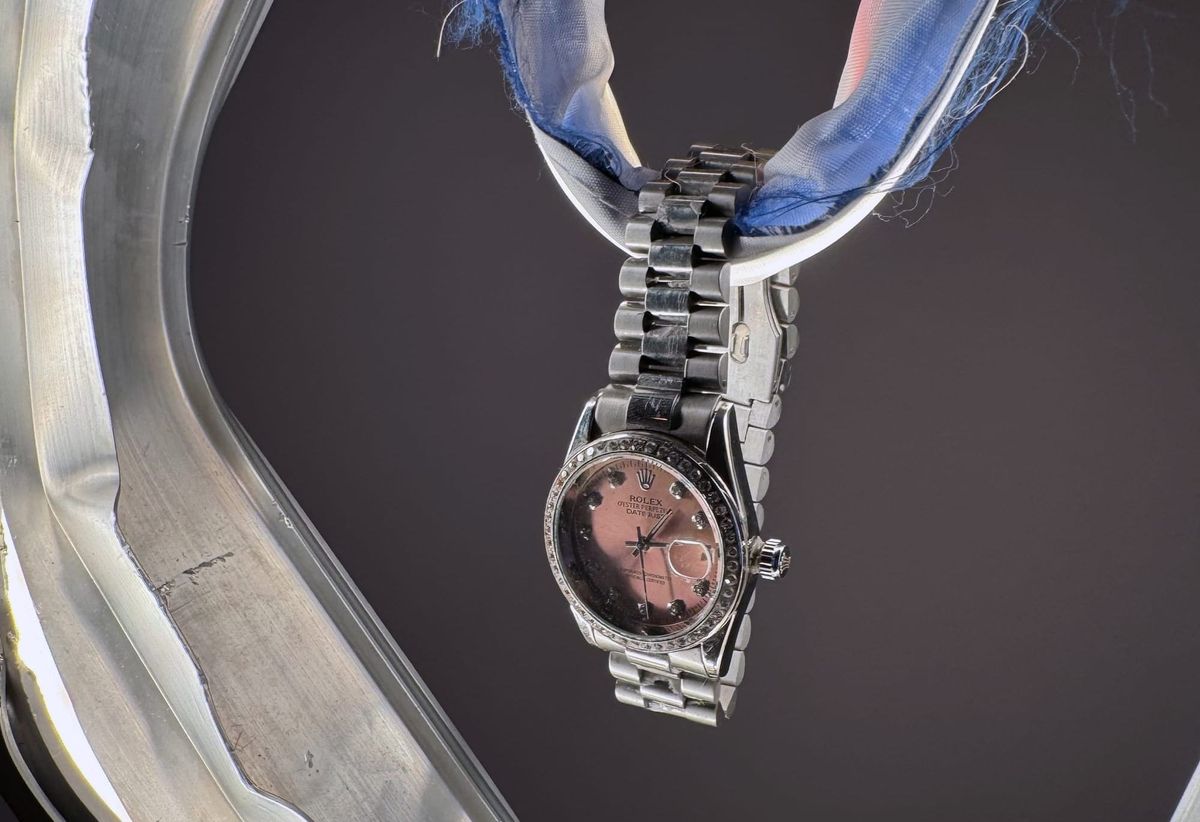
The exhibition’s largest piece, ‘Sentinel of Lacrimosa Guerrero’ (2026), is a profound personal reflection through fragments from Madriz’s life. The sculpture includes items like a switchblade and camo neck gaiter, referencing his family’s migration from Latin America to Louisiana, and the complex experience of the American Dream. The juxtaposition of objects, such as fragments of credit cards from debts past and present, illustrates the economic challenges facing artists in New York today. Unlike enduring ancient totems, Madriz’s works embody the current era’s instability, poised on the brink of unraveling.