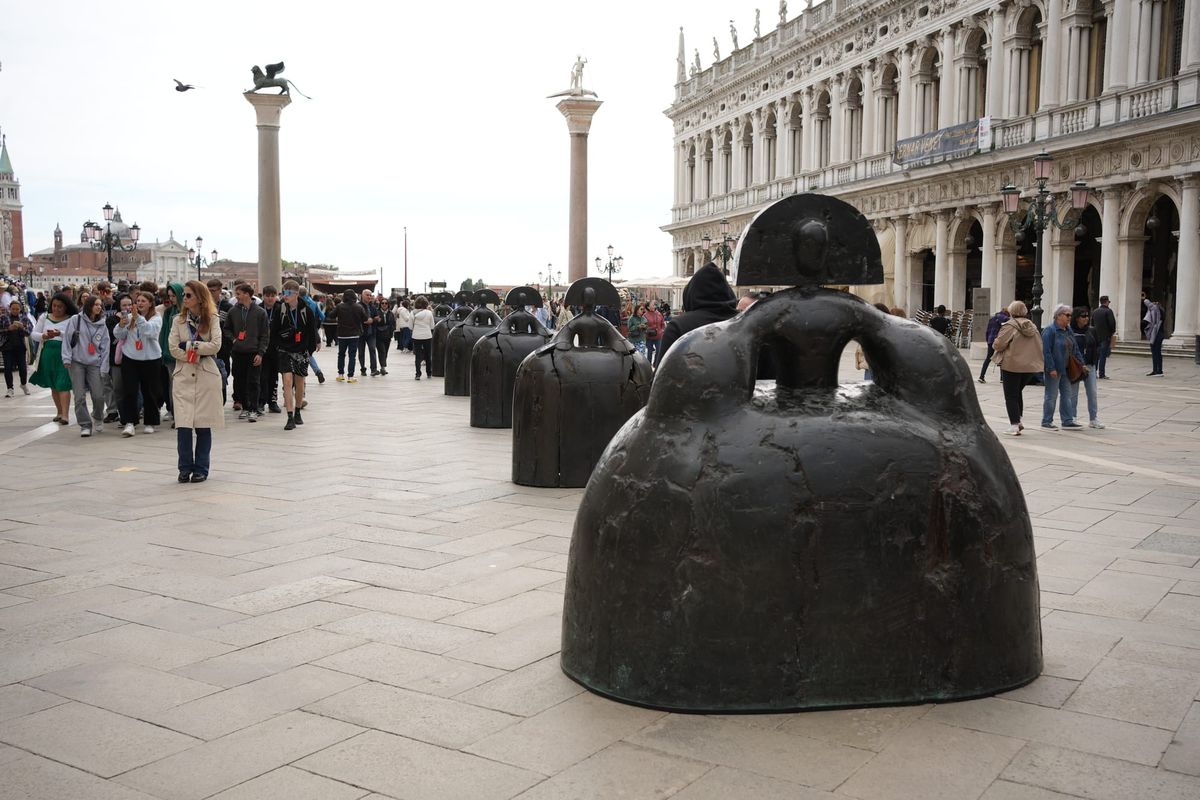
The Venice Biennale, often likened to the Olympics of the art world, is set to return in 2026, bringing with it a blend of political intrigue and cultural rivalry. This event, a pinnacle in the art calendar, lays bare the complex workings of the global art scene, as artists move beyond abstract theories to showcase their work on an international stage.
As the inaugural art biennial, the Venice Biennale has influenced how similar events are perceived globally, with the Italian term ‘Biennale’ becoming synonymous with such exhibitions. The event is categorized into three main sections: the prestigious Giardini with its 29 permanent national pavilions, the Arsenale, which hosts temporary exhibitions for numerous countries, and various collateral events scattered across Venice and its islands. The central exhibition, titled ‘In Minor Keys’, will occupy both the Giardini and the Arsenale.
This year, the Biennale has been marked by controversy, with the jury resigning after refusing to consider countries implicated in crimes against humanity, such as Israel and Russia. In response, the awards have been restructured to allow public voting on ‘Visitor Lions’. Notably, South Africa has withdrawn its participation following the cancellation of Gabrielle Goliath’s ‘Elegy’, a poignant installation mourning the victims of Gaza, now displayed at the Chiesa di Sant’Antonin in Castello.
Returning to the Giardini is Russia, while Israel, due to renovations at its usual site, will present at the Arsenale with artist Belu-Simion Fainaru. The US pavilion, uniquely privately owned, will feature artist Alma Allen after other proposals fell through. Additionally, Qatar is set to establish a new pavilion, a surprising development given its size compared to larger nations yet to do so.
The exhibition ‘In Minor Keys’, initially led by the late curator Koyo Kouoh, continues under the guidance of her colleagues, emphasizing solidarity among Black and African communities. Featuring 110 artists, the exhibition draws inspiration from notable Black diasporic writers. The Biennale’s decision to exclude countries under ICC scrutiny underscores a commitment to human rights, reflecting Kouoh’s vision.