VENICE — On May 5, a day before the Venice Biennale previews commenced, Ukraine was hit by a severe drone and missile attack from Russia, targeting civilians and infrastructure. This tragic event resulted in the deaths of 27 people and left over 100 injured. At the 61st Venice Biennale, amidst various controversies, the decision to reintegrate Russia, despite its ongoing hostile actions against Ukraine over the past five years, stands out as particularly disgraceful.
This brutal conflict, the most severe in Europe since World War II, was almost entirely absent from the expansive Biennale, including the main exhibition In Minor Keys, national pavilions, and numerous collateral events, except for sporadic protests outside the Russian pavilion. Zhanna Kadyrova’s project Security Guarantees, featured in the Ukrainian Pavilion at the Arsenale and within the Giardini, boldly addresses the war and emerges as a significant piece of the Biennale.
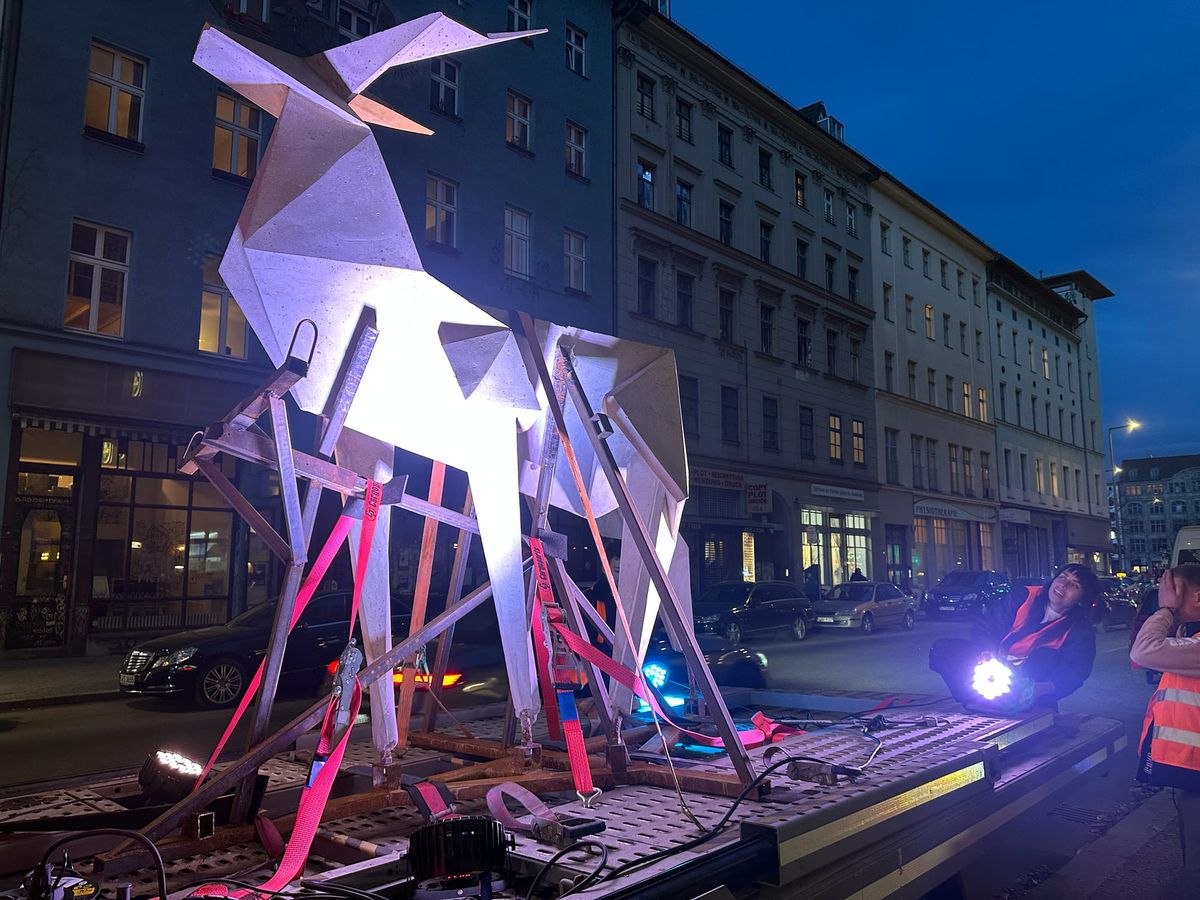
Kadyrova’s sculpture “The Origami Deer” (2019), suspended in an orange harness near the Giardini’s entrance, close to the Russian Pavilion, captures attention with its concrete form resembling a delicate origami deer, symbolizing strength and fragility. The accompanying texts reference the 1994 Budapest Memorandum, where Russia, the UK, and the US promised Ukraine security in exchange for nuclear disarmament. This agreement proved ineffective when Russia invaded Crimea in 2014 and launched a full-scale invasion on February 24, 2022, with minimal opposition from the US and UK, leaving Ukraine to resist alone.
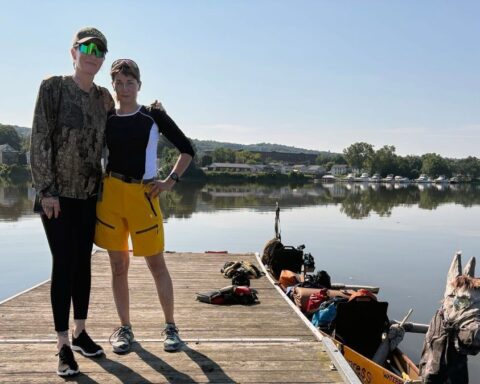
The sculpture’s history is notable, having first been installed in Pokrovsk, Ukraine, replacing a Soviet military symbol. As Russian forces approached in 2024, Kadyrova, along with curators Leonid Maruschak and Ksenia Malykh, successfully relocated it to safety. The sculpture, now a symbol of displacement, journeyed through European cities like Vienna, Warsaw, Prague, Berlin, and Paris before reaching Venice, mirroring the journey of millions of Ukrainians fleeing the conflict.
The accompanying video installation captures this journey with silent clips of the sculpture traveling, portraying both the sculpture’s majesty and the human connections formed along its path. Each stop hosted discussions on Ukraine and the war, alongside celebratory events, highlighting the resilience and spirit of Kadyrova’s project amidst destruction. The work’s emotive power resonates with refugees who see in it a reminder of their lost homes.