This article is part of a series examining underrepresented craft histories, researched and written by the 2025 Craft Archive Fellows in collaboration with the Center for Craft.
As one of humanity’s oldest crafts, natural pigment-making sits at the crossroads of science, agriculture, and art. It takes curiosity and ingenuity to look at a marigold flower and understand that it can dye fabric in shades ranging from mustard yellow to gold; it also takes knowledge, passed down through generations, to recognize its anti-microbial and anti-inflammatory properties. The blue of denim can be traced to indigo, a dye crop cultivated and processed by West Africans and their descendants across the Atlantic world, and the global indigo trade that enabled blue textiles was inseparable from enslaved labor and African dyeing knowledge.
Indigo is only one example of the many plant and mineral dyes Africans and Black Americans have cultivated to create a wide spectrum of color. Bògòlanfini, or mudcloth, is another earth-based color tradition, dating to the Bambara people in the 12th century in what is now present-day Mali. The word itself explains the process: “Bògò” means “clay” or “mud,” “lan” means “by way of,” and “fini” means cloth in Bambara — “mud by way of cloth.”
Even with its central place in both art and daily life, natural pigment-making is still largely missing from institutional craft archives. As a researcher and environmental designer, I am deeply invested in Black people’s relationships to plant dyes, sustainable materials, and natural fibers. Yet in tracing these histories, the archives do not seem to fully capture the breadth and depth of this knowledge. What emerges instead is a reminder that pigment-making is an environmental craft tradition deserving of preservation, study, and renewed attention today.
Chemical-derived dyes were discovered accidentally in 1856, though plant-based dyes remained in use well into the 20th century. Before that shift, the colors of textiles, art, and painted surfaces depended on natural dyes and pigments drawn from local ecologies. Why do we celebrate finished works while overlooking the craft traditions — and the people — that made their color possible?
Despite the long history of plant dyes and pigments, I have not found any archives in the United States devoted specifically to natural color-making by Black folks. What I did find was that one celebrated historical figure’s pigment-making was among his many accomplishments, even if it is often overshadowed by his other scientific work.
George Washington Carver is best known as an innovative agricultural scientist whose research helped transform Southern farming through crop rotation, soil restoration, and resource conservation. Born into slavery in Missouri in the early 1860s, Carver was driven by a commitment to help poor Black farmers still burdened by the economic devastation of slavery and sharecropping. He believed scientific knowledge and creative practice should be available to everyone.
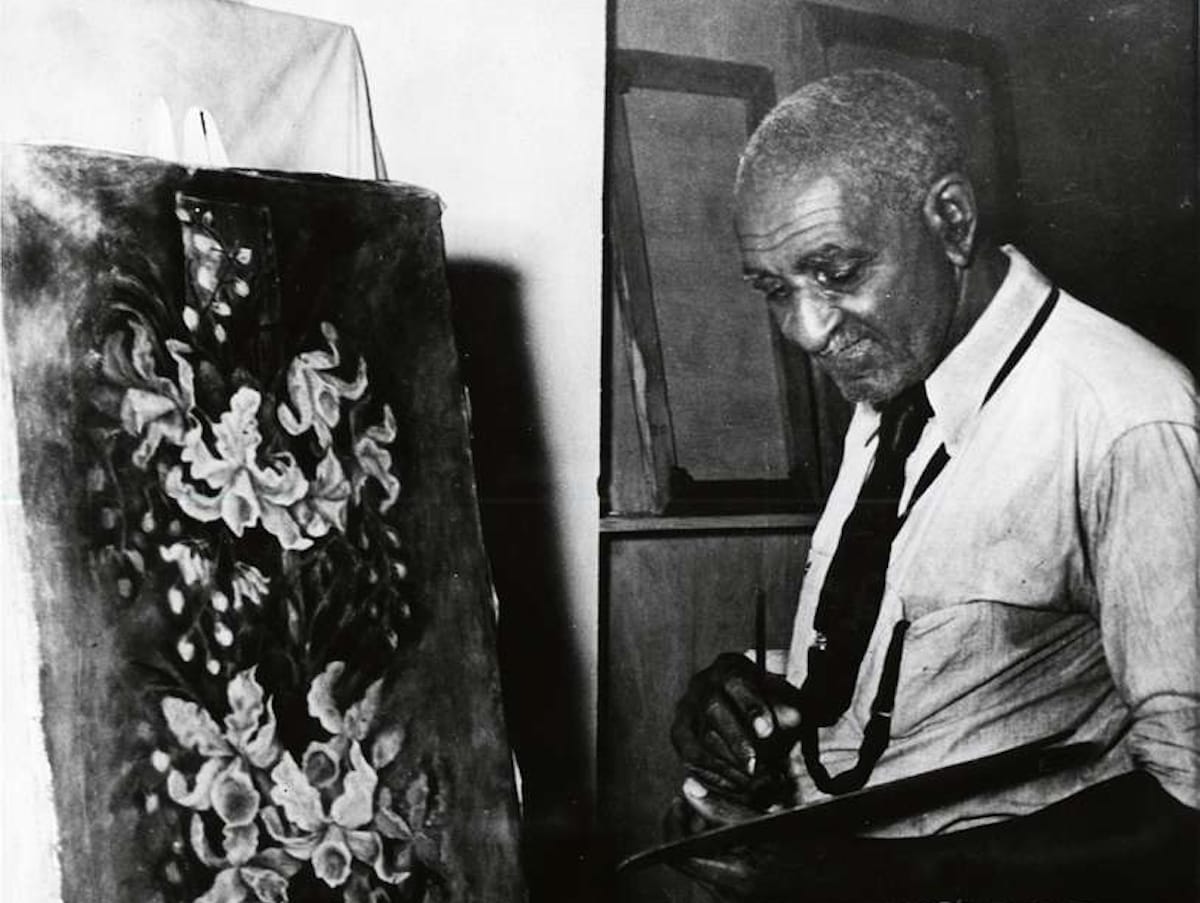
Although Carver’s scientific achievements are well documented, his artistic and material practices have received far less attention. He was an accomplished artist, craftsperson, and natural pigment maker who understood resourcefulness as both a necessity and a way of life. He believed people could work with what was available around them, and as he famously advised, “From what you have, make what you want.” One of the few times his artistic work received broad recognition came in a November 1941 Time magazine profile that called him the “Black Leonardo.” The piece coincided with the opening of the George Washington Carver Museum and Archives at Tuskegee University and noted that the institution held 71 of Carver’s original paintings, many made with paints he and his assistant produced from peanut oil, Alabama clay, and vegetables.