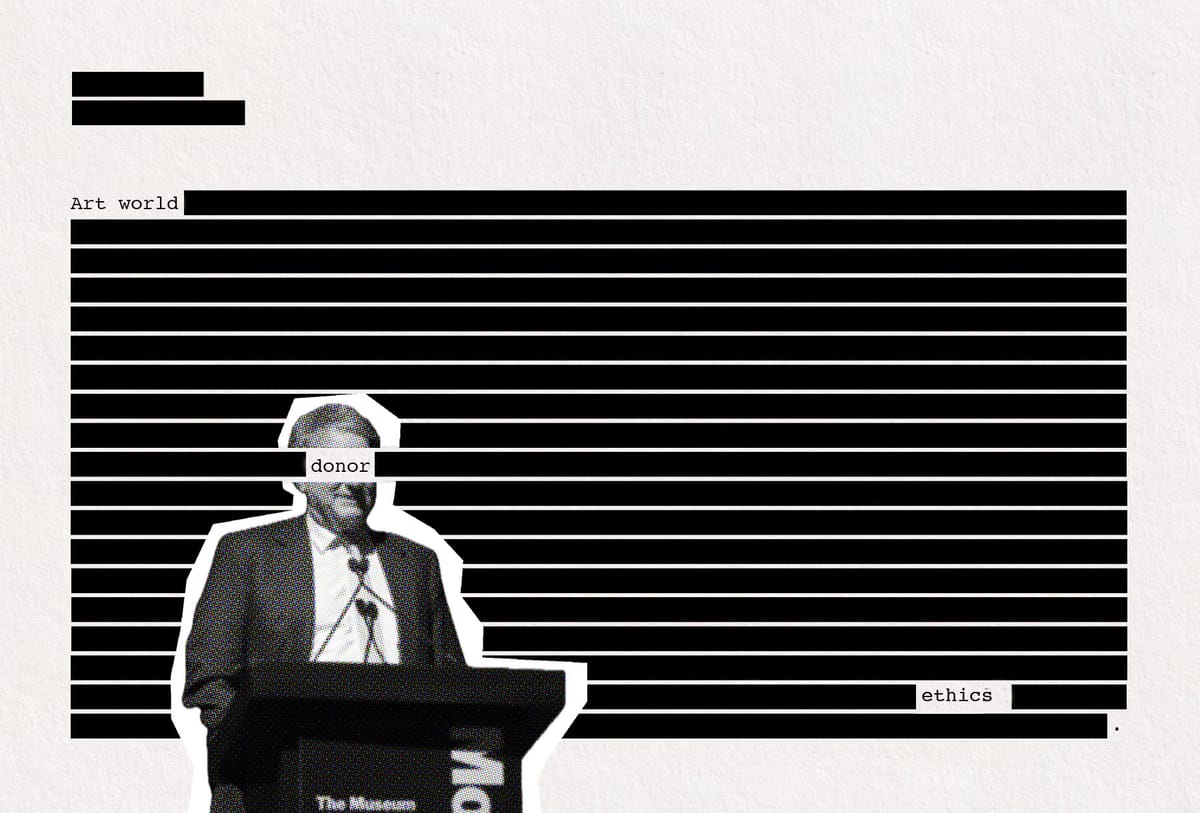
With the release of the Epstein files, journalists and art enthusiasts have been delving into the documents to uncover connections to the art world. The proximity of power corridors to modern and contemporary art was already known, as the elite often use their art holdings for financial leverage, as noted by Josh Spero in the Financial Times. While it may feel voyeuristic to peer into the elite’s realm, it’s crucial to recognize that we’re only seeing a fragment of the power structures where real decisions are made. Jeffrey Epstein’s influence is deeply rooted in these power dynamics, which often exploit and degrade, generating widespread cynicism.
David Ross, a former museum director and chair at the School of Visual Arts, is one of the few art-world figures facing repercussions for his interactions with Epstein, a convicted sex offender. Ross’s emails reveal the lengths to which institutional leaders go to charm donors and trustees for financial gain. This behavior is not unique to upper echelons; even leaders of smaller arts organizations might engage in similar practices if it ensures donor support. While this doesn’t excuse their actions, it provides insight into the pressures they face, as discussed by Emil J. Kang, former Program Director for arts and culture at the Mellon Foundation, in his essay on the overburdened sector.
The pressing question remains: How can arts leaders be encouraged to reject funding from corrupt sources in favor of ethical donors who uphold civic values? Dismissing the notion that “the system has always been this way” is essential, as it breeds pessimism that leads to exploitation.
Since the 1980s, the arts have experienced a decline as they become entwined with an affluent donor class detached from ordinary people and unaccountable for their dubious actions. Ironically, as public interest in art grows, ethical standards have deteriorated to satisfy this demand.
We must remember that behind every art executive is a board that heavily influences decisions, often positioning leaders as scapegoats. Today, the lines blur between working for oppressive regimes and reputable institutions, especially when figures like disgraced billionaire Leon Black, who paid Epstein $158 million for unqualified financial advice, remain on the board of the Museum of Modern Art. This environment breeds cynicism and prompts us to question the true purpose of art. If art is supported only by those who drag us into the mire, we must ask ourselves if it’s truly worthwhile.