MAASTRICHT, the Netherlands — The European Fine Art Fair (TEFAF) made its return to the MECC convention center in the Netherlands this week, bringing with it a display of museum-quality artworks. Since its beginning in 1988, the fair has attracted a global audience of collectors and connoisseurs, maintaining its standing as a leading art event despite its out-of-the-way location. While the fair is known for its luxury — complete with champagne and caviar — a quieter narrative unfolded around the rising demand for provenance transparency.
This year, exhibitors faced increased scrutiny regarding the origins and ownership of their pieces. Some dealers have adapted to these demands by providing more detailed provenance information, while others continue to use vague descriptions like “Property of a Hong Kong Gentleman” or “Old German colonial collection.” A dealer at the fair noted, “I don’t put all of it [provenance] in the catalogue because it’s not that interesting.” TEFAF’s long-standing collaboration with the Art Loss Register aims to prevent the display of stolen or disputed items, although gaps in provenance were still apparent.
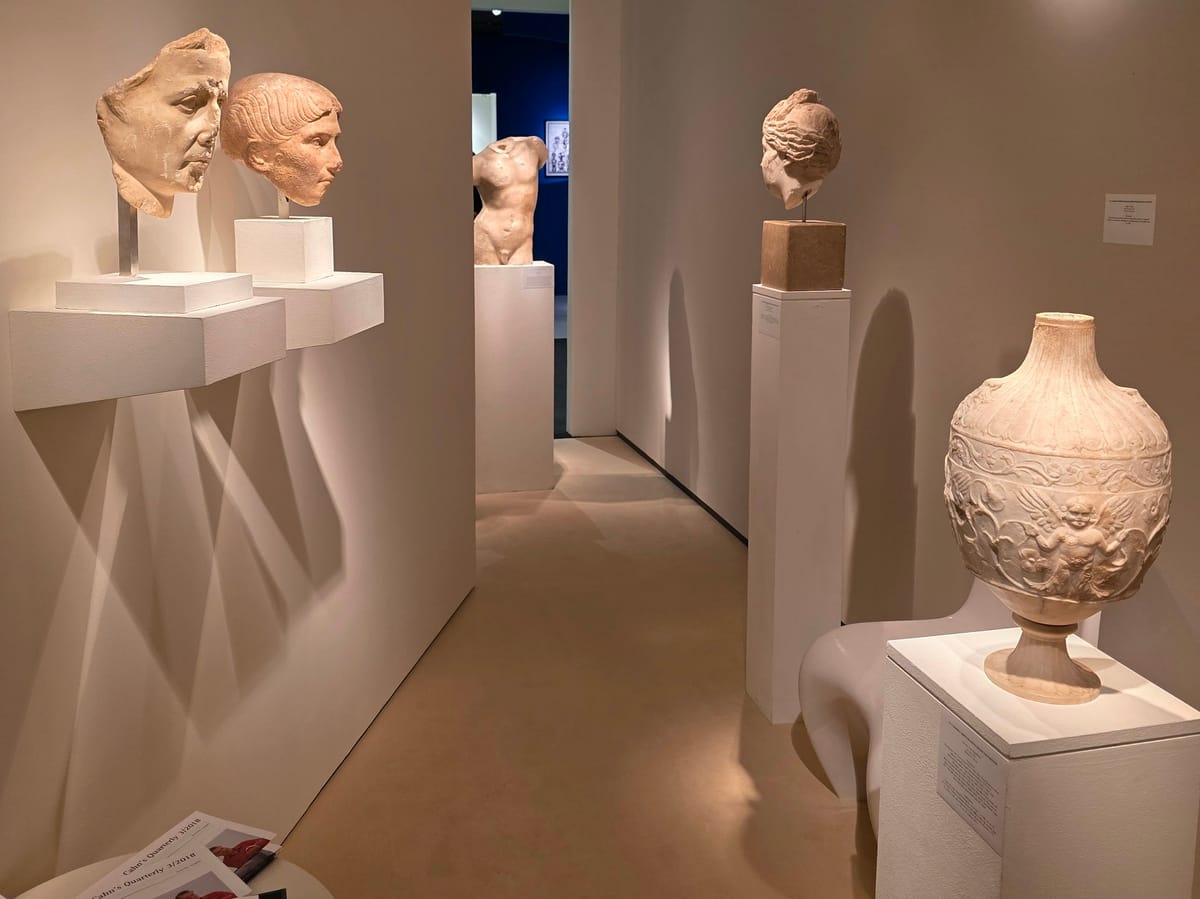
Galerie Chenel from Paris showcased a marble Roman “Cuirass of an Emperor” with a provenance listing two private collections and two Sotheby’s sales in London from 1961 and 1964. The omitted name of Robert Hecht, a controversial dealer, from the current fair’s provenance contrast with its listing at Frieze Masters in London, potentially reflecting market hesitation or TEFAF’s strict vetting standards. This practice of modifying provenance isn’t new, as seen with the Bubon bronzes, which were looted and have been gradually returned to Turkey.
Security was notably heightened at this year’s fair, likely in response to a significant jewelry theft in 2022. The fair was also marked by discussions on the upcoming EU Regulation 2019/880, set to reshape the European art market in 2025 by requiring import licenses and stricter checks for non-European art. Charlotte Chambers-Farah from the Art Loss Register highlighted the impact of increased scrutiny on this year’s event, stating it influenced the pieces that were showcased.
TEFAF’s focus on cultural diversity was evident through its programming and the featured works, including those by historically underrepresented artists. Among the 273 galleries, standout exhibits featured African modernism and works by Palestinian-born artist Juliana Seraphim. The TEFAF Summit also addressed declining public arts funding, emphasizing the need for sustainable private patronage. The art market continues to navigate its past, with ongoing challenges in provenance disclosure amid broader market shifts.