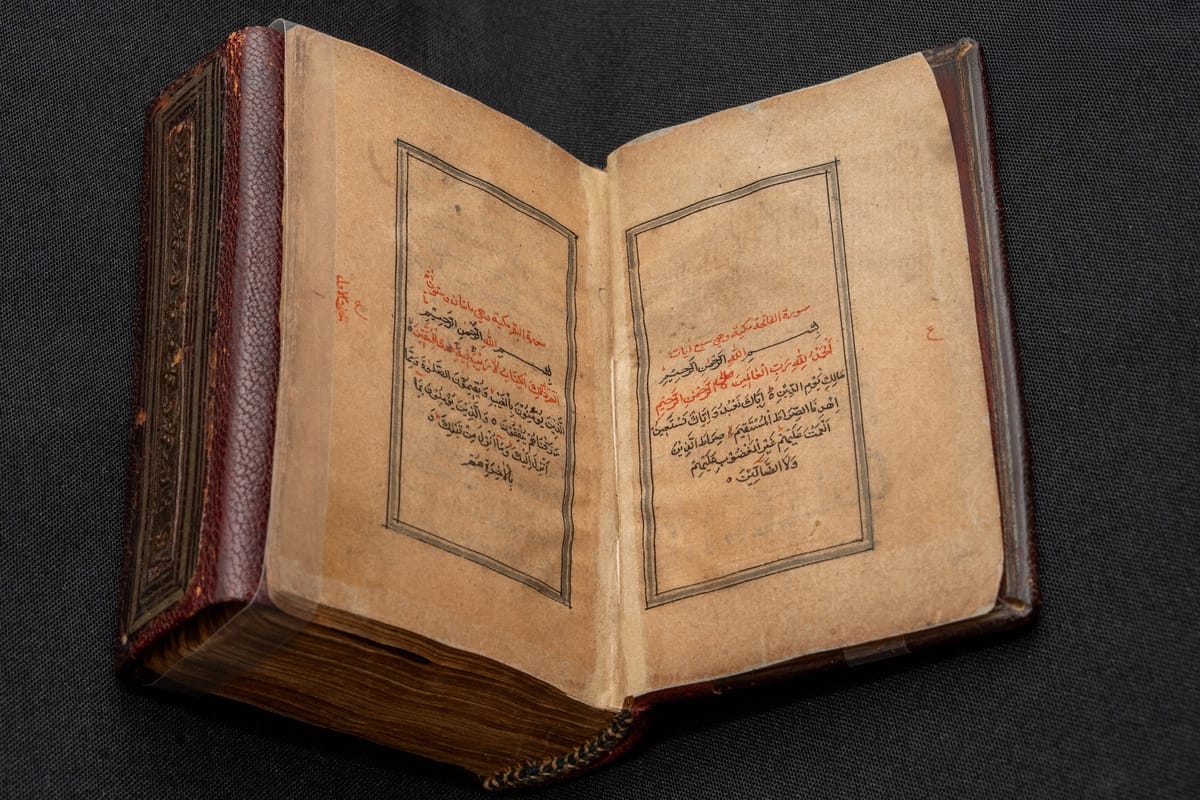
The Schomburg Qur’an, Auudi Dorsey’s depictions of the Black community at the shoreline, a missing Pollock painting, and a tribute to Claudette Colvin are among the highlights. On January 6, Zohran Mamdani took the oath as New York City’s mayor, placing his hand on a significant edition of the Qur’an, currently on display at the New York Public Library’s main branch. This edition was acquired by the library in 1926, originating from the collection of Arturo Schomburg, an Afro-Puerto Rican historian, after whom Harlem’s Schomburg Center is named. Made in 19th-century Syria for everyday use, this Qur’an symbolizes the mayor’s dedication to the dignity of immigrant and working-class residents.
In a feature for Essence, Jasmine Weber explores Auudi Dorsey’s artistic representations of a New Orleans beach, a vital gathering place for Black communities during segregation. Dorsey, native to the Crescent City, stumbled upon the beach’s legacy in 2013, sparking his interest in its rich history. His artistic journey included gathering stories from elders and archival materials, eventually leading to sketches of its vibrant past. Captivated by images of Black individuals enjoying the coast, Dorsey remarked on the contrast with the post-Katrina era, describing a striking photograph of children prepared for swimming lessons as particularly inspiring.
In The Washington Post, Sebastian Smee narrates a family’s relentless pursuit of a stolen Pollock painting, initially bought before the artist’s fame. Lacking extensive insurance, the owner faced a decade of legal and financial turmoil. His copious notes resembled the chaotic style of Cy Twombly’s work, echoing his struggle to maintain composure amid the crisis. Meanwhile, as Charlotte Higgins reports for the Guardian, museums grapple with pressures from political forces. Steven Nelson, formerly of the National Gallery of Art, critiques the anticipatory compliance seen in institutions, where diversity efforts are redefined to avoid scrutiny.
Katelyn Burns for Xtra highlights the role of homophobia in recent tragedies, urging acknowledgment of the biases shaping narratives around the deaths of LGBTQ individuals. Burns argues that erasure and discrimination persist, reflecting broader societal issues. Concurrently, Felix Pal of the Caravan examines the expansive reach of Hindu nationalism, revealing the strategic growth of the RSS’s influence. Their research exposes the illusion of grassroots support, unveiling a coordinated effort to bolster the movement’s presence across various sectors.
The 19th’s Eden Turner honors Claudette Colvin, a pivotal figure in the Civil Rights Movement, arrested at 15 for defying bus segregation. Colvin’s recollection of her historic stance highlights the weight of legacy, as she felt the symbolic push of past leaders on her shoulders. Despite not becoming the face of the boycott, Colvin’s story remains a testament to courage. Additionally, a video from the Victoria and Albert Museum showcases Terry Facey’s craft in miniature furniture, offering a glimpse into his meticulous process. Lastly, poet Kaveh Akbar shares a zine in memory of those lost in Iran’s recent unrest, emphasizing the global impact of art and activism.