For Native American communities in the U.S., pipelines symbolize serpents invading sacred soils, rather than energy conduits. The Lakota’s ancient prophecy of a black snake tainting revered grounds is realized today in pipelines transporting fossil fuels for large corporations, violating federal treaties and threatening global ecosystems.
At the border between the U.S. and Canada, construction of a 1,000-mile tar sands pipeline has reignited the Indigenous-led push for climate justice and land restitution, particularly on Anishinaabe land in Minnesota. The rerouting of Line 3, originally built in 1968 by Canadian giant Enbridge, has caused fresh harm to water sources and chemical spills near the Mississippi River, adding to its history of leaks and a significant oil spill in 1991. Demonstrations by water defenders and environmental groups highlight Enbridge’s poor cleanup record and unwelcome presence on tribal lands from Alberta to Wisconsin.
Since November 2020, the Stop Line 3 campaign has evolved into a wide-ranging coalition of climate advocates using open-access art for posters, banners, and flags. A multitude of visual pieces, including designs, paintings, and zines, spotlight Indigenous issues and the diverse life forms at risk from ongoing resource extraction. Throughout 2021, artist collectives such as Onaman Collective, Resist Line 3, NDN Collective, Stop the Money Pipeline, and JustSeeds released public domain art with restrictions on corporate use and profit-making.
Line 3 contravenes the 1855 Treaty with the Chippewa, which diminished Anishinaabe lands to a small portion of northern Minnesota. This area has become a site of resistance, inspiring Indigenous artists to depict the threatened wildlife. Artists like Ojibwe and Mètis creators Isaac Murdoch and Christi Belcourt feature buffalo, bears, fish, and birds with radiant hearts in their calls for conservation. Red eagles with blood-dipped wings and images of winged tribal mothers highlight shared maternal instincts across species.
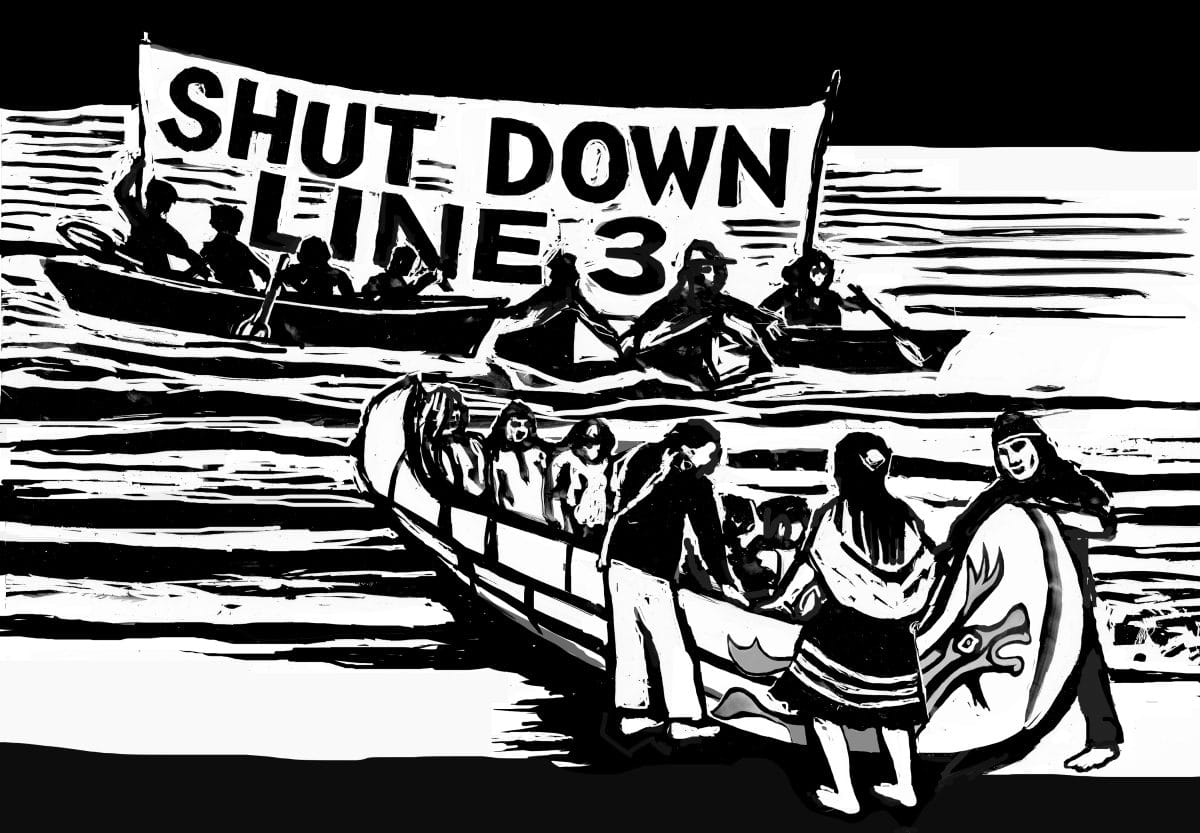
As activists physically obstruct construction, Milwaukee artist Susan Simensky Bietila captures their defiance in her black-and-white illustrations, reminiscent of early 20th-century woodcuts. Another piece shows demonstrators with large artworks and banners, one declaring “Cut the head off the black snake.” Enbridge-backed police have detained hundreds of water protectors, with many still imprisoned, prompting calls from Stop Line 3 advocates for governmental intervention to dismiss exaggerated charges.