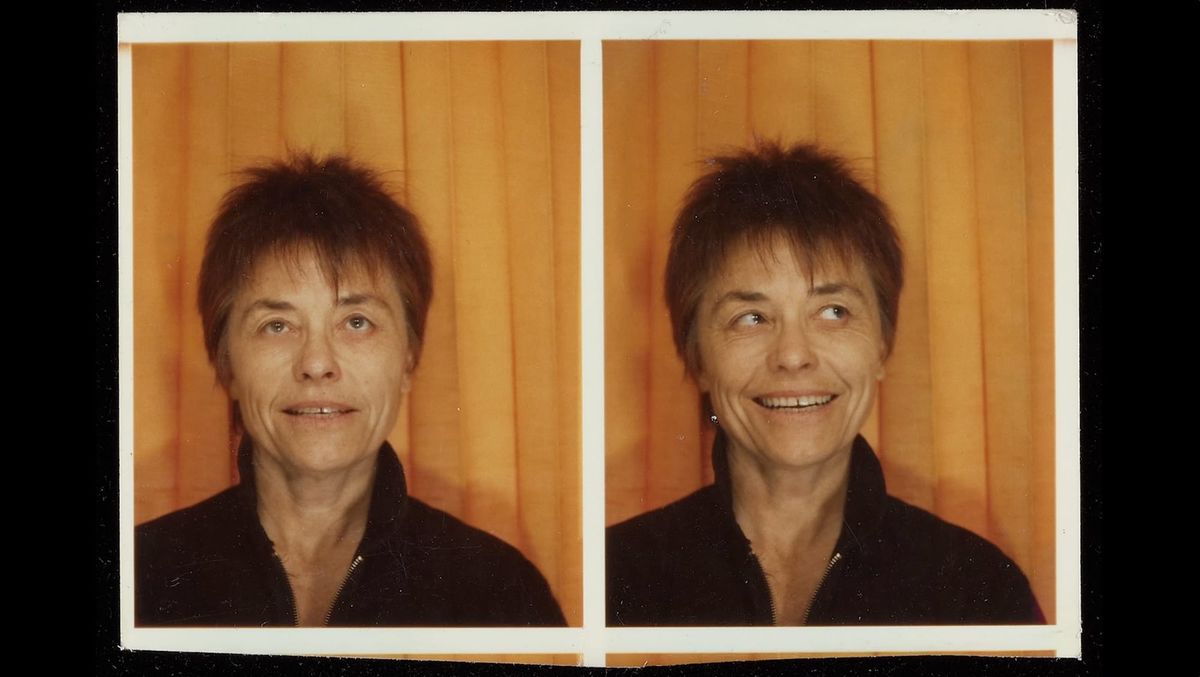
Barbara Forever (2026) distinguishes itself from most biographical documentaries almost immediately by skipping over the first three decades of its subject’s life. In voiceover, the late Barbara Hammer says that her life did not truly begin until she started making films and came out as a lesbian in the early 1970s.
Eager to recover lost time, she reinvented herself quickly, leaving her husband, with whom she had been living in the woods of Northern California, and becoming part of Berkeley’s queer and experimental filmmaking communities. From there, the documentary follows the pioneering feminist filmmaker’s life and career in chronological order, tracing the development of both her artistic approach and her political beliefs.
Aside from new interviews with Hammer’s longtime partner, Florrie Burke, the film is assembled almost entirely from archival material. Hammer carefully preserved extensive personal photographs, notes, videos, and voice recordings, making it possible for her to effectively tell her own story, with director Brydie O’Connor shaping the material through editorial choices.
Those choices mean that although the film moves linearly through time, Hammer’s reflections do not. Many of the audio recordings were made in her final years, when she was living with endometrioid ovarian cancer and confronting her mortality, which prompted her to reconsider her life. In that same period, she created her performance piece The Art of Dying or (Palliative Art Making in the Age of Anxiety) in 2018, a year before she died.