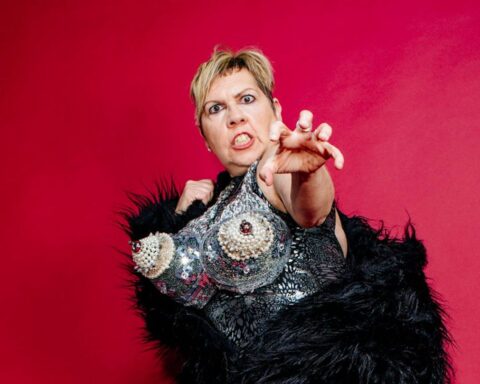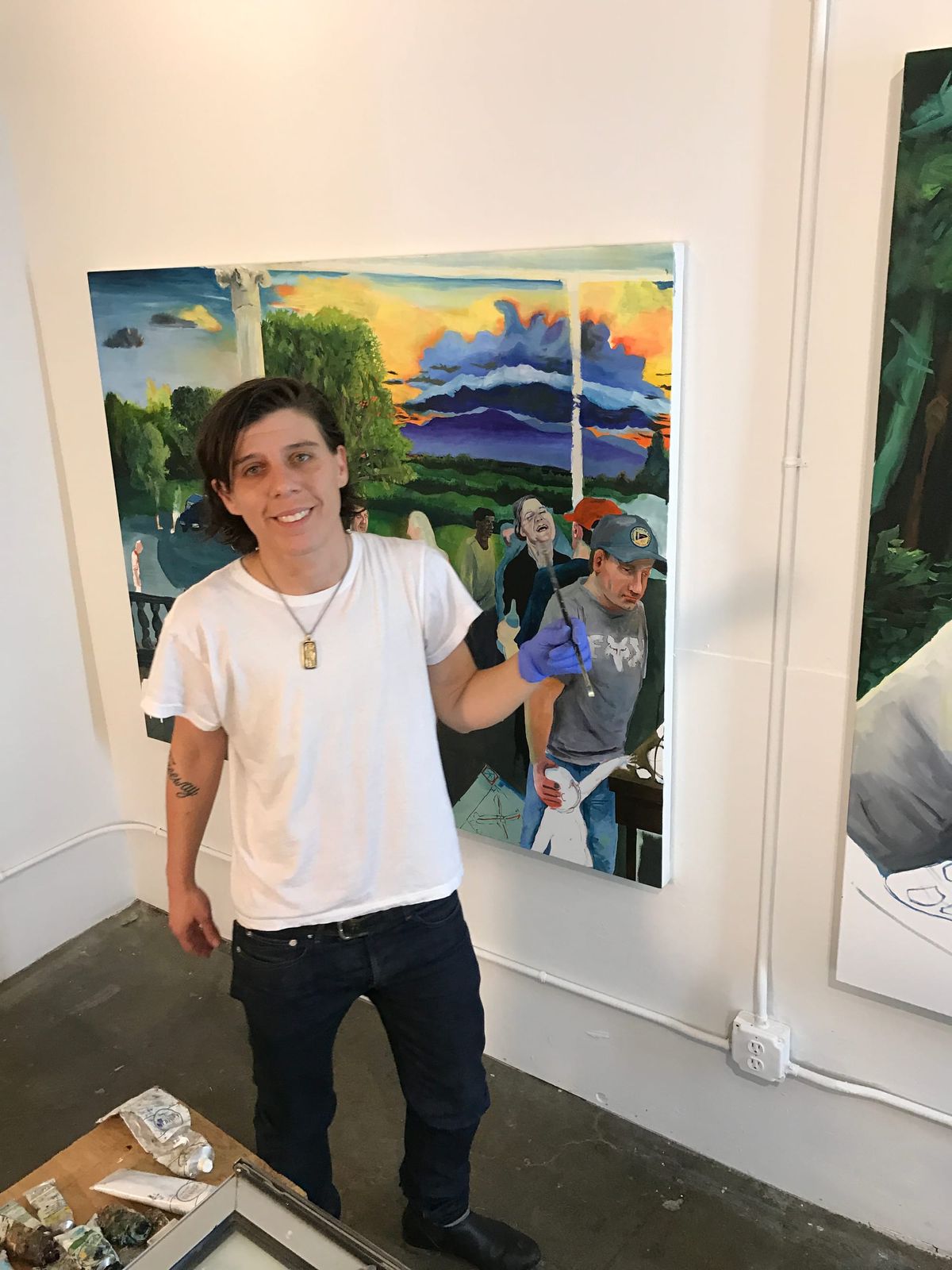
Celeste Dupuy-Spencer, a notable painter known for her compelling portrayals of resistance against injustice both locally and globally, passed away on Friday, April 10, at 46, at her residence in Los Angeles. Her passing occurred just days before a new solo exhibition of her work was set to open at Jeffrey Deitch’s gallery in West Hollywood. The cause of her death has not been publicly disclosed, and the gallery plans to release further information regarding the exhibition and a memorial in the near future.
Deitch, whose gallery shared the news on Saturday, expressed that Dupuy-Spencer was deeply cherished within her artistic circle. In an email to Hyperallergic, he described her as an “extraordinary artist and a wonderful person,” highlighting her dedication to her craft, often working tirelessly in her studio. “We spent many hours in her studio talking about the history of art and how it intersects with world events,” Deitch remarked.
Based in California, Dupuy-Spencer’s art often delved into the violent aspects of contemporary American politics. Her vivid painting of the January 6 insurrection, titled “Father, Don’t You See That I Am Burning” (2021), was acquired by the Hirshhorn Museum and Sculpture Garden in Washington, DC, in 2022. She was also vocal against the actions of Israel towards Palestinians in Gaza and the Occupied West Bank, facing significant online harassment but standing firm in her support for Palestinian human rights.
Born in 1979, Dupuy-Spencer was raised in Rheinbeck, New York, frequently visiting Louisiana. She studied at Bard College, pursuing a Bachelor’s of Fine Arts in 2007, though she did not complete her degree. After moving from New York to New Orleans in 2012, she eventually settled in Los Angeles, exhibiting at Nino Mier Gallery and Eve Fowler’s Artist Curated Projects. Her career gained momentum with her inclusion in the 2017 Whitney Biennial and the Hammer Museum’s 2018 Made in LA biennial.
As her recognition grew, Dupuy-Spencer spoke about her identity as a trans, masculine-presenting individual while not fully identifying as male or female. “I don’t consider myself transitioning to male, but I was starting to do that and found myself reacquainted with something that I really love in myself — the feminine side that was in a constant state of suppression,” she told Los Angeles Magazine in 2021. Her forthcoming solo show at Deitch, titled Burning in the Eyes of the Maker, explored the intersection of the art world’s commercial nature and the political themes inherent in her work.