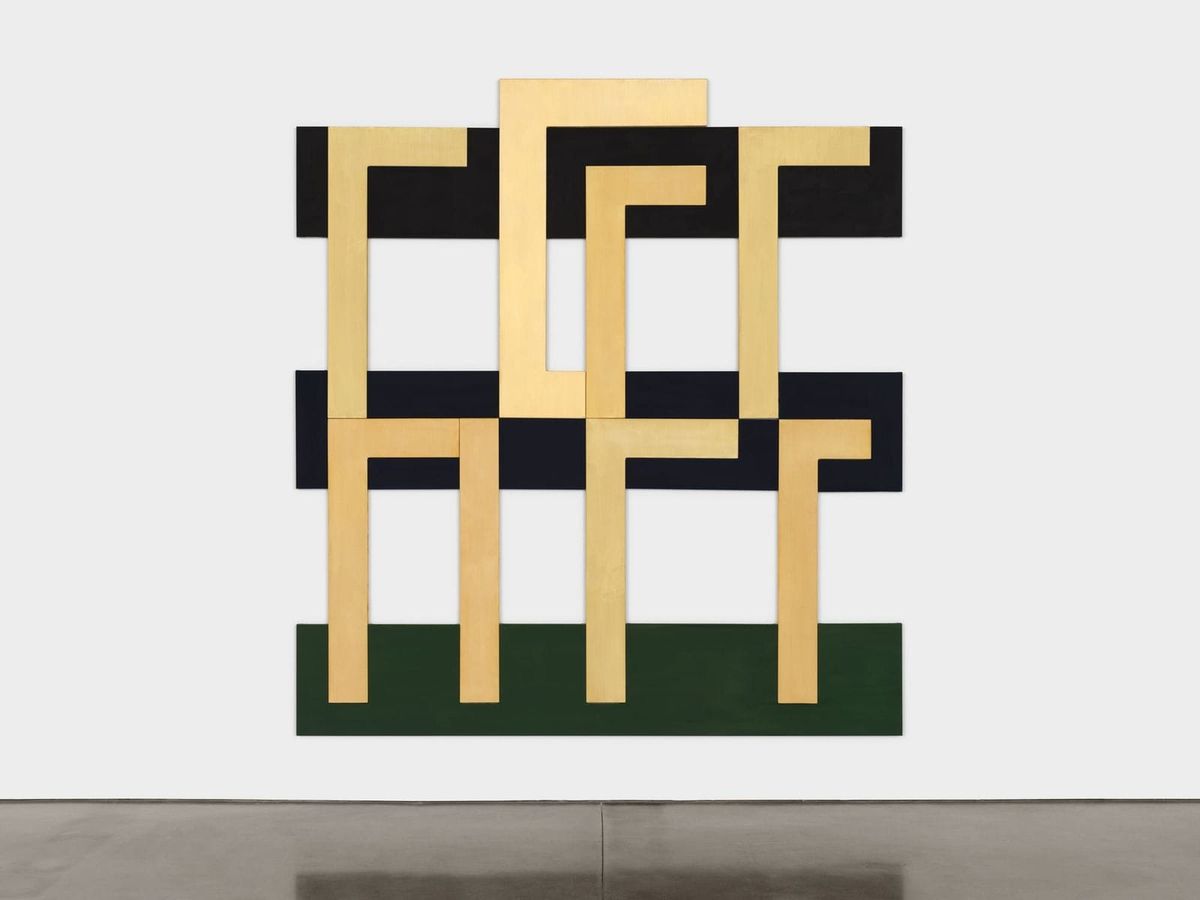
David Novros creates complex, multipart paintings using horizontal and inverted L-shaped panels, carefully placed with precise intervals between them. These artworks are not merely shapes on a wall; the wall itself becomes a key part of the viewer’s experience. In 2008, Novros shared an insight, reflecting on his visit to the Alhambra in Granada, where he first realized that painting could transcend being an object on a wall. He envisioned paintings as site-specific, interacting with the light and space around them, akin to the tiles he saw there.
At the Paula Cooper exhibition, Novros’s panel paintings stand apart from those of Frank Stella and Kenneth Noland. Rather than being objects that protrude from the wall, Novros’s creations incorporate the wall as an integral element. Describing them as “portable murals,” Novros indicates the necessity for these artworks to adapt to different environments. His paintings consist of meticulously arranged monochromatic panels with varying thicknesses and widths, inviting viewers to observe them from both a distance and up close.
The painting “Untitled” (2024) features 20 panels that come together to form three broad horizontal bars, interspersed with lighter, inverted L-shapes. This arrangement creates a unique internal rhythm, with tan-colored vertical bars subtly differing in tone. The slight separations between panels contribute to a handmade, imperfect feel, emphasizing the transient nature of the work.
The more elaborate “Untitled” (2025) comprises 37 panels, organized into three rows with window-like openings. Novros employs a palette of five colors without a discernible pattern, creating continuous variation in the arrangement of vertical panels and the dimensions of openings. The painting’s interaction with light, as observed through shifting shadows, highlights Novros’s shared sensitivity with artists like Robert Ryman and Suzan Frecon, whose works are also influenced by the passage of time and changing light.
Accompanying these paintings is a selection of watercolors, each showcasing variations in color across vertical and horizontal bands, all set against white paper. Novros’s exhibition demonstrates his acute sensitivity to his medium and materials, encouraging viewers to pause and immerse themselves in the experience. As poet Robert Duncan suggested, the role of the artist, like the poet, is to maintain the capacity to respond. In Novros’s art, the acts of seeing, doing, and thinking are interwoven, inviting a journey of discovery.