It’s not often that an artist’s press release captures your attention, but occasionally, the biographical context does just that. This was true for the exhibition Edward Zutrau: Thirty Years, Two Worlds at Lincoln Glenn. Born in Brooklyn, Zutrau was a pupil of Will Barnet and briefly inspired by Barnet’s abstract ‘Indian Space’ phase. In 1955, Zutrau married a Japanese woman and moved to Japan, exhibiting his work there but not in the U.S.
Returning to New York in 1967, he held three solo exhibitions with Betty Parsons between 1972 and 1980. Despite Parsons’ friendship, Zutrau’s art received little recognition, briefly mentioned by Calvin Tomkins in a 1975 New Yorker article on Parsons, and absent from Wikipedia. He gained some recognition only a few years ago, with reviews acknowledging his links to Abstract Expressionists like Mark Rothko and Clyfford Still, and Color Field artists.
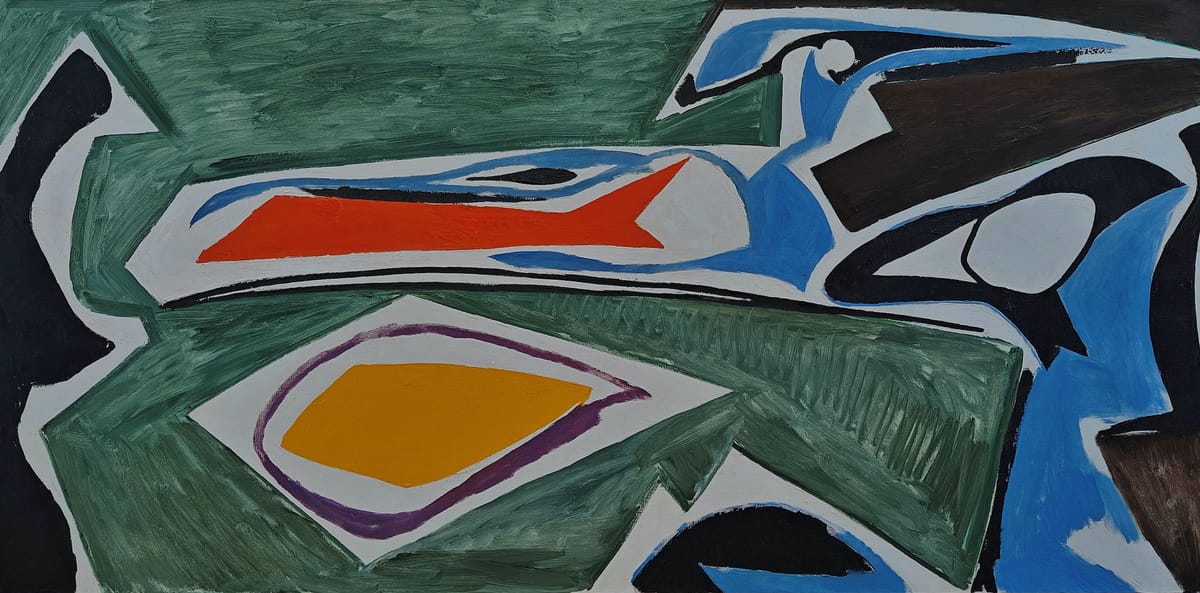
Observing the 12 paintings on display, from 1956 to 1984, seven were crafted in Japan. Zutrau merged Abstract Expressionism’s simplicity with Japanese ink painting’s permanence, creating a unique style. This was evident in ‘Untitled’ (1969), showcased prominently, capturing attention even on a rainy day.
Unlike other second-generation Abstract Expressionists, Zutrau embraced ‘first thought, best thought’ from ink painting. His ‘Untitled’ features a reddish-orange oval and a black stroke, forming an asemic ideogram that suggests a dialogue between abstract sign and ideogram, meaninglessness and meaning.
Zutrau’s work in Japan and the U.S. reflects his exploration of color and form. The exhibition Edward Zutrau: Thirty Years, Two Worlds at Lincoln Glenn (542 West 24th Street, Chelsea, Manhattan) will be on view until February 21, organized by the gallery.