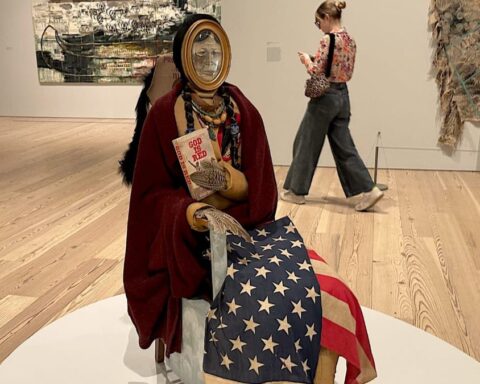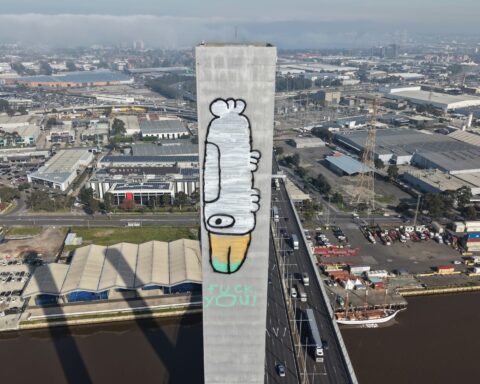
This week covers a range of intriguing topics: Tania Bruguera’s stained glass museum manifesto, Molly Crabapple’s critique on AI, Cindy Corrie speaking out, remembering Asha Bhosle, and the rise of right-wing knitters.
Molly Crabapple, with her new book, argues in the Guardian that tech giants have orchestrated a massive art theft by using AI to replicate artists’ work without consent. She observes that AI image generators scraped her artwork from the internet, transforming it into lackluster imitations. This practice, affecting countless artists, represents an unprecedented art heist, as tech companies bypass copyright laws under the guise of innovation.
Paulo Nazareth, a Brazilian artist, showcases his work in Berlin without setting foot in Europe. As Tajla Vale notes in Africa Is a Country, Nazareth’s artistic journey involves traversing the Americas and Africa, embracing ancestrality through ritualistic walks. His refusal to visit Europe until he explores all 54 African nations highlights his critique of traditional art education and the perceived necessity of European influence.
Michelle Cyca in The Walrus discusses the Artemis II mission, framing it as a modern-day space colonialism. Despite backlash, Cyca argues that the Artemis Accords, which allow lunar resource mining, contradict the Outer Space Treaty, turning space exploration into a competitive race. This narrative challenges the notion that space endeavors universally benefit humanity.
Cindy Corrie, writing in the Nation, reflects on her daughter Rachel Corrie’s legacy and the ongoing shipment of bulldozers to Israel. She urges the Senate to block these shipments as a tribute to her daughter and others affected by such conflicts, advocating for a meaningful stance on human rights protection.
Supriya Ganesh in Vulture addresses the oppressive nature of American gender norms and the racism and transphobia entwined within them. She explores personal experiences of confronting these biases and the phenomenon of transvestigation targeting women of color in public discourse.
Rebecca Liu in the Dial examines the decline of romcoms in Hollywood, despite their global popularity. Billy Mernit suggests that the genre suffered from oversaturation and lost its appeal due to an influx of formulaic productions, leading studios to avoid the romcom label, even as they produce films with romantic elements.
Finally, Diet Paratha commemorates the late Asha Bhosle, highlighting her influence on hip-hop through numerous song samples, celebrating her enduring legacy at 92.