PARIS — Artists savvy in digital technology have long noticed the transition of state power from physical to virtual realms, a notion explored since the 1998 Ars Electronica’s InfoWar. This theme resonates in Laurent Grasso’s refined short film, “Elysée” (2016), shown at Galerie Perrotin’s Impasse Saint Claude venue. On the same day, U.S. intelligence affirmed that Russian entities Guccifer 2.0 and DCLeaks.com, aligned with Wikileaks, aimed to bolster Donald Trump, a revelation against which the film contrasts, focusing on the tangible opulence of a power chamber.
“Elysée,” a week-long feature at Galerie Perrotin, previously debuted in Hong Kong, followed by screenings in Seoul and Ajaccio as part of Grasso’s Paramuseum exhibition at the Palais Fesch. Commissioned by the Archives Nationales for the exhibit Le Secret de l’Etat, this sleek 16-minute piece, filmed by a professional crew, is the first in a planned series on power locales. The projection is framed by Grasso’s gold leaf artworks, with the entrance flanked by two bas-reliefs and two oil and palladium pieces titled “Studies into the Past” (2016).
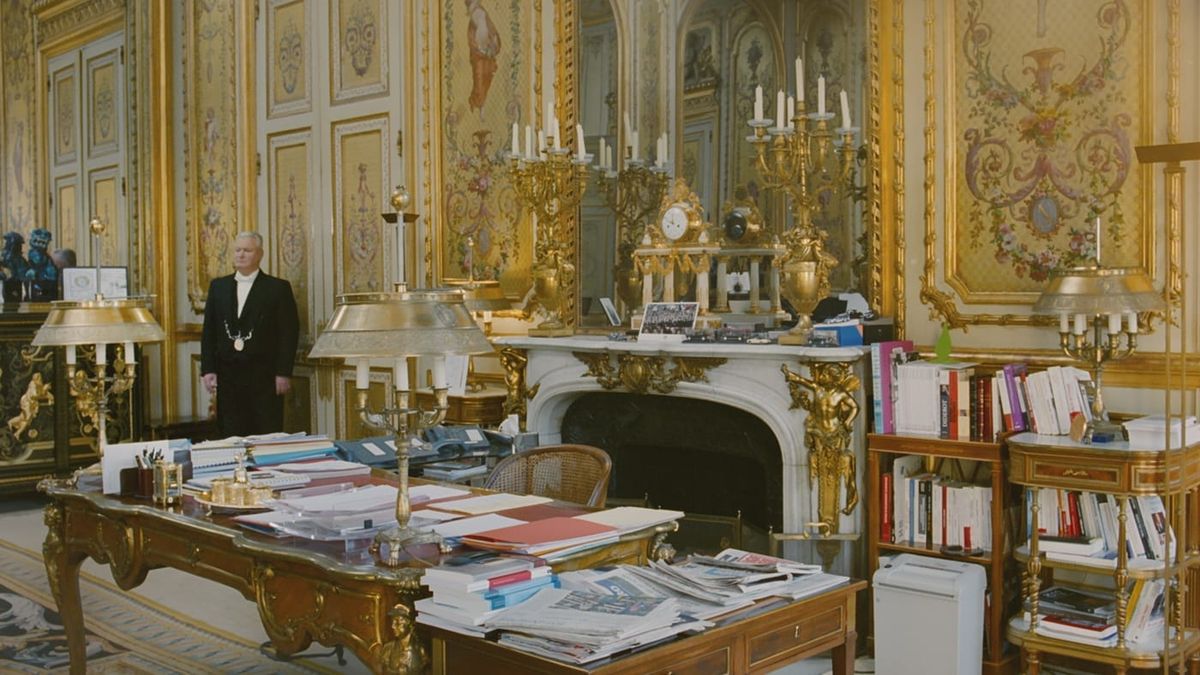
Grasso gained unprecedented access to film in the Salon Doré at the Élysée Palace, the French President’s office. Named for its gilt filigree, the Salon Doré reflects the grandeur of the Elysian Fields from Greek mythology. Built in 1722 by Armand-Claude Mollet, the palace was once home to the Marquise de Pompadour. Later, architect Étienne-Louis Boullée made significant alterations. Presidents, including François Hollande, who permitted the filming, have utilized this office. Noteworthy items belonging to Hollande, featured in the film, include a Charlie Hebdo cartoon book and toy car collection.
“Elysée” captivates with its serene, apolitical portrayal of power. The film employs a languid telescoping glide, reminiscent of machine vision, with minimal editing. It immerses viewers in the room’s splendor, as the camera pans over majestic surfaces and guards, rendered almost lifeless. This visual indulgence is heightened by Nicolas Godin’s atmospheric music, creating a transcendent experience that evokes the grandeur of political office and mirrors the elaborate style associated with figures like Vladimir Putin and Donald Trump.
Trump’s use of digital media parallels the Salon Doré’s regal aesthetics, projecting wealth and distraction. Despite his campaign’s focus on Wikileaks, Trump now dismisses the election interference claims, echoing a Shakespearean sentiment of overprotest. Grasso’s film mirrors Trump’s role in cyberculture and information warfare, foreshadowing his normalization in the White House’s similarly opulent Oval Office.
Laurent Grasso’s “Elysée” can be seen at Galerie Perrotin (10 Impasse Saint Claude, 3rd arrondissement, Paris, France) until January 14.