I first encountered Rama Duwaji’s art in 2024 while waiting for the restroom at Huda, a Levantine bistro in East Williamsburg. It took me a moment to realize that the vibrant artwork I was admiring was actually a New York City-mandated first-aid poster, beautifully reimagined in Duwaji’s distinctive style.
Born in Texas, the Syrian-American artist has contributed her illustrations and animations to prominent outlets such as the New Yorker, Tate Modern, and BBC. Duwaji became widely recognized last November when her husband, Zohran Mamdani, won the New York City mayoral race in a landmark victory that resonated with millions. As a naturally private individual, she was thrust into the public eye, becoming both a tastemaker and Gen-Z role model on the left, and a controversial figure on the right.
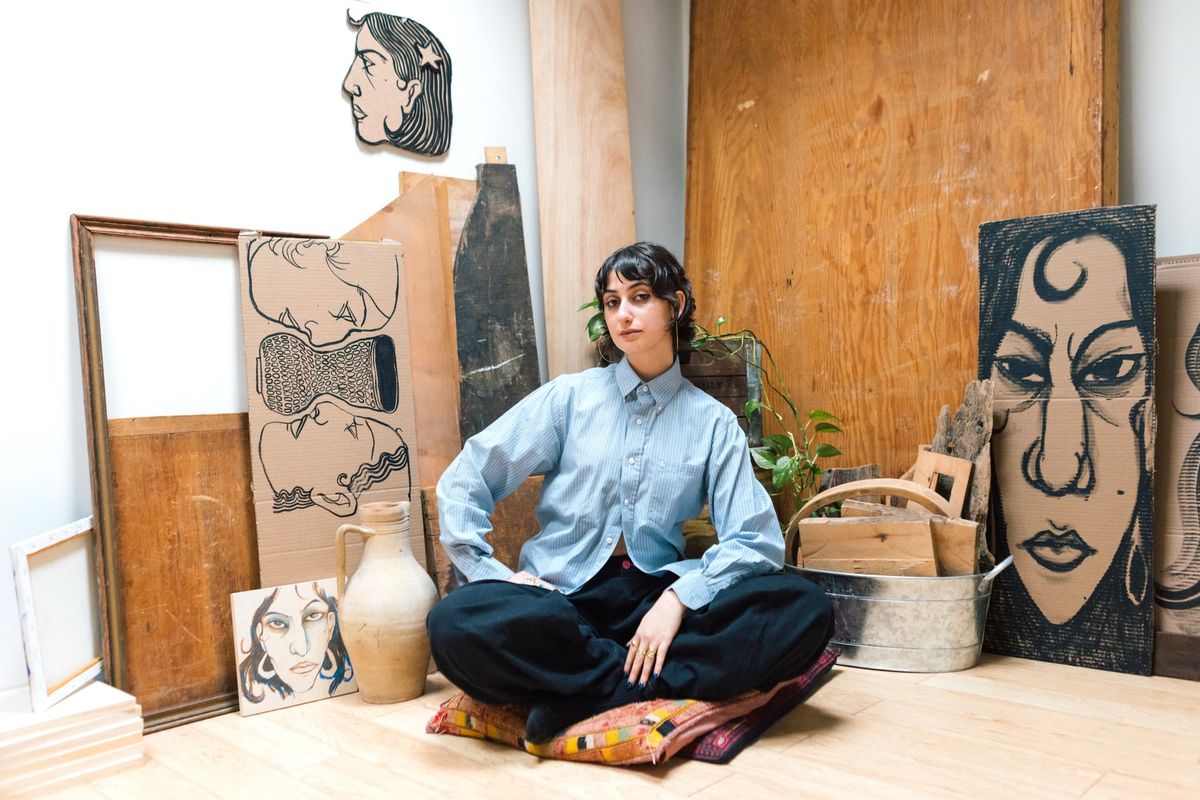
Recently, I had the opportunity to meet Duwaji at Gracie Mansion in Upper Manhattan. We engaged in an extensive discussion about her artistic process and her role as New York’s first lady. Surrounded by her hand-drawn animation frames, paintings on reclaimed wood and cardboard, and whimsical ceramics, Duwaji left a lasting impression as an artist committed to authenticity amid the pressures of media scrutiny. Here are some highlights from our conversation.
Hyperallergic: How did you start your journey as an artist?
Rama Duwaji: It was probably due to my stubbornness. I couldn’t imagine doing anything else, so I had to find a way to keep drawing.
H: What attracted you to illustration and animation over fine art?
RD: It wasn’t so much about practicality as it was about accessibility. Fine arts seemed to require a studio and costly tools, whereas illustration could be done anywhere, even in the margins of a notebook or on the subway.
H: Your art, often political, reflects your varied background. How has your role as first lady influenced your work?
RD: Everything is political, from what we highlight to what we omit. My position has only reinforced my dedication to creating honest and complex art that reflects the times and my journey.
H: Has becoming a public figure changed you personally?
RD: This experience has been transformative. It has made me reflect on my past and future, and to face the changes within myself, even before this moment.
H: Your work often features themes of sisterhood. Can you elaborate?
RD: Sisterhood and platonic love are central to my life and naturally reflect in my art. My friendships are a crucial part of my life and influence my worldview and creative expression.