Editor’s Note: The following text has been excerpted with permission and adapted from ‘When Home Is a Photograph: Blackness and Belonging in the World’ by Leigh Raiford, published by Duke University Press on April 14 and available online and in bookstores. Text Copyright Duke University Press, 2026.
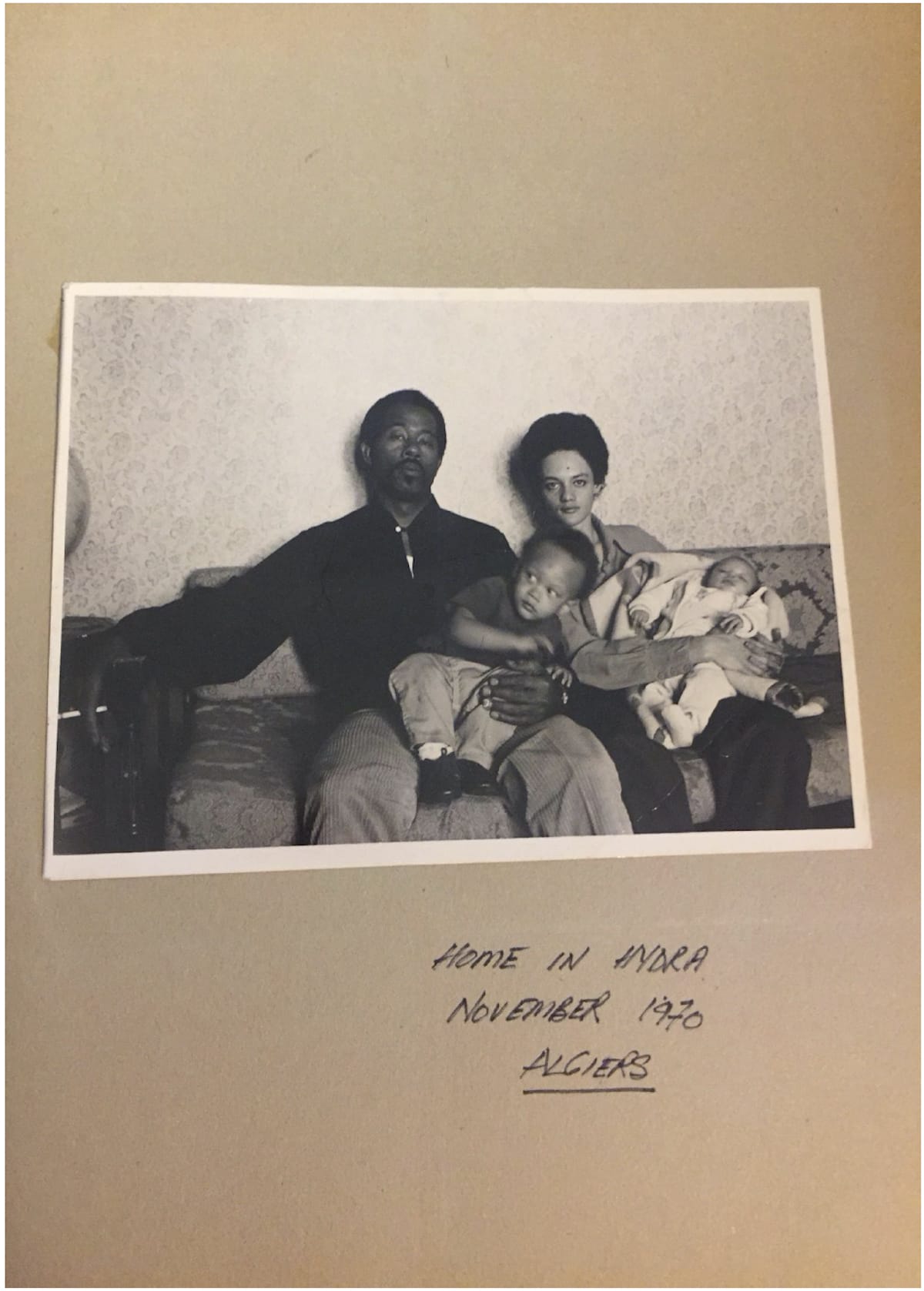
This photograph by Jeffrey Blankfort captures a rare moment of Maceo and Joju Cleaver together as siblings, without their parents, Black Panther Party leaders Eldridge Cleaver and Kathleen Neal Cleaver. They sit closely in a carver chair, an early American design upholstered in zebra print, which was a favorite of Kathleen’s and a prominent feature in their San Francisco home. The chair evokes the iconic image of Huey P. Newton, orchestrated by Eldridge Cleaver in 1967, symbolizing cultural nationalism through African-inspired décor.
Understanding these artifacts as everyday objects from the Cleavers’ home allows us to see them as conduits of diasporic connection. Kathleen Cleaver, in her essay about the Panther delegation’s 1972 trip to Congo-Brazzaville, highlights the persistent desire among African Americans to connect with Africa. The possession of such diasporic resources in one’s home provides a sense of movement and connection, even in times of stasis. This chair, unlike the symbolic spears and shields, was lived in, embodying a sense of rest and settlement.
Tina Campt’s work encourages us to view such photographs through the lens of quiet and the quotidian, challenging traditional diaspora studies. While the image of the siblings can affirm forced mobility in the Black radical tradition, it also reflects an aspiration for domestic tranquility, balancing between rest and movement. Kathleen cherished the chair so much that she had it shipped to Algiers, where the photograph of Maceo and Joju was taken as they unpacked their new home, highlighting the chair’s significance as much as the children’s presence.
For those living under uncertain conditions, home must be both a retreat and portable. Kathleen’s upbringing across various countries as a diplomatic child instilled in her the ability to create familiar environments in new settings. Despite the Panthers’ enthusiasm for Africa, living in exile in Algeria presented challenges, including language barriers and cultural differences, especially for the women whose American styles contrasted with local expectations. The photograph juxtaposes the zebra print with Islamic tile patterns, illustrating a layered vision of home where imagined and real Africas converge to support Kathleen’s children.