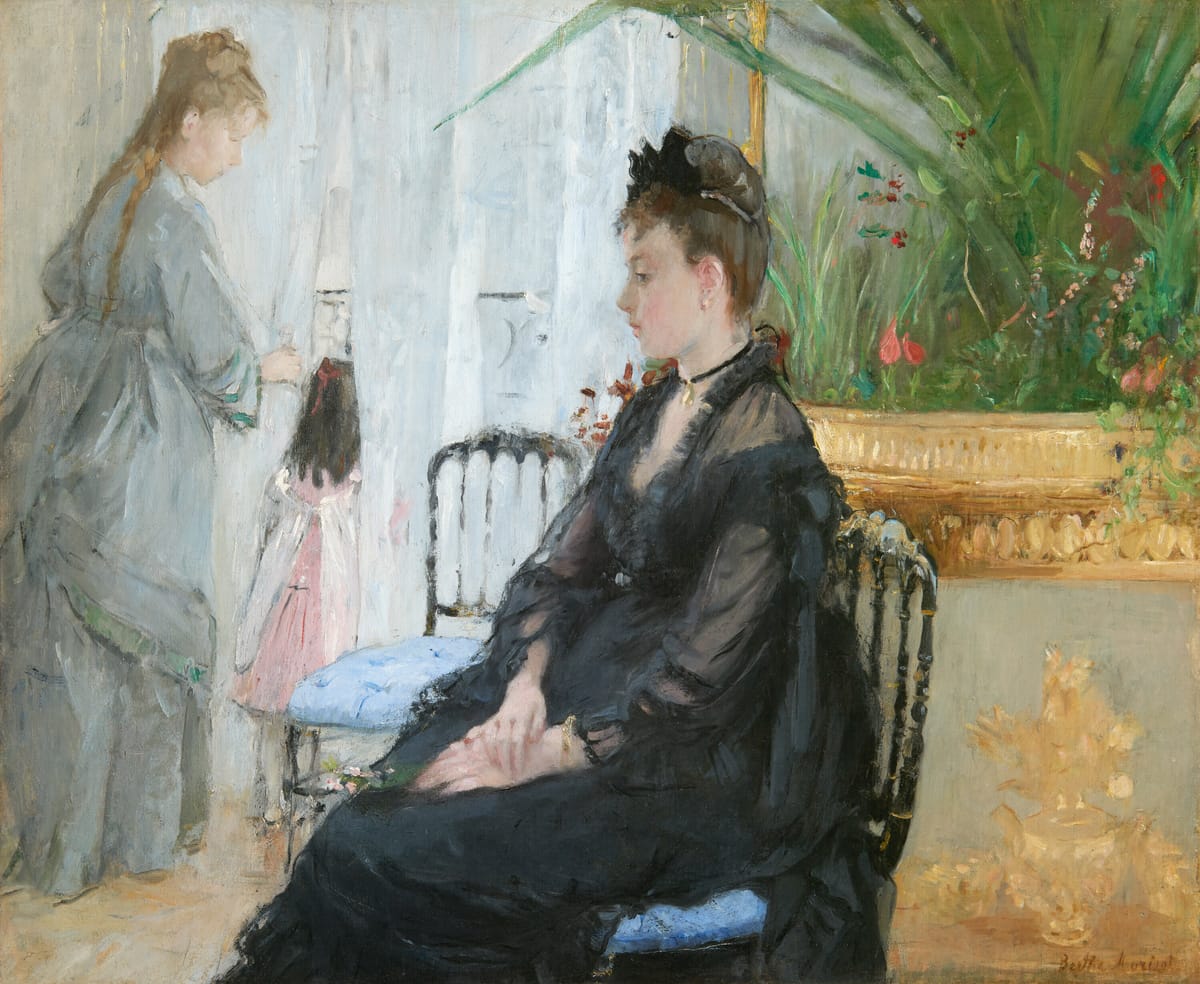
SAN FRANCISCO — The exhibition ‘Manet & Morisot’ at the Legion of Honor offers an insightful look into the intertwined lives and works of two significant French artists from the 19th century, Édouard Manet and Berthe Morisot. Rather than maintaining the narrative that Morisot was merely influenced by Manet, the exhibition invites viewers to appreciate the mutual respect and equality in their artistic relationship. As the audience navigates through several galleries, the delight in witnessing their artworks side by side becomes apparent.
Édouard Manet, often referred to as the ‘father of Modernism,’ is well-known for his painting prowess, comparable to that of Cézanne. The revelation here is the strength of Morisot’s work, which stands confidently beside Manet’s, a fact he himself acknowledged. Their acquaintance began in the mid-1860s at the Louvre, where Morisot and her sister Edma, under their mother’s chaperonage, met Manet. Despite the societal norms of the time, which did not require Manet to have a chaperone, the artists formed a friendship. Manet, already notorious for works like ‘Le Déjeuner sur l’herbe’ and ‘Olympia’ from 1863, was drawn to Morisot’s formidable presence.
In 1868, Morisot became the central figure in Manet’s ‘The Balcony,’ but she was never his student, despite perceptions of her as his muse. Morisot’s paintings, often smaller due to practical reasons and the societal limits on women’s ambitions, gradually claim their space as the exhibition progresses. Her influence on Manet is visible as his art evolves to embrace more open compositions and looser brushwork. Beyond art, Manet played a role in encouraging Morisot’s relationship with his brother Eugène, whom she married in 1874, wisely retaining her maiden name professionally. Eugène, also an artist, supported her work and appeared as a model in several of her paintings, offering a rare depiction of fatherhood in Impressionist art.
Morisot’s influence and strength as an artist become increasingly evident, culminating in her 1885 ‘Self-Portrait,’ which shows her confidently at work, a direct gaze meeting the viewer’s eyes. This painting serves as a powerful conclusion to the exhibition, juxtaposed against the initial gallery featuring Manet’s portraits of her. By the end, the focus shifts from who influenced whom to simply savoring the exquisite artistry presented. ‘Manet & Morisot’ continues to be displayed at the Legion of Honor in San Francisco through March 1, curated by Emily Beeny.