RIDGEFIELD, Conn. — Upon entering Uman: After all the things… at the Aldrich Contemporary Art Museum, the sense of movement is immediate, with artworks seemingly poised to transition into new spaces. In the side gallery, black and white dots mimic the movement of dust or seeds, surrounding pieces like “and it’s the thing again” (2025) and “ayeeyo’s warmness” (2025). The former depicts a creature with a snake-like form and a vivid orange eye, echoing the adjacent sculpture “the thing #1” (2023), which features a streetlight emerging from a mound of fabric resembling soil. The latter piece features red dots across geometric blocks, reminiscent of East African tapestry, and is adorned with black tassels, a nod to the artist’s fashion background.
In this space, smaller works extend the theme of fluidity with a raw, unrefined charm. The brushstrokes, bold and childlike, create forms that are somewhat familiar — the slant of a roof, the shape of a mountain, or the roundness of a sun. Lines twist and turn into wings; colors blend to form dreamlike landscapes. The red borders of the paintings suggest a soft, warm glow, an aura of memory captured fleetingly. For Uman, images are restless, always shifting to new contexts and meanings.
Uman’s work is characterized by a mixture of spontaneity and intention, avoiding the transcendental aspirations of abstract artists like Rothko. Her paintings reflect the reality she carries: the irrevocable loss of a childhood in Somalia, the landscapes of Upstate New York that recall her origins, and private internal terrains. These pieces convey a sense of finding home in distant lands.
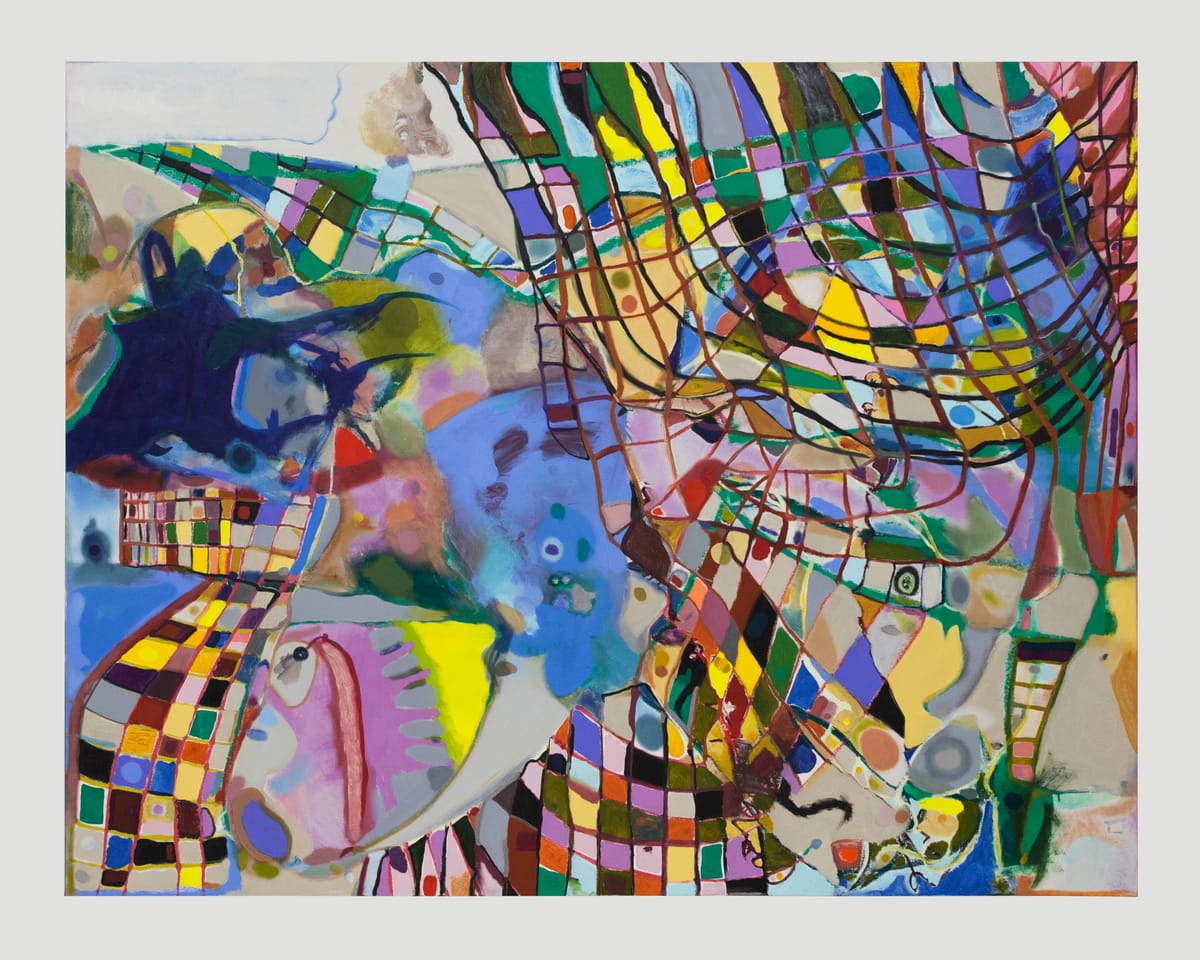
In “melancholia in a snowy walk” (2025), spirals and curves form a cosmic pastoral scene, set against deep red walls that amplify the room’s energy. “first class, window seat” (2025) features wavy grids that resemble woven textiles and fields, hinting at a life woven across continents. Meanwhile, “melancholia in a fall breeze” (2025) embraces dreamlike imagery, with pink tides and fluctuating planets. “amazing grace glorious morning” (2025) presents red circular forms, open to interpretation but deeply evocative.
Throughout the exhibition, Uman’s symbols remain intentionally elusive. Circles, spirals, and other motifs tease at meaning but resist easy interpretation, safeguarding the complexity of diasporic experiences. These paintings inhabit a space between familiarity and alienation, painting the distance between lost homelands and the imagined ones we strive to recreate. In Uman’s hands, abstraction becomes a way to carry forward what official narratives often overlook or silence.