In 2017, Swedish artist and writer Fia Backström began frequent visits to Buffalo Creek in West Virginia. Over nearly ten years, she returned regularly, drawn by both the warmth of the local community and the region’s complex history. The area is marked by significant labor movements and a darker past of mining and ecological catastrophes. A notable disaster occurred on February 26, 1972, when a coal slurry dam burst, unleashing a massive wave of toxic sludge that devastated the valley, claiming 125 lives and displacing 4,000 people. The mining company termed it an ‘act of God,’ leaving the land poisoned for years. Survivors received a $13,500 settlement, with some participating in psychiatric studies on collective trauma.
Backström’s ongoing visits revealed a region far more intricate than its stereotypical portrayal. Her research highlights the interplay of environmental decay, disaster capitalism, and generational poverty. These insights are captured in her exhibition, ‘The Great Society,’ at the Queens Museum until May 17. The exhibition advocates for working-class unity through a rich tapestry of visual and textual elements.
While Backström’s work is primarily photographic, it expands into diverse media including embroidery and docupoetry, reminiscent of Claudia Rankine’s style. Her piece ‘Witness [According to Estimates]’ (2025) is a text-based artwork that juxtaposes stark statistics with human impact, inspired by Muriel Rukeyser’s ‘The Book of the Dead.’ Another installation, ‘Days Without Lost Time Accident’ (2024–25), features photo-sculptures of mining site signage, printed on steel, with inverted colors to emphasize the text.
The exhibition further explores alternate realities with ‘Sacrifice Zone’ (2025), a large-scale work resembling local power lines. It displays over 80 altered photographs from the region, creating a surreal dimension. This absence of human figures challenges the narrative of mass media portrayals of Appalachian poverty during the ‘Great Society’ era.
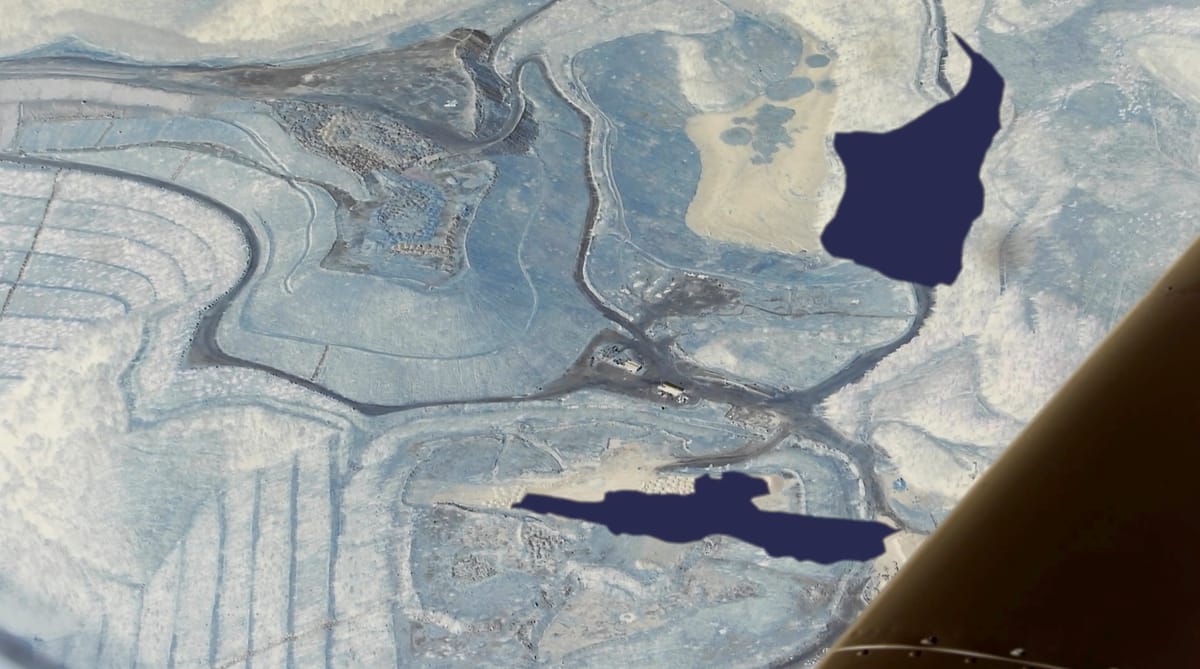
Backström’s deep engagement with the region is evident in her videos, such as ‘Toxicology Report’ (2025), which combines aerial footage of mining sites with poignant voiceovers and interviews with locals. The final gallery continues this narrative, featuring more docupoetry and the travelog video ‘The Mud Wave’ (2024), illustrating her profound connection to Buffalo Creek.
The exhibition culminates in ‘Buffalo Creek Therapy Quilt 2025’ (2023–25), a collaborative work with local residents, inspired by a historical quilt from the 1972 disaster. This piece, created through embroidery workshops, is a testament to communal memory and resilience, linking past and present through textiles.