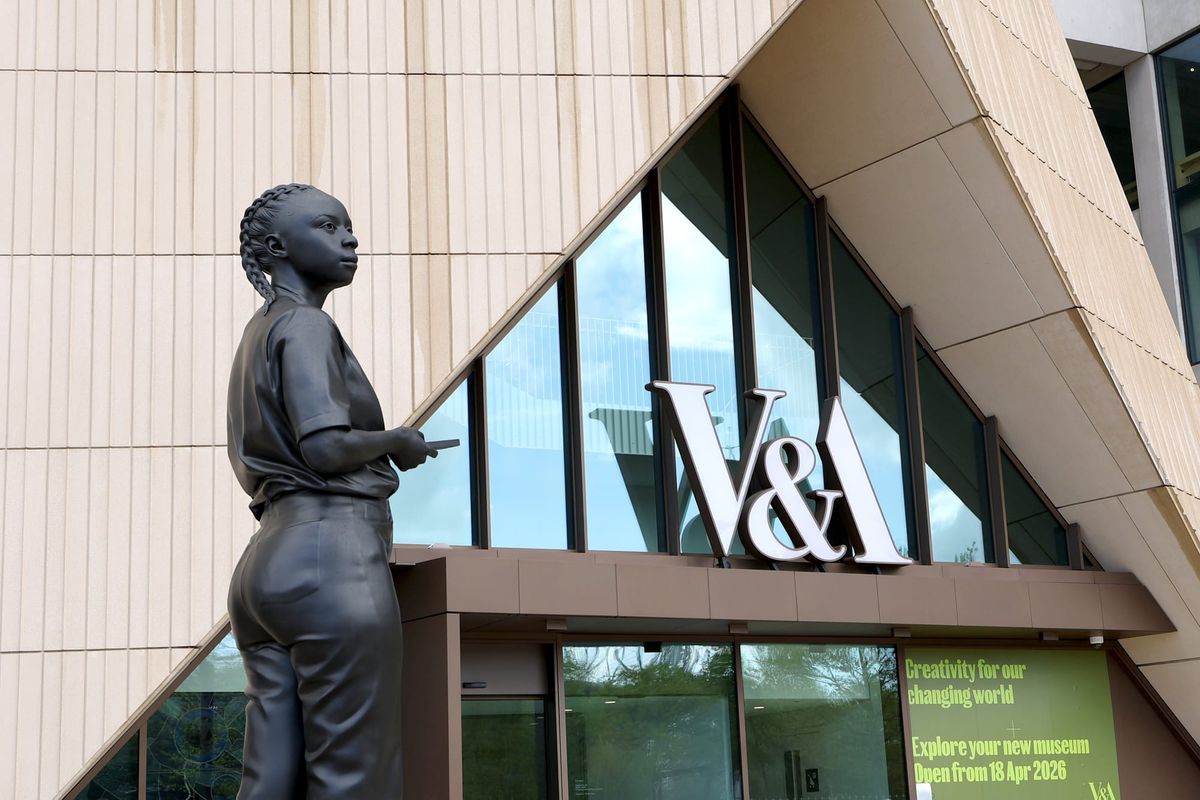
A newly released letter shows that alleged “racist” and “culturally insensitive” conduct played a role in Yuko Kikuchi’s decision to resign in January from her position as head of academic programs at the Victoria and Albert (V&A) Museum in London.
In the January 26 letter, which she shared with The Art Newspaper, Kikuchi said her proposals met resistance, that she felt marginalized as the only person of color among senior staff, and that repeated microaggressions harmed her mental health. Addressed to V&A Director Tristram Hunt and museum research committee trustees, the letter states that there was “a culture of systemic racism within the organisation that … needs to be addressed.”
Kikuchi, a Tokyo-born researcher who has lived in the UK for more than 30 years, founded a research hub dedicated to transnational arts and continues to teach the history of craft and design. But when she joined the museum in 2023, she wrote that “she felt unwelcome from day one.” Her role involved shaping the museum’s educational content and curricula, including undergraduate and postgraduate offerings, as well as collaborative programs such as the history of design MA with the Royal College of Art (RCA).
Drawing on her research into East Asian histories in Britain, Kikuchi proposed adding decolonization material to the MA program in 2024. She told The Art Newspaper that V&A tutors pushed back, recommending that the material be moved to the second term and replaced in the first with a “Eurocentric curriculum.” She also said a senior colleague asked her not to use terms such as “decolonial” and “post-colonial” when speaking with other museum staff.
The V&A’s 2025-2026 annual report says 65% of staff who chose to disclose their racial identity are White. Kikuchi’s letter included the signatures of 12 academics, along with an appendix of student testimonials describing further instances of cultural insensitivity, racial discrimination, and problematic curricula. In a joint statement to Hyperallergic, the V&A and RCA said they are committed to “stand firmly against unlawful discrimination in all its forms, and take any incidents of discrimination or reporting of unsafe learning environments extremely seriously.”
The statement added that both institutions are focused on strengthening the MA program through student engagement and on supporting “a global and inclusive curriculum.” The museum also said it is “actively interrogating its colonial heritage through its public programmes, education initiatives and collections research.” Kikuchi has not responded to Hyperallergic’s request for comment.
According to the letter reviewed by The Art Newspaper, one student said a museum course left out the experiences of enslaved people in its discussion of 18th-century Jamaica and instead centered the feelings of the white population. Another said a lecturer “shut the conversation down” after a question about whether the V&A would consider repatriation of its Maqdala objects.
The Maqdala objects were taken by the British army during the 1868 expedition to Abyssinia, when a number of items were looted from Ethiopia. Several pieces, including a golden crown, precious golden vessels, and cultural garb, have been in the V&A’s collection for more than a century. Repatriation has come up repeatedly in discussions with Hunt, who became director of the V&A in 2017, though he ruled out full restitution of the Maqdala objects a year into his tenure because of the restrictions of the 1983 National Heritage Act.
Hunt has repeatedly criticized that law, calling it “both outdated and infantilizing for trustees of the national museums affected by it.” Just over a year ago, Year 10 schoolchildren from Bristol also alleged inappropriate racial behavior by V&A staff, and a member of the school staff launched a petition calling for a boycott and an apology. The museum says it has taken steps including inclusivity training for staff and the creation of an Equality, Diversity, and Inclusion forum.
Speaking to The Art Newspaper, Kikuchi said the strain of the job and its effects on her mental health, including poor sleep and depressive symptoms, made it clear she could not remain. “I was very, very excited about this job,” she reportedly said. “I really didn’t expect to quit after two years.”