ANTIGUA and GUATEMALA CITY, Guatemala — The fall of 2025 has been a notably eventful period for Guatemala, marked by significant international events including the 12th Central American Games in October, a bid for the 2026 FIFA World Cup, and the inauguration of the 24th Bienal de Arte Paiz in early November. Distinguished as the second-oldest biennial in Latin America, this year’s edition is the most expansive yet, featuring 46 artists—nearly twice the number from 2023—showcased across 10 venues in Antigua and Guatemala City, representing over 15 countries.
This iteration draws on the theme of The World Tree, inspired by the life-giving myth central to various ancient cosmogonies, as curator Eugenio Viola explains in the exhibition catalog. The tree of life holds particular significance in Mayan cosmogony, symbolizing the interconnected nature of existence and the universe’s structure. For Viola, who serves as the artistic director of the Bogotá Museum of Modern Art (MAMBO), this theme embodies the intricate interconnections within society.
During the press preview in Antigua, a focus on site-specific works was evident. At La Nueva Fabrica, a long-time partner of the biennial, the Fundación Paiz para la Educación y la Cultura welcomed attendees, emphasizing its 40-year commitment to fostering education and culture in Guatemala. However, some tension arose over language choice during speeches, which were delivered in English with Spanish translation available via headphones, prompting calls for Spanish to be the primary spoken language given the local context.
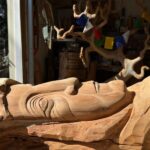
Among the notable artworks, Patricia Belli’s “Multitudes” (2025) stood out with its quilt of used clothing and lace, exploring themes of destruction and renewal. Luz Lizarazo’s mural “Wander” (2025) traveled through the gallery space with depictions of flora and fauna. Balam Soto’s “Kukulkan: An Immersive Mythological Journey” (2025) employed data interactivity to bring Mayan mythology to life, while installations at the Museo Arte Colonial, including works by Gian Maria Tosatti and D Harding, intertwined with pre-Hispanic Mayan artifacts.
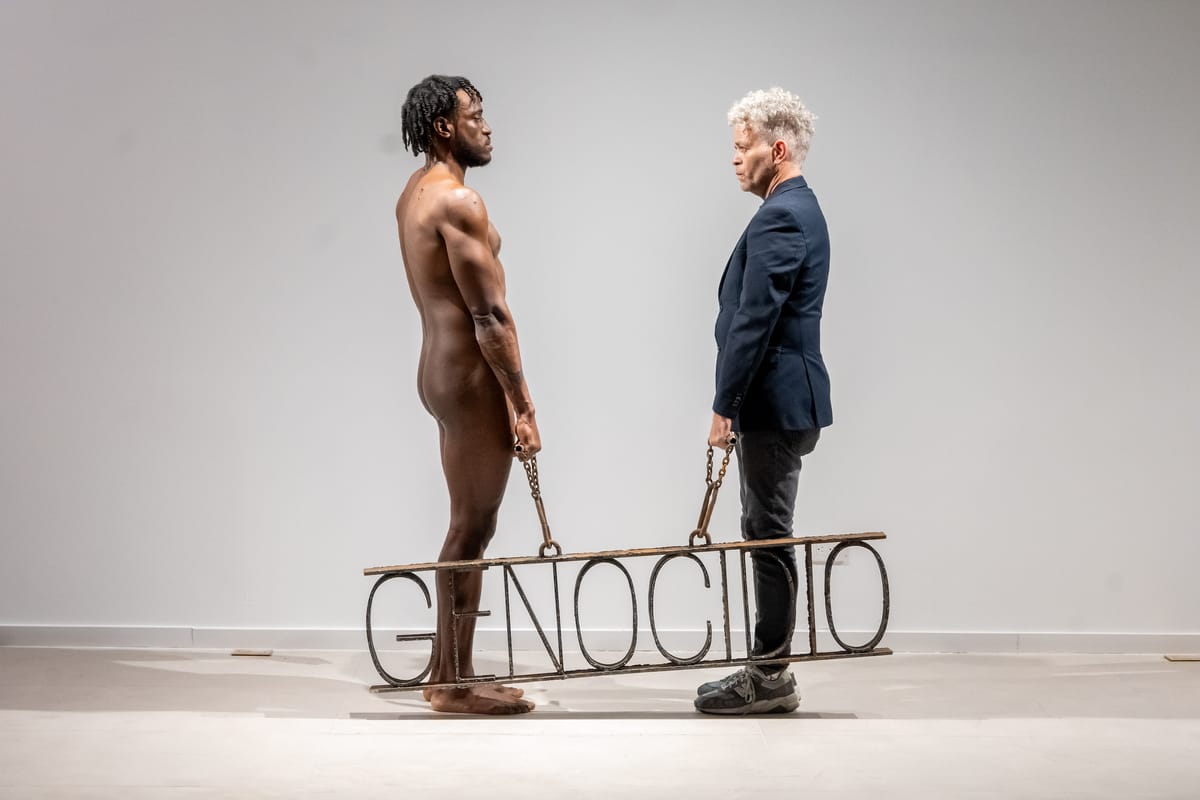
As the biennial continued in Guatemala City, performances and installations emphasized the translation of cultural knowledge into universal expressions. Regina José Galindo’s performance in front of the local courthouse highlighted the plight of José Rubén Zamora, an imprisoned journalist, while Carlos Martiel’s piece at the Fundación Paiz invited reflection on the heavy legacy of genocide. These elements, along with the diverse international participation, underscored the biennial’s theme of interconnectedness, though some critiques were raised about the predominance of English and the limited representation of Guatemalan artists.