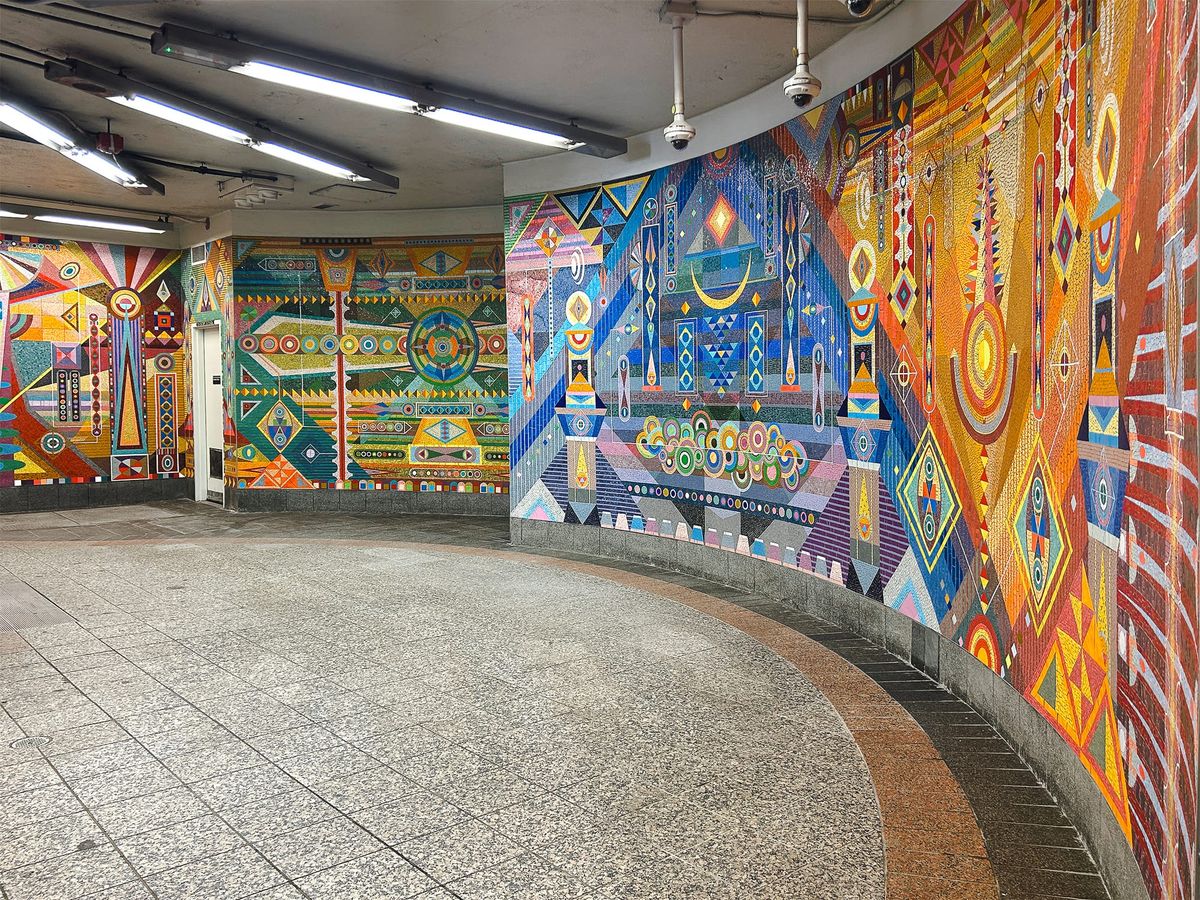
The vibrant glass mosaic titled “Abstract Futures” (2025) now enriches the New York City subway system with its celestial and cosmological themes. Created by the feminist art collective Hilma’s Ghost, this 600-square-foot artwork was installed earlier this month at the 42nd Street entrance to the 7 train in Grand Central Station. It offers a stunning visual experience for commuters as they pass between the turnstiles and escalators.
Commissioned by the Metropolitan Transportation Authority’s (MTA) Arts and Design program, which has integrated over 400 artists’ works into the city’s transit spaces, this mural will be formally celebrated in a dedication ceremony early next month. “Abstract Futures” is composed of three segments that interweave tarot archetypes with heroic narratives, symbolizing the transformative journeys of urban travelers.
The first section begins with “The Fool,” a tarot emblem of new beginnings, rendered in vivid reds, oranges, and pinks. It portrays a daring protagonist on a quest for new adventures. The middle panel, filled with earth tones, depicts the challenges and spiritual growth of the protagonist, anchored by the “Wheel of Fortune” tarot symbol. Near the turnstiles, the final segment illustrates a spiritual awakening beneath a sky of blues and purples, transitioning into a bold sunrise and concluding with abstract tarot wands, indicating the cycle’s recommencement.
Hilma’s Ghost founders, Brooklyn-based artists Sharmistha Ray and Dannielle Tegeder, shared with Hyperallergic that the mural’s creation spanned over two years in collaboration with master mosaic fabricator Stephen Miotto. The mural shares its name with the collective’s initial project, an abstract tarot deck, reflecting their dedication to reinterpreting spiritual and cultural narratives.
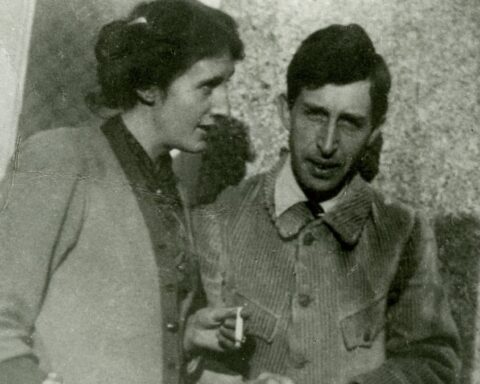
Influenced by Hilma af Klint, a Swedish Theosophist artist, Hilma’s Ghost has undertaken various artistic ventures since its inception in 2020. These include performances, philosophical games, installations, and educational workshops. Ray and Tegeder view their mural as a tribute to New York City’s resilience and a space for inclusivity, connection, and healing.