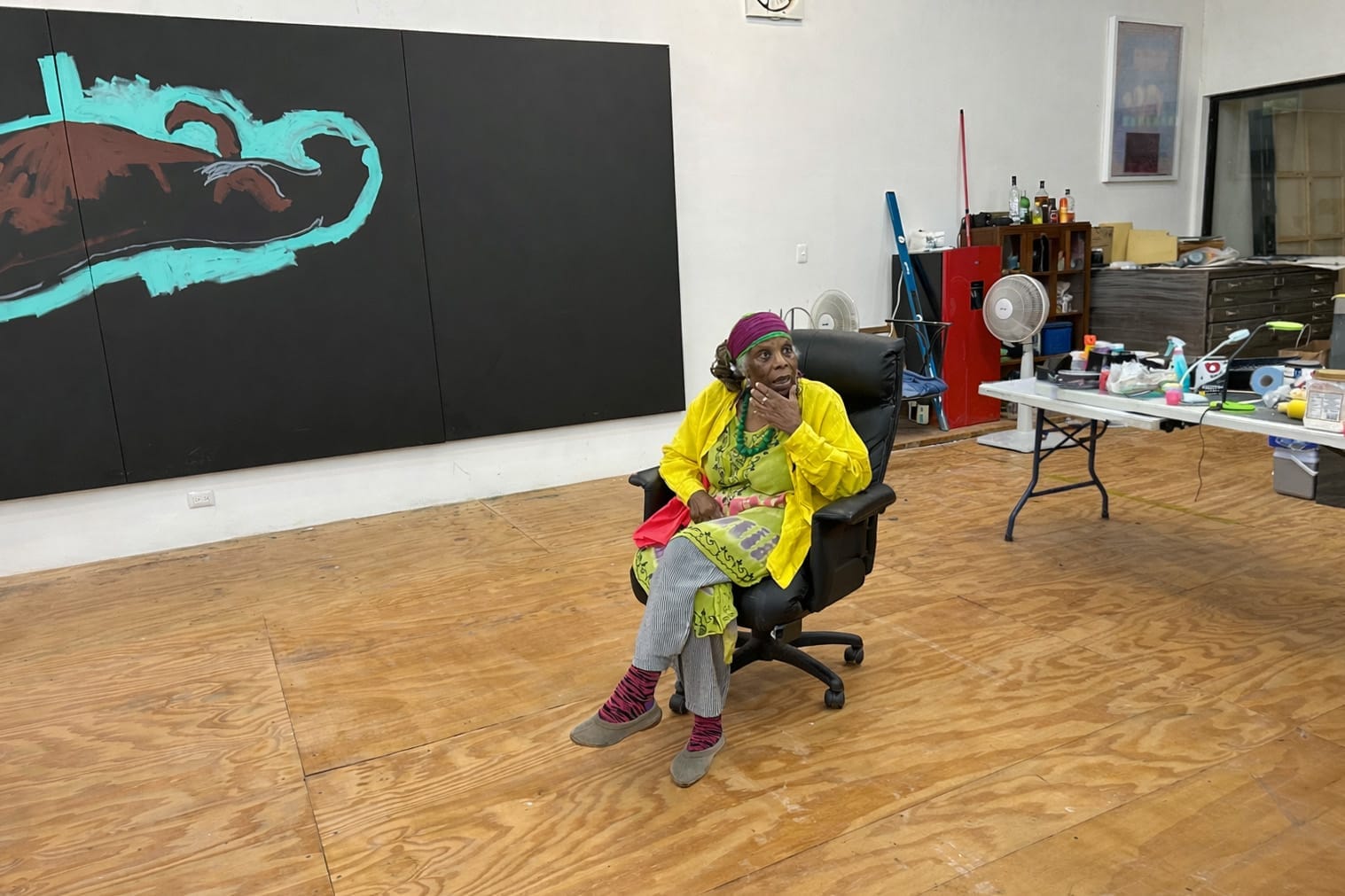
Mary Lovelace O’Neal frequently uses the phrase “I can mark,” a testament to her enduring influence since the late 1960s, both in the art world and the Civil Rights movement. As a founding member of the Nonviolent Action Group at Howard University, she studied alongside luminaries like David Driskel and was mentored by figures such as Malcolm X and Martin Luther King Jr.
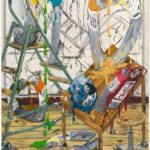
The artist divides her time between Oakland, California, and Mérida, Mexico. During a December phone interview, she shared experiences from her childhood in Jackson, Mississippi, where segregation relegated her to the status of a third-class citizen. Her dynamic paintings serve as powerful statements of her presence in unwelcoming spaces, evident in works like the Lampblack series and the Whales Fucking series.
Born in 1942, Lovelace O’Neal earned her BFA from Howard University and her MFA from Columbia University. Her career includes solo exhibitions at prestigious institutions such as the San Francisco Museum of Modern Art and the Mississippi Museum of Art. Recognized as professor emeritus at the University of California, Berkeley, she is set to exhibit at the Virginia Museum of Fine Arts this year.
Discussing her formative years, O’Neal recalls traveling each summer by train from Pine Bluff, Arkansas, to Chicago, a journey that shielded her from the harsh realities of segregation until crossing the Mason-Dixon line. Her artistic journey continued at Howard University, where she engaged with influential educators and participated actively in the Civil Rights movement.
Reflecting on her time at Columbia University, O’Neal describes the challenges and triumphs she encountered while developing her early black pigment paintings. Her subsequent career in the Bay Area saw her teaching and developing notable series like Whales Fucking, which drew inspiration from personal encounters with nature.