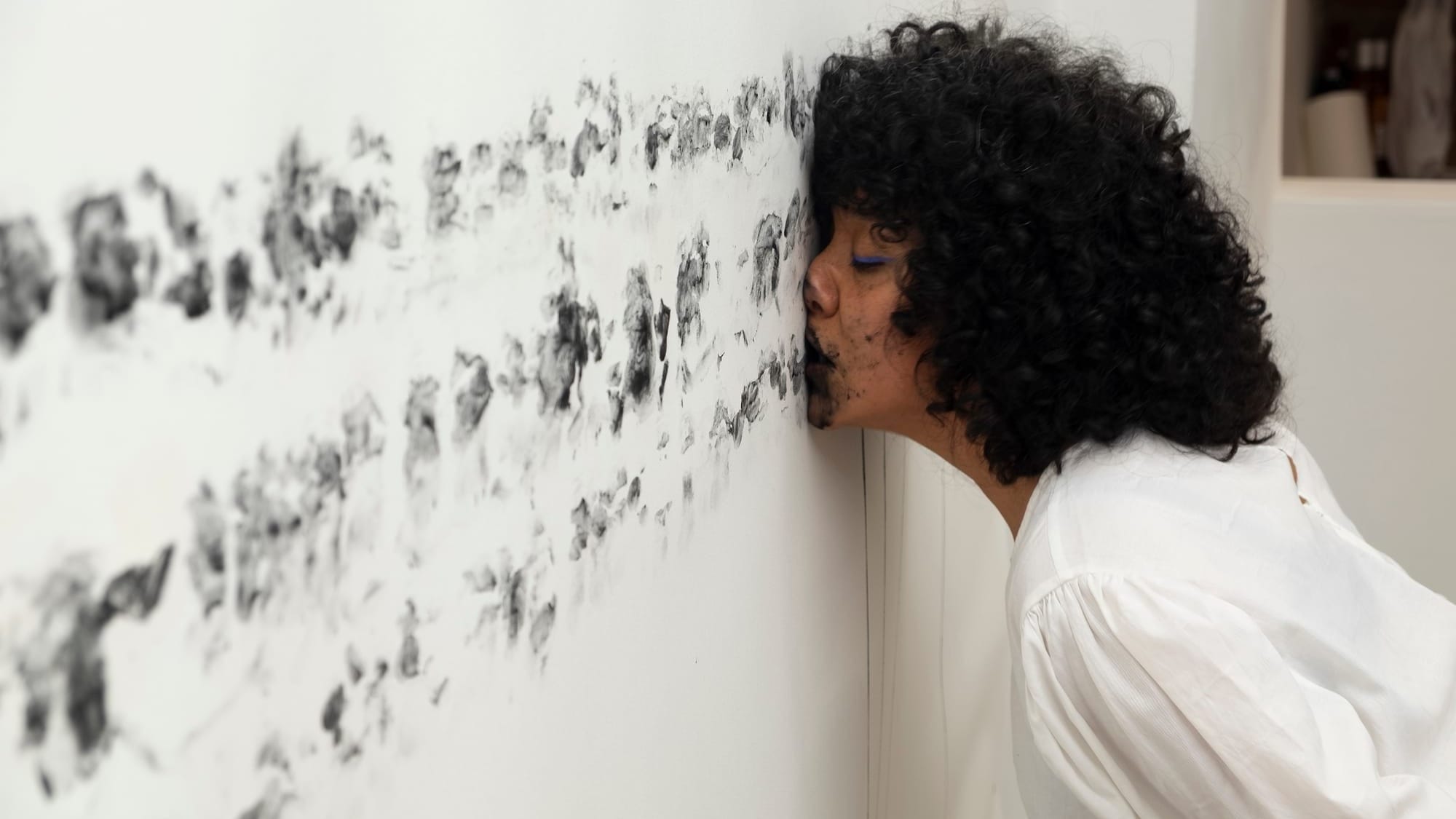
The world urgently needs compassionate and perceptive art educators who are as open to learning as they are to teaching. Mónica Palma, an artist and teacher originally from Mexico and now residing in Brooklyn, exemplifies this ideal. Today, she shares insights gained from her experiences teaching art to young children.
This week, as numerous children at ICE’s distressing Dilley detention center in Texas recount their stories, I am reminded of a clay workshop Palma held for youngsters who had newly arrived from Colombia, Venezuela, and Ecuador. These children linked the clay with their perilous journey through the jungle to the United States. In response, Palma allowed the clay to serve as a medium for them to knead and process their memories. “The children were embodying two narratives: one of a traumatic past and another of fantasy and joy,” she notes.
—Lakshmi Rivera Amin, associate editor
Palma, whose art often delves into themes of language, heritage, and memory through her own bodily expressions, writes, “When I paused to observe how children used their mouths, I was captivated.” She realized that her students expressed and understood their environment through bites, sounds, licks, and tastes in ways that words could not capture. This observation became a principle in her artistic practice: “I carried that sense of intimacy and discovery into my art.”