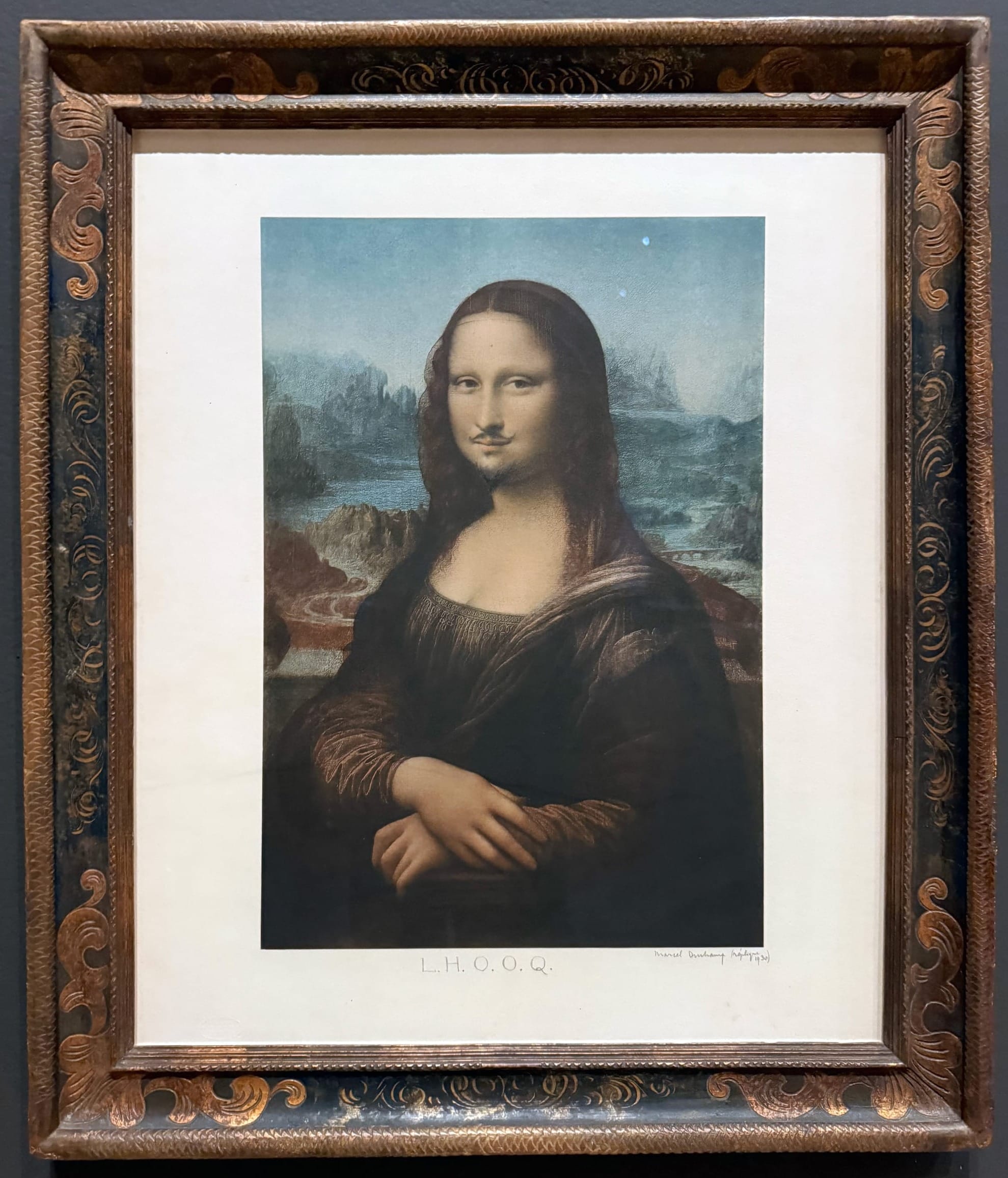
Anyone familiar with introductory art history is aware of Marcel Duchamp. In fact, even those who engage with contemporary art in any form are likely familiar with him, perhaps unknowingly. In 1917, Duchamp, a French-born artist, notoriously turned a urinal upside down, signed it, and declared it art. This singular act is often credited with altering the course of aesthetic history forever. Art was no longer evaluated by skill, craftsmanship, or beauty; instead, it could be anything an artist deemed art. This paved the way for conceptual art, process art, and much more.
This Sunday, April 12, the Museum of Modern Art (MoMA) in New York will present the first comprehensive U.S. exhibition on this intriguing artist in over five decades. Duchamp is known as a craftsman, appropriator, trickster, and perhaps, in contemporary terms, a troll. I recently spoke via Zoom with Belgian critic and scholar Thierry de Duve, who has explored the contradictions in Duchamp’s work for half a century. De Duve, who has edited and authored numerous books on Duchamp, including ‘The Definitively Unfinished Marcel Duchamp’ (1991), shared insights during our conversation, lightly edited for clarity.
Hyperallergic: As an expert on Duchamp, what captivates you about him? Thierry de Duve: By conventional standards, I am indeed a Duchamp expert. Interestingly, I never considered myself a fan of Duchamp. I believed I was done with him, perhaps bored. However, the MoMA exhibition reignited my admiration. Since discovering Duchamp in the 1970s, I’ve had mixed feelings. His work is esoteric and deliberately mystifying, which I don’t particularly like. Yet, his extraordinary intellect and contradictions have always fascinated me.
H: Did you appreciate the painting segment of the exhibition? TD: No, the painting section is the weakest, though still intriguing. Duchamp may not be the greatest artist of the century, but he could be the most intelligent. His early paintings reveal he wasn’t a great painter, unlike contemporaries like Matisse and Picasso. Yet, Duchamp had the foresight to realize this and evolved into a great artist, despite lacking painting prowess. This aspect makes him fascinating in our so-called post-medium era.
H: Does his work hold more interest in this ‘post-medium era’? TD: That’s a lengthy discussion, which is the focus of my book, ‘Duchamp’s Telegram’ (2023). ‘Post-medium art’ isn’t my term; I use ‘art-in-general’ system. My thesis is Duchamp didn’t create or author the transition from the old to the new art-in-general system. He was merely the messenger for a change that began before his time. The art world transformed in the 1880s, not the 1960s. Duchamp’s ‘Fountain’ conveyed the message that art no longer required a traditional medium. This message took time to be fully understood, reaching prominence in the 1960s with Pop, Conceptual, and Minimalist artists.