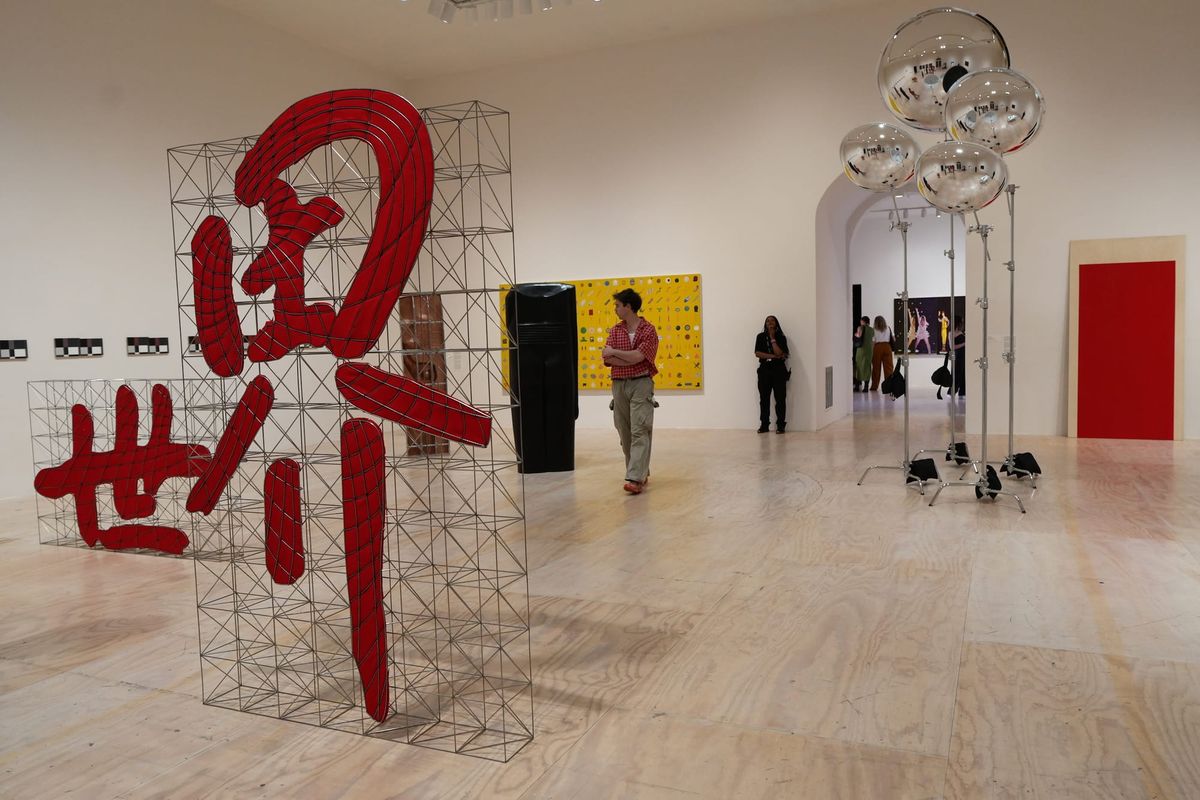
On an unexpectedly warm spring day, a group of us visited MoMA PS1 in Queens for the press preview of the latest iteration of Greater New York, which begins today, April 16. This exhibition showcases artists living and creating in New York City and marks its sixth occurrence since 2000, coinciding with the museum’s 50th anniversary. Featuring the work of over 50 artists in what the museum describes as the ‘formative years of their career,’ it provides a glimpse into not only their personal journeys but also the ever-evolving nature of the city amidst a backdrop of uncertainty and cautious optimism.
Hrag Vartanian, editor-at-large, remarked on how the curators have captured the authentic energy of New York City—eschewing the polished veneer in favor of a more raw, dynamic portrayal. The show presents a city that is at once messy, beautiful, and intense, a reflection of the myriad experiences it offers. He noted the success of the exhibition could be attributed to the in-house curation by Connie Butler, Ruba Katrib, and their team, who demonstrated a deep connection to the city they inhabit.
Vartanian appreciated the diversity and depth of the works displayed, finding inspiration in their ability to challenge conventional perspectives on art. While the show was strong in photography, it was less so in painting. The multicultural essence of the exhibition resonated with the city’s identity, surpassing the more conventional approach seen in the Whitney Biennial. The unique immigrant and migrant influences were especially impactful, offering a fresh narrative that transcends simple assimilation.
Lisa Yin Zhang, associate editor, initially found herself captivated by the exhibition, despite noticing some minor flaws upon reflection. She valued the emotional range and authenticity the show captured, contrasting it with the more sterile feel of other exhibitions like the Whitney Biennial. Zhang appreciated the vivid depiction of life in New York, particularly through the lens of immigrant experiences, and enjoyed the unconventional pieces that seemed driven by genuine creativity rather than critical expectation.
Rhea Nayyar, staff writer, felt a grounded optimism throughout the exhibition that kept her engaged beyond her usual routine. The show successfully encapsulated the intersection of visual, historical, and cultural elements that define New York life. However, she noted the lack of directional signage, which led to missing parts of the exhibition. Despite this, Nayyar embraced the opportunity to explore unfamiliar aspects of the city, a reminder to delve deeper into the rich tapestry of her hometown.