I recall the dance floor for its ability to inspire imagination. Within the swirling lights and deep beats, we created new worlds, mourned our losses, and envisioned what could come. As a curator, I see raving as a transformative method of creating worlds, extending beyond warehouses and into museums. Often dismissed as frivolous, dance floors have been more than just spaces of escape. In the anthology “Writing on Raving” (2025), McKenzie Wark and Destiny Brundidge argue that collective dancing transcends mere leisure. Rhythmic movement dissolves hierarchies, with bass and rhythm affecting both space and perception, allowing us to imagine different social orders.
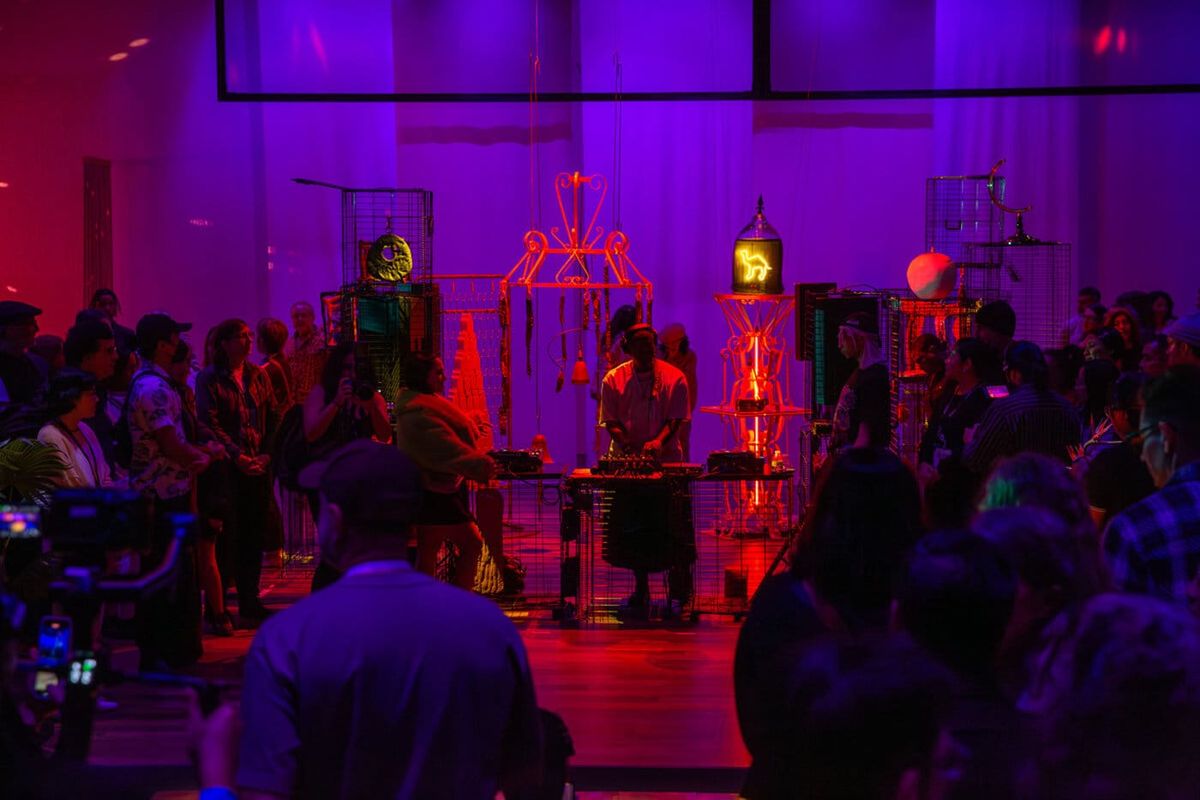
Museums are beginning to acknowledge the significance of dance floors. At Dia Beacon in 2024, Steve McQueen used bass and light to reshape perception. “Elements of Vogue” at Centro de Arte Dos de Mayo in 2018 emphasized voguing as an embodied knowledge from marginalized communities. The Swiss National Museum’s “Techno” in 2025 explored techno culture as heritage. That year, I curated “Rave into the Future: Art in Motion” at the Asian Art Museum in San Francisco, featuring artists from the West Asian and North African diaspora. These projects highlight an institutional shift toward embracing nightlife and sound as significant cultural elements.
Rave culture is not just about heritage or formal experimentation; it represents a diasporic counterpublic. In communities influenced by displacement, sound bridges borders and eras, providing a temporary sense of belonging. Mainstream art history has often simplified complex narratives, especially regarding West Asia and North Africa. Centering on joy and resilience, as seen in “Rave into the Future,” challenges these reductive narratives by emphasizing complexity and resonance.
The exhibition featured Joe Namy’s copper dance floor, which recorded collective rather than individual presence, and Yasmine Nasser Diaz’s “For Your Eyes Only,” which transformed bedrooms into dance floors, bridging intimacy and resistance. Meriem Bennani envisioned a speculative refugee island with teleportation and perpetual parties, while mentalKLINIK’s installation symbolized persistence through endless glitter redistribution. These works illustrated insurgent and collective joy, challenging any singular narrative of rave culture.
The exhibition evolved through live activations, testing the museum’s flexibility. Events like daytime disco sessions and conversations about decolonizing the dance floor expanded the notion of who could experience collective joy. This raised important questions about whether museums can truly host intergenerational and diasporic gatherings without diluting them. The fear of glitter’s uncontrollable nature underscored museums’ discomfort with exhibiting joy that defies clear boundaries. The challenge remains whether museums can learn from raves, embracing collective joy and allowing vibrations to reshape their spaces.