TORRANCE, Calif. — Art possesses the power to astonish, comfort, offer respite, ignite the imagination, and provide insight into another’s inner world. It can challenge deeply rooted beliefs and critique entrenched societal norms. At the FOG Design+Art event, I encountered artworks that were thought-provoking and unconventional, yet overwhelmingly affirming of human creativity and beauty. That same day, a man was fatally shot by two border patrol agents while aiding a woman who had been pushed down. This tragic event made it difficult to concentrate on anything else, and it felt irresponsible to ignore it. In this mindset, I visited the Torrance Art Museum to view ‘DEFENDING ETHICAL INTEGRITY (D.E.I.): The New Degenerate Art,’ encountering works that demanded engagement and defied inattention.
As I entered the gallery, the chants of protesters filled the space, featuring phrases like ‘Say it loud, say it clear, immigrants are welcome here’ and ‘no aceptaremos una América racista’ (we will not accept a racist America) from Elana Mann’s video piece ‘Call to Arms’ (2015–25). Beside the video, an arm-shaped acoustic sculpture with a pierced palm allowed sound to travel through, amplifying voices and resisting silencing. This was part of a collective sculpture, ‘Con Nuestros Manos Construimos Deidades (With Our Hands We Build Deities)’ (2023), by Art Made Between Opposite Sides (AMBOS), featuring ceramic hands and embroidered patches with messages like ‘I am choosing to believe the future can be beautiful’ and ‘Abolish ICE,’ which led to its removal from Pepperdine’s exhibition ‘Hold My Hand in Yours’ for being deemed too political for the campus.
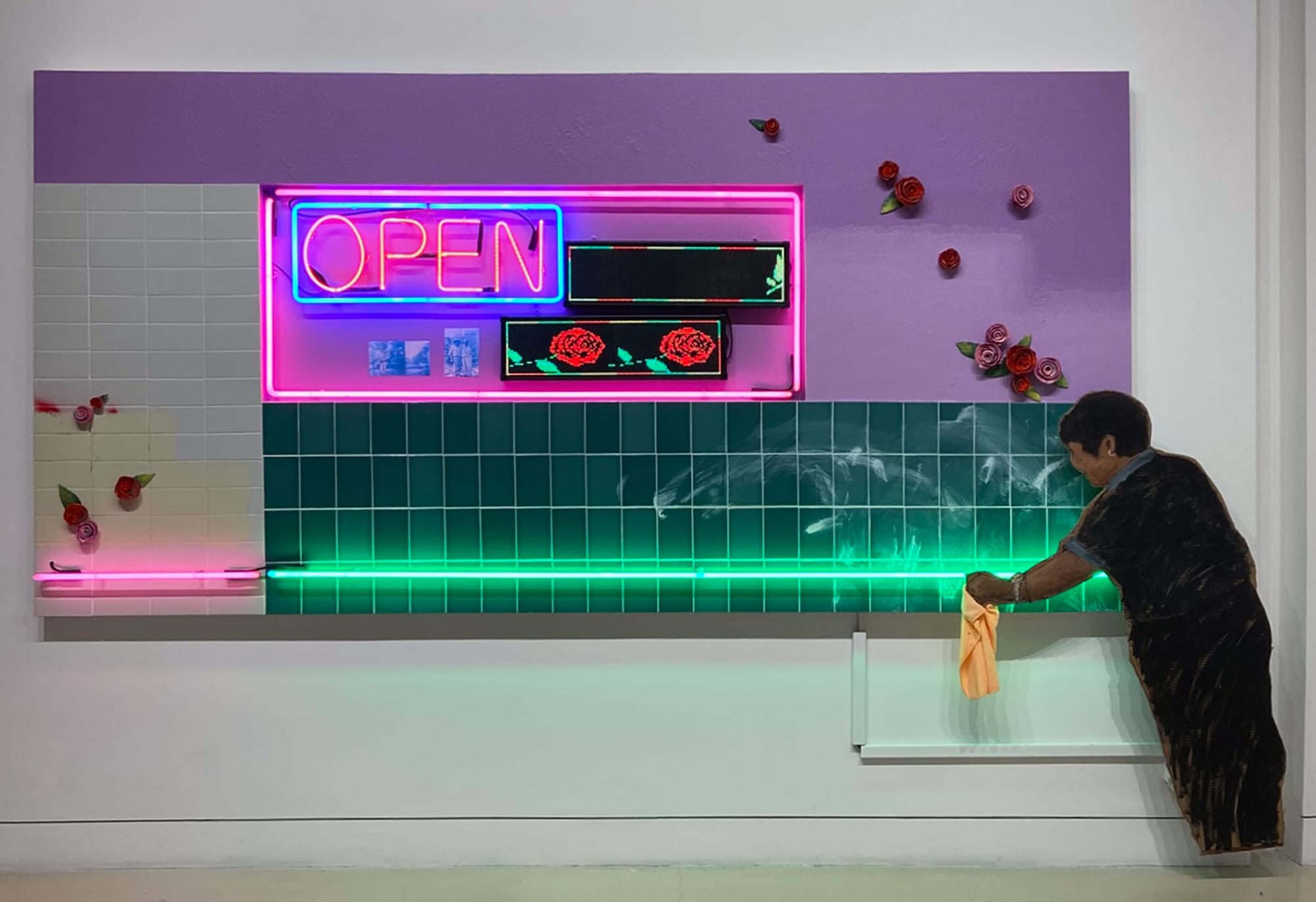
The artworks, potentially labeled as ‘degenerate’ by the Nazi Party’s 1937 ‘Entartete Kunst’ (Degenerate Art) exhibition, reclaim the term as a stance of ethical defiance against neutrality and institutional comfort that enables violence and bigotry. Polly Borland’s sculptures, depicting bodies once considered ‘unfit’ by fascism, and Patrick Martinez and Jay Lynn Gomez’s ‘Labor of Love’ (2022), which honors unseen laborers, challenge societal norms. Hugo Crosthwaite’s stop-motion film ‘A HOME FOR THE BRAVE’ (2020) powerfully confronts state violence, depicting migrants as targets of brutality, while Laurie Lipton’s detailed charcoal drawing ‘POST TRUTH’ (2017) critiques the media-driven political machine surrounding President Trump.
Steven Wolkoff’s installation of medicinal vials labeled with titles of books banned by Defense Secretary Pete Hegseth from the United States Naval Academy Nimitz Library reflects on the loss of diverse narratives. Books like ‘Gender Queer’ (2019) by Maia Kobabe and ‘I Know Why the Caged Bird Sings’ (1969) by Maya Angelou were burned and encapsulated as a commentary on censorship. This installation invites contemplation on the transformative potential of empathy and understanding, questioning whether experiencing another’s perspective could change the world.
In the words of Maya Angelou, ‘the quality of strength lined with tenderness is an unbeatable combination.’ Engaging with these artworks means feeling their intensity and passion, rendering silence impossible in the face of their profound messages.