Eugène Atget has been a significant influence in photography for nearly a century, yet his work risks being perceived as outdated. The International Center of Photography’s exhibition, ‘Eugène Atget: The Making of a Reputation,’ promised fresh insights into his career, sparking curiosity. However, the exhibition largely reiterates the familiar narrative of Atget’s rescue from obscurity by Berenice Abbott, who preserved and propagated his evocative images of Paris. The exhibition’s most distinct feature might be its aesthetic choice of dark red walls and gold text, a nod to grandiose galleries of the past.
Despite the title, ‘The Making of a Reputation,’ Atget’s acclaim is presented as pre-established. The exhibition offers little explanatory text but is adorned with high praise from Atget’s contemporaries. Described as an artist of great courage and mastery, Atget’s story of humble beginnings and late discovery of photography as a career is overshadowed by accolades. These embellishments obscure the narrative of Atget as an orphan and struggling artist who only turned to photography in his mid-30s, making his later recognition seem almost serendipitous.
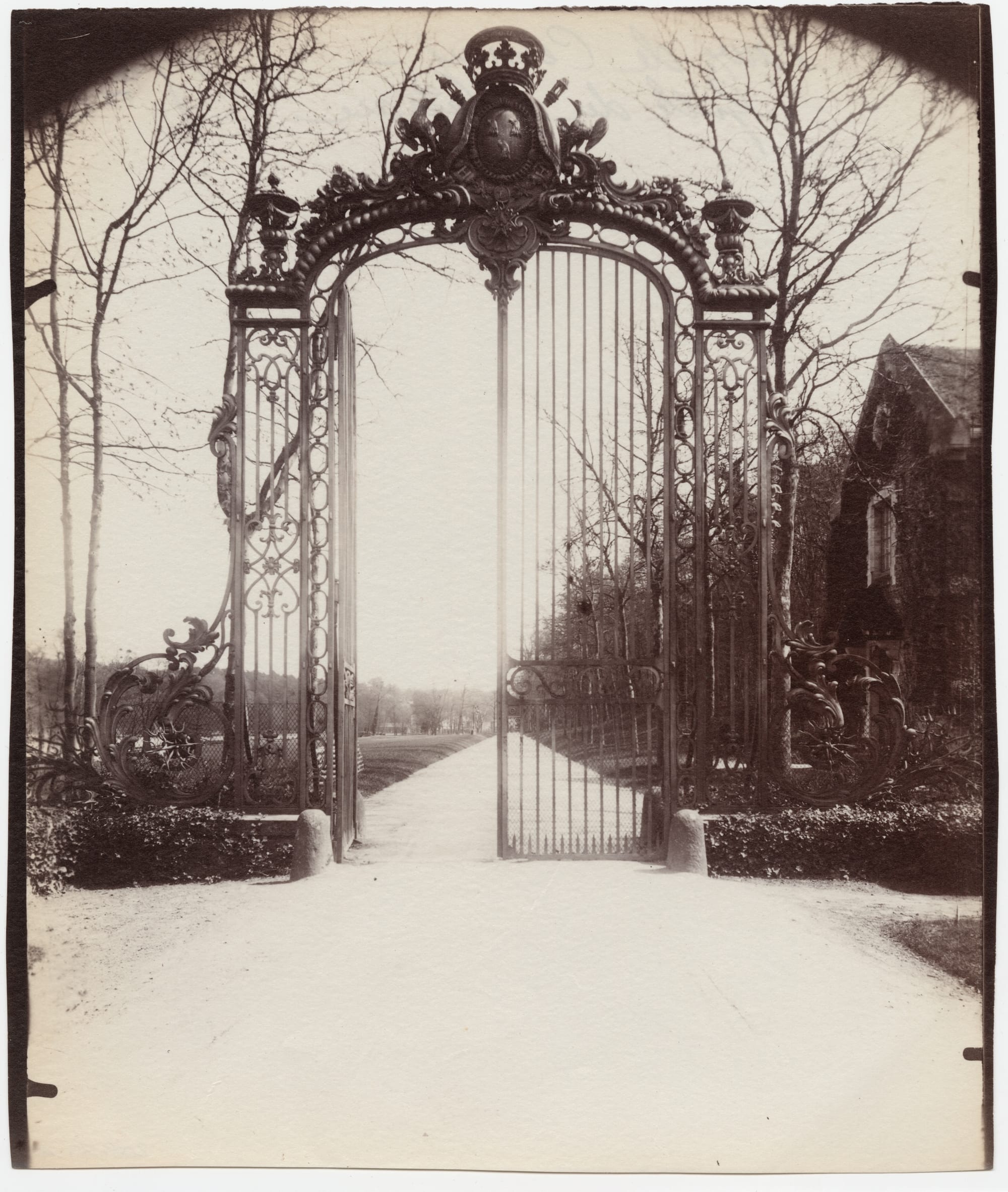
Despite the exhibition’s predictable approach, it remains a captivating experience. The exquisite prints draw viewers in with their intricate details, reminiscent of miniature dioramas. Photographs such as ‘Pontoise, Place du Grand Martroy’ (1902) offer a tactile pleasure, inviting viewers to explore their depths. Atget captured the vanishing essence of old Paris, a city depicted in his images as cluttered and Dickensian, recorded in the early morning hours devoid of people. His work evokes a haunting presence, like in ‘Trianon’ (1926), where the absence of figures adds a spectral quality.
Although Atget never considered his work artistic, marketing them as ‘documents for artists,’ Berenice Abbott posthumously transformed him into an artist, influenced by her connections in Surrealist circles. Their portraits in the exhibition highlight their shared yet distinct perspectives, with Atget’s classic pose contrasting Abbott’s modernist angle. This juxtaposition raises questions about the origins of the allure in Atget’s photographs—are they rooted in his vision or Abbott’s curatorial influence?
As we ponder the transformation of images across time, the exhibition makes us question the very nature of artistic legacy. Can the alienation from original contexts, much like Duchamp’s readymades, reinvent a work into a contemporary masterpiece? These reflections linger as we leave the exhibition, realizing that the promise of novelty matters less than the opportunity to engage with Atget’s enduring imagery.