Last autumn, I attended an engaging double documentary screening at Welcome to Chinatown featuring Christopher Radcliff’s 15-minute short, “We Were the Scenery” (2025), and Elizabeth Ai’s “New Wave: Rebellion and Reinvention in the Vietnamese Diaspora” (2024). The event attracted a full house, aided by local downtown eateries providing dinner. Over the past two years, these documentaries have garnered significant critical acclaim, with “We Were the Scenery” securing the Short Film Jury Prize in Nonfiction at Sundance and a Special Jury Prize for Documentary Short at the Los Angeles Asian Pacific Film Festival, and it even received an Oscar nomination. Meanwhile, “New Wave” was recognized as an official selection at the 2024 Tribeca Film Festival, earning a jury mention for Best New Documentary Director, and was featured in the Viet Film Fest.
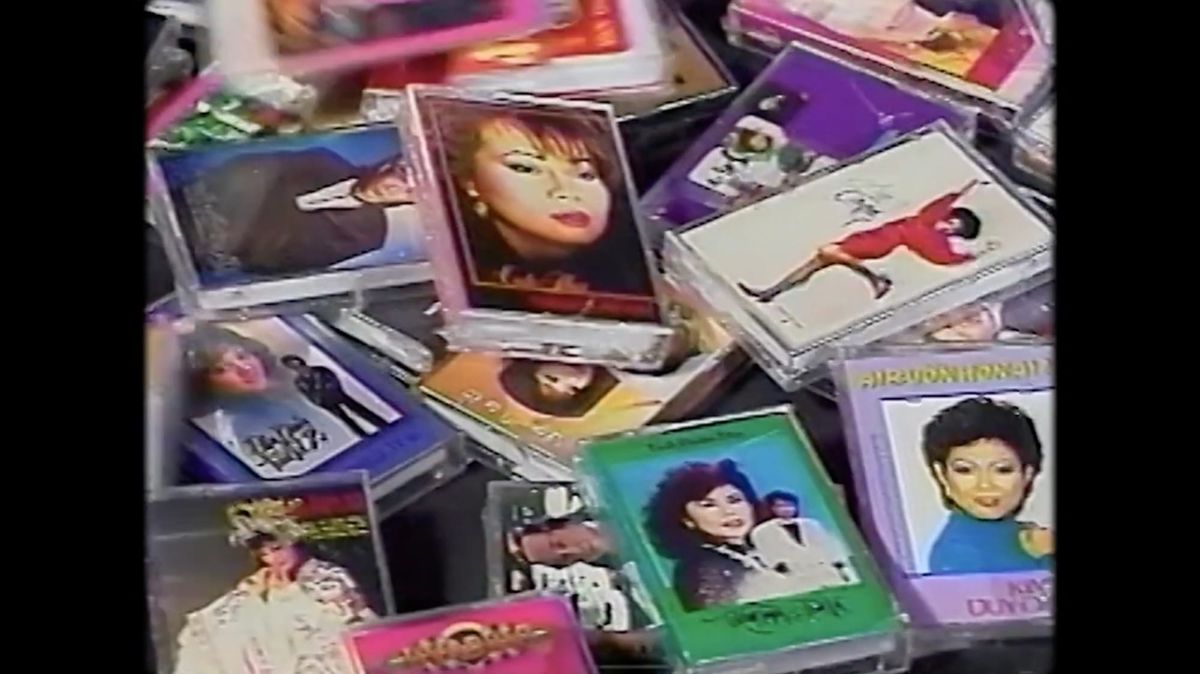
Radcliff’s film delves into the lives of Cathy Linh Che’s parents, Vietnam War refugees who unexpectedly became extras in Francis Ford Coppola’s “Apocalypse Now.” Instead of revisiting the themes of Joseph Conrad’s “Heart of Darkness,” the focus shifts to the personal memories of these individuals, whose wartime experiences were relegated to the background. Ai’s documentary explores the vibrant California Vietnamese New Wave of the 1980s and ’90s, characterized by Euro disco and synth pop influences. The film centers on Ai’s personal connection to this subculture and features Lynda Trang Đài, a pioneering figure in Vietnamese-American music.
While these films are successful in their storytelling, my concern arose during the post-screening discussion. The conversation predictably turned towards “archival practice,” a term that frequently surfaces in art circles. Archives, though valuable for historical recovery and cultural understanding, often become over-romanticized as limitless sources of liberatory politics. This discourse tends to emphasize presence over action, a limitation in representational politics.
One potent example of how archives can engage with political discourse is Titus Kaphar’s painting for Time magazine during the Black Lives Matter movement, which uses art to demand social change. Similarly, the “Kho Tàng Nhạc Vàng” exhibition in Seattle, curated by Thanh Tân, showcases pre-1975 South Vietnamese music, offering a powerful political statement through its very existence. Although “New Wave” and “We Were the Scenery” contribute to the diasporic archive, the challenge is to ensure that accompanying discussions do more than merely highlight their significance.
Salma Mousa, in her reflections on archival memories in Dazed, cautions against historicizing struggles prematurely. This notion resonates with the Vietnamese diaspora’s narrative. Not everything needs to be archived, and if our response to hyperconsumption is to create more for an imagined future archive, we might miss critical engagement opportunities. The true radical potential of art is undermined when we rely solely on archival reflexes, which may ultimately fail to capture our identity.