AMSTERDAM — Upon entering a compact gallery in the Rijksmuseum, visitors are met with a vivid depiction of creation’s chaos. In Louis Finson’s painting, “The Four Elements” (1611), four nude figures are caught in a swirling motion, struggling against an empty backdrop. A mature man strains to keep the group intact, while a younger man, entangled with a distressed woman, grapples with flailing limbs. Nearby, another woman appears to scream, encapsulating the tumultuous beauty of Western mythological foundations.
This striking artwork is part of the Metamorphoses exhibition at Rijksmuseum, named after Ovid’s famous poem. Promoted as a major event, the exhibition merges Renaissance masterpieces with ancient and modern art, using Ovid’s tales as a lens to explore themes of creation, desire, and transformation. Curators have carefully organized pieces by the myths they portray, resulting in a show that delves into transformation, desire, and gender, offering more than mere visual indulgence.
The exhibition underscores the tension between continual change and a predetermined world, a theme central to Ovid’s work. In a small gallery focused on myths of chaos and creation, Finson’s painting hangs alongside Constantin Brâncuși’s “Promethee (Prometheus)” (1911) and Ana Mendieta’s “Birth (Gunpowder Works)” (1981), each piece contributing to a narrative of transformation and indeterminacy. The beauty of change and the horror of unending transformation play out across these works.
Subsequent galleries highlight metamorphoses born of troubling origins, often involving women transformed not by their own actions but by divine jealousy or violence. Artworks present bodies violated by non-human forces, illustrating the inescapable power dynamics. Pieces like Michelangelo’s “Leda and the Swan” and Correggio’s “Jupiter and Io” depict these tales with an erotic lens, while Juul Kraijer’s “Untitled” works against this voyeurism.
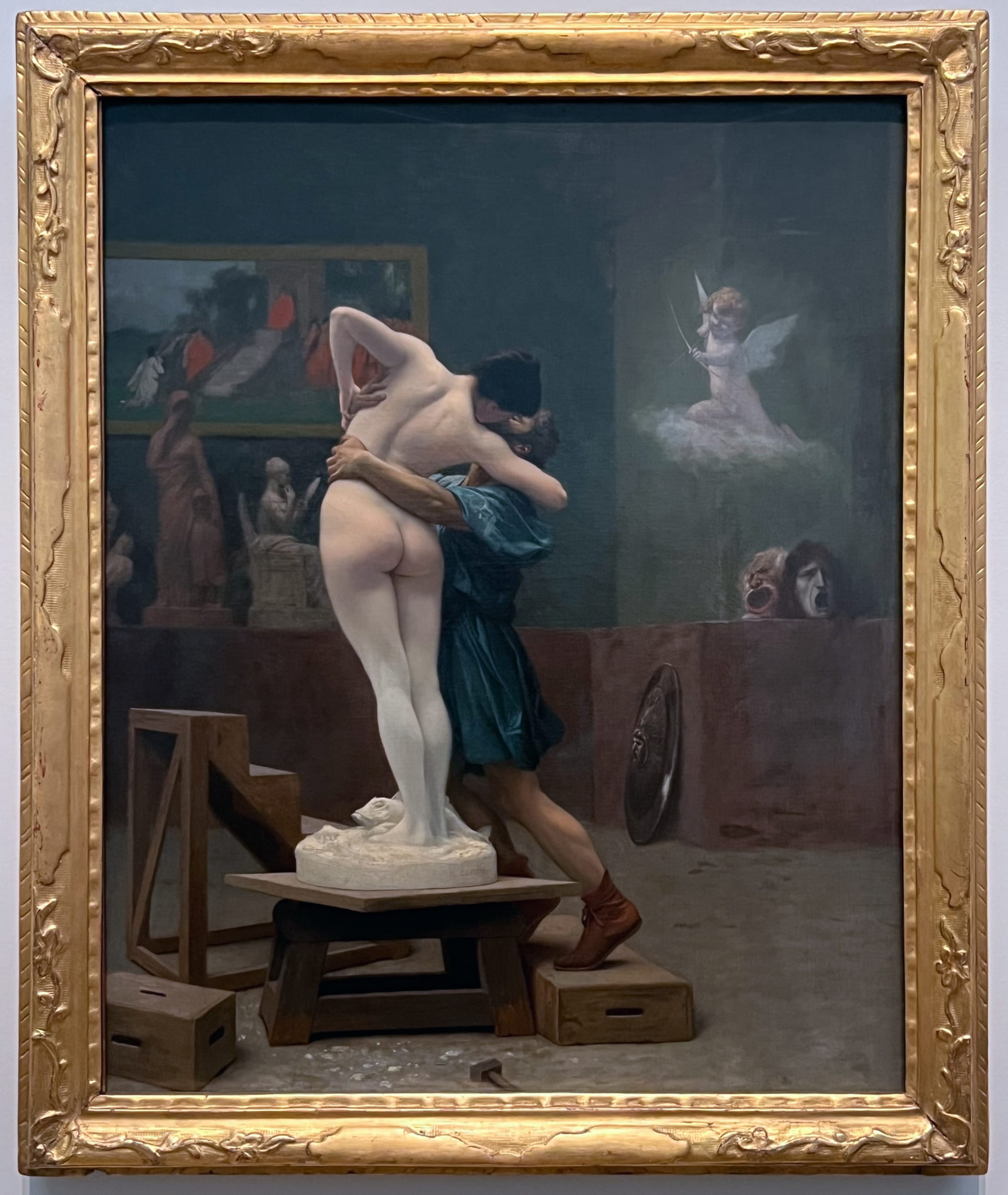
While the exhibition attempts to address contemporary gender understandings, it does so superficially. Ulay’s self-portraits in “S’he | Dreaming of Self-Impression” explore gender expression but are placed in a gallery that skirts deeper discussions of queerness. The standout piece, Bernini’s “Sleeping Hermaphroditus” (1620), is isolated in a darkened space, missing the opportunity to engage with modern intersex experiences. Despite its captivating imagery, the exhibition prioritizes blockbuster appeal over profound analysis, drawing crowds with works by Caravaggio, Titian, and Gérôme.