About 12 years ago, I found myself working at the same time on two essays about two of the most important artists of the 20th century, and nearly exact contemporaries: Simone Forti (born in Italy in 1935) and Yoko Ono (born in Japan in 1933). Though only two years apart in age, they shared much more than a generation. Both were transcultural migrants whose early lives were marked by the hardships of fascism and war.
Each also faced discrimination in different forms. Forti’s Jewish family left Italy because of Mussolini’s Racial Laws, while Ono was — and remains — alternately exoticized and vilified as an Asian woman. As innovators working across disciplines, both pushed beyond conventional limits in sound, drawing, poetry, participation, movement, new media, and sculpture. Both also repeatedly used touch as a means of connection, and both brought everyday objects into their work as vivid collaborators.
Their art often carried a playful disregard for bodily propriety, from Forti’s seething mound of limbs in Huddle (1961) to Ono’s satirical 1971 Museum of Modern (F)Art. Ono transformed the fields of art and music through works such as her conceptual instruction paintings, while Forti’s pieces involving captive animals — the subject of my 2015 essay “Simone Forti Goes to the Zoo” — similarly changed ideas about how bodies can and should move.
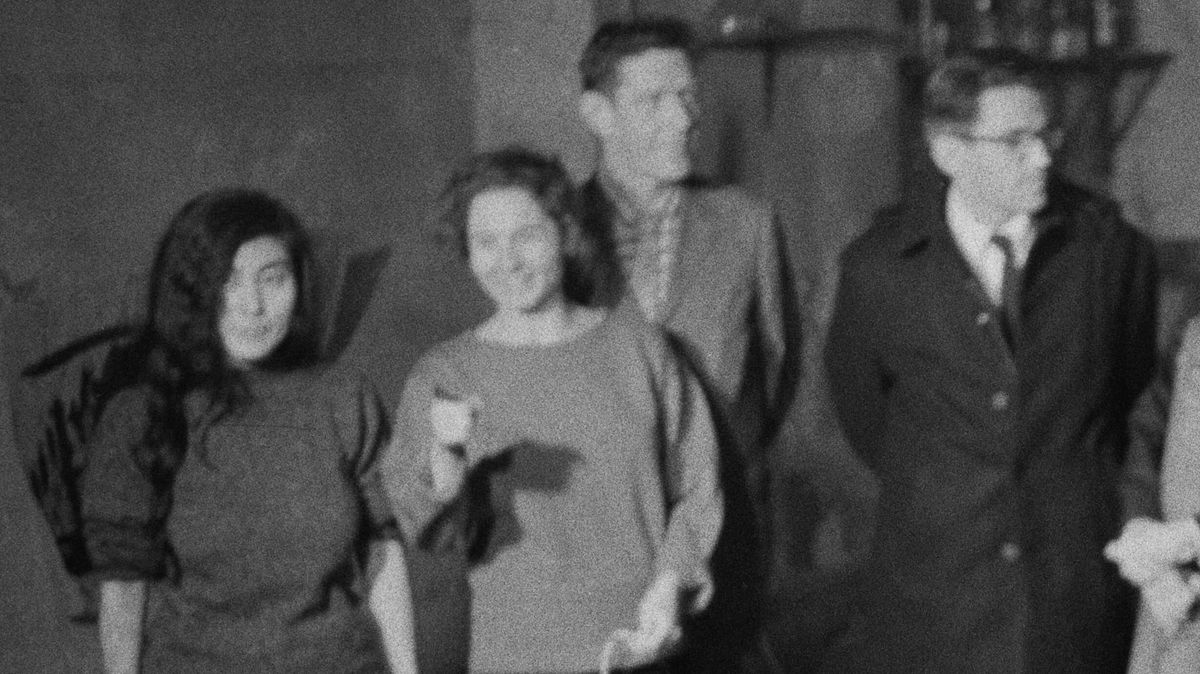
I had long been curious about Ono’s 1961 screaming piece dedicated to Simone, “Voice Piece for Soprano, to Simone Morris” (Forti was then married to Robert Morris). At the time, no one had yet asked Forti about her response to it, or about her encounters with Ono in the 1960s and after. There is photo documentation of the two standing together in Ono’s legendary Chambers Street Loft, with John Cage in the background, perhaps in conversation, and Forti’s Five Dance Constructions and Some Other Things premiered in Ono’s loft that same year.
So in 2014, along with asking Forti to perform her delightful elephant walk, I asked her directly. She admitted that her memory was not always perfect, but her recollections remain meaningful. In honor of Forti’s death last week at 91, which has inspired a wave of admiration for her decades of innovation, I have retrieved this never-before-published exchange from my archives.
Julia Bryan-Wilson: When did you first meet Yoko Ono? What were some of your initial impressions of her?
Simone Forti: I must have started hearing Yoko’s name around 1960. I knew that she was married to Toshi Ichiyanagi and that they both were doing interesting work in the larger artistic community that I shared with La Monte Young.