In the fall of 2022, Max and I ascended the renowned steps of New York City’s Metropolitan Museum of Art to explore Chroma: Ancient Sculpture in Color. As the son of a professional classicist, Max was already familiar with the history of painted statues, setting him apart from most visitors. As we navigated the exhibit, observing the vibrant reconstructions of ancient works, we noticed parents and children equally captivated but reacting differently. Adults often appeared shocked or skeptical, while children seemed more open and inquisitive.
A woman remarked, “It looks so, well, tacky,” and a suited man doubted the authenticity, saying, “They could not possibly have been this gauche.” Yet, young visitors, unburdened by preconceived notions of classical art, displayed curiosity. While Max and I admired the vividness of the Quirinal Boxer and a painted archer, many adults seemed to mourn their prior understanding of history in light of these revelations.
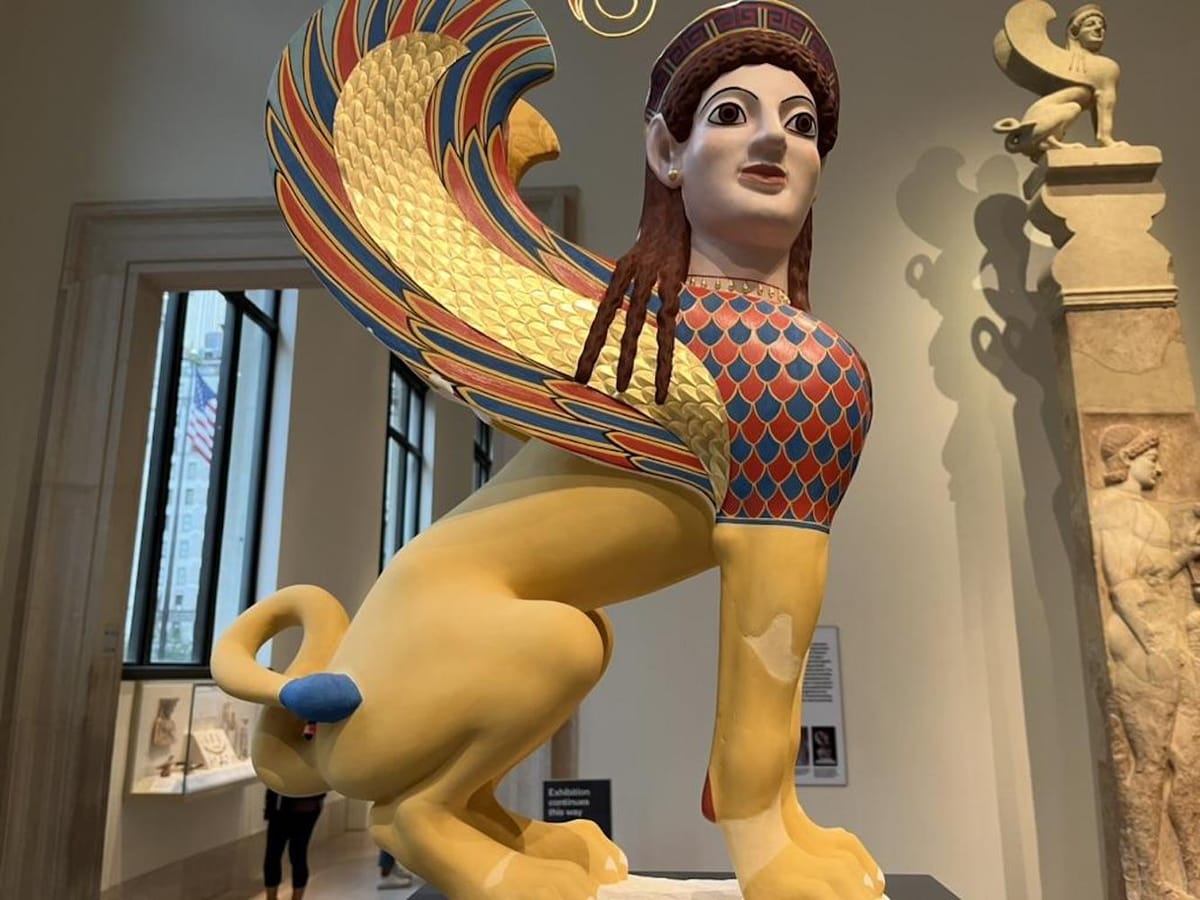
The Chroma exhibition, which took place from summer 2022 to spring 2023 at The Met, delved into the polychromy remnants on ancient artworks, showcasing the work of Vinzenz Brinkmann and Ulrike Koch-Brinkmann in reconstructing Greco-Roman art. The exhibition also featured the newly restored Archaic-era Sphinx finial, a collaboration between Liebieghaus in Germany and The Met. Chroma: Sculpture in Color from Antiquity to Today offers a comprehensive analysis of the exhibition, enhanced by color illustrations and contributions from 38 scholars across 23 chapters.
A scholarly symposium in March 2023 laid the groundwork for Chroma. Met curators Séan Hemingway and Sarah Lepinski introduced the exhibition, discussing the discovery and reconstruction of ancient polychromy and its historical journey from antiquity to the Renaissance. The book’s chapters balance technical details with broader accessibility, exploring scientific methods like 3D imaging and X-ray fluorescence spectroscopy (XRF) to recover polychromy. The Brinkmanns’ choice to create physical reconstructions is highlighted as crucial for audience understanding.
Chroma’s contributors also examine sociopolitical factors, notably race in polychromy. Najee Olya’s essay addresses the depiction of Aithiopes or Aethiopians in Greek and Roman art, emphasizing the dissonance between ancient and modern racial categorizations. Sinclair Bell critiques historical anachronism, warning against imposing contemporary notions of race onto the ancient world. The publication signifies The Met’s shift toward acknowledging polychromy and challenging the narrative of white supremacy, encouraging a broader public understanding of ancient diversity.