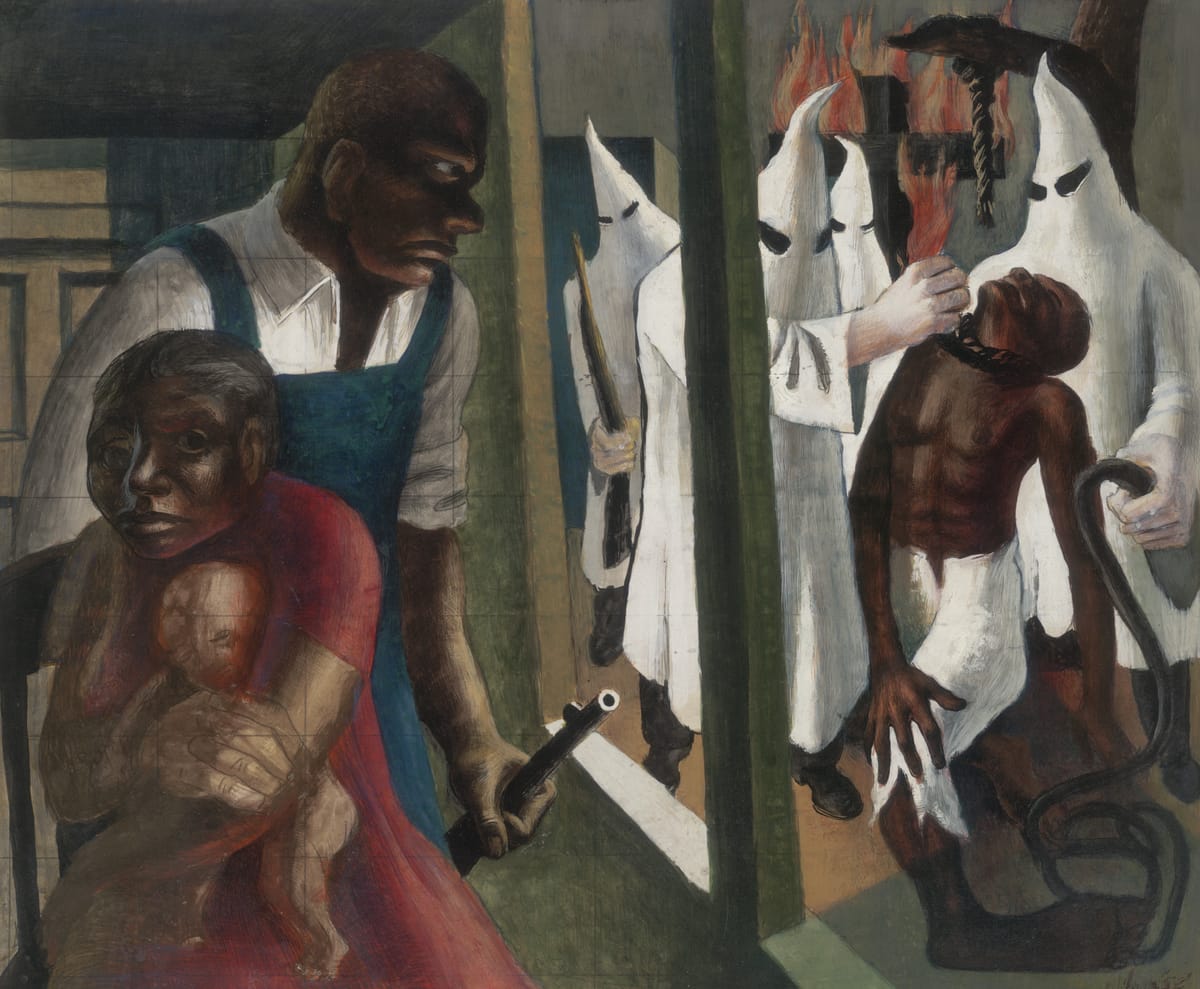
In 1940, Richard Wright’s groundbreaking novel Native Son ignited a revolutionary wave in American literature that continues to resonate today. Among those influenced by Wright’s powerful storytelling was John Wilson, an artist born in 1922 to Guyanese immigrants in the working-class district of Roxbury, Massachusetts. Wright’s established literary presence profoundly shaped Wilson, whose political prints and paintings often drew from Wright’s works. The exhibition Witnessing Humanity: The Art of John Wilson at the Metropolitan Museum of Art displays artworks inspired by Wright’s literature, including lithographs like “Black Boy” (1965) and “Native Son” (1942).
Witnessing Humanity showcases Wilson as an avid reader, motivated by Wright’s protest narratives to infuse his art with political meaning. The retrospective reveals Wilson grappling with the psychological impacts of racial violence on Black families through his paintings and lithographs, echoing Wright’s themes. Both artists reflected Marxist ideals, illustrating the struggle of rural and working-class men to preserve their dignity in an oppressive society. Wright’s protagonists and Wilson’s subjects embody the notion that racial terror wasn’t only about fear but also a means to control and exploit Black labor.
Wright’s influence is evident in Wilson’s celebrated work “The Incident” (1952), inspired by Uncle Tom’s Children. This mural portrays a man protecting his family while witnessing a lynching, resonating with themes from Wright’s “Big Boy Leaves Home.” At the Met, Wilson’s admiration for Wright is evident in a quote highlighting how the author expressed what Wilson aimed to visualize: the African American struggle for dignity in an oppressive world.
Earlier works like the lithograph “Breadwinner” (1943) parallel the themes in “The Incident,” questioning the reality of emancipation in mid-century America. The piece depicts a factory worker, burdened by societal expectations, with a newspaper headline “WAR” on his lap. This continuity in Wilson’s work underscores the ongoing challenges faced by Black workers post-slavery.
Wilson maintained a lifelong dialogue with Wright, culminating in The Richard Wright Suite in 2001, a series of etchings for Wright’s Down by the Riverside. Wilson’s career began with contributions to leftist magazines like New Masses, where his lithograph “Deliver Us From Evil” (1943) juxtaposed WWII atrocities with racial violence in the U.S. His time abroad in Paris and Mexico further enriched his artistic perspective, culminating in works that celebrated labor and creativity, such as “The Painter” (1947–48).