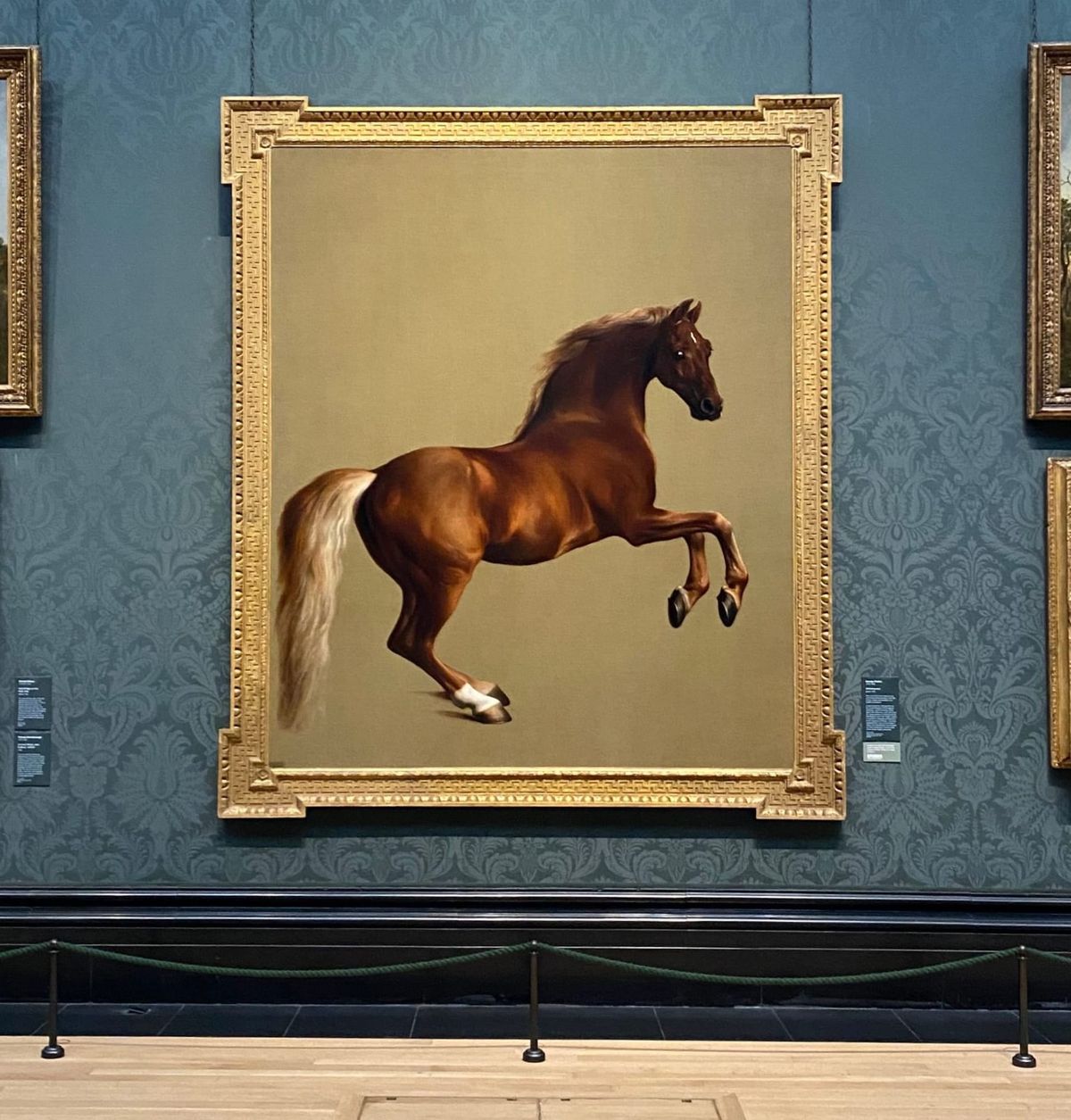
LONDON — What does a name signify? “Whistlejacket” stands as a grand and untamed creature. But where is he located? Begin your journey at the Western (Sainsbury Wing) section of the corridor at London’s National Gallery, which showcases a vast history of esteemed paintings. Your path will be straight and true, passing through doors framed by marble of a deep, mottled madder hue. As you move through room after room, you’ll finally encounter him, mounted on the wall of Gallery 34. Although his stance is side-on, his head turns to reveal the bright white of his eye, capturing the viewer’s attention. This is “Whistlejacket,” an equine masterpiece crafted by George Stubbs, a Liverpool-born son of a currier.
The exhibit, Stubbs: Portrait of a Horse, displays studies, working drawings, three paintings, and a copy of The Anatomy of the Horse. This detailed treatise, published in 1762, includes Stubbs’ 50,000-word analysis, paired with anatomical illustrations across 18 tables. Stubbs’ expertise in equine anatomy is evident; he delved into the inner workings of horses, capturing veins, arteries, ligaments, and muscles in his ghostly, translucent drawings. His work reflects both profound anatomical knowledge and imaginative flair. When Stubbs paints a horse, it is depicted with vivid vitality, shimmering and vibrant. “Whistlejacket,” created in 1762, portrays a horse that any monarch might covet, though it remains without a rider.
Unlike the many equestrian statues scattered through Trafalgar Square, Whitehall, and Parliament Street, which depict men elevated by their horses — rulers, warmongers, and politicians — “Whistlejacket” stands alone. Intended for George III, the newly crowned Hanoverian king known for his later madness, the horse was never adorned with a rider, preserving its solitary magnificence. This narrative unfolds within another gallery where an entire exhibition celebrates Stubbs’ equine art and his in-depth anatomical insights. The only other riderless horse painting by Stubbs on a similar scale, typically unseen in a private collection, is also featured here. Named “Scrub,” this piece shows the horse poised nervously by a river in an imagined landscape, as if wary of the water and perhaps mankind. Stubbs: Portrait of a Horse is open at the National Gallery (Trafalgar Square, London) until May 31.