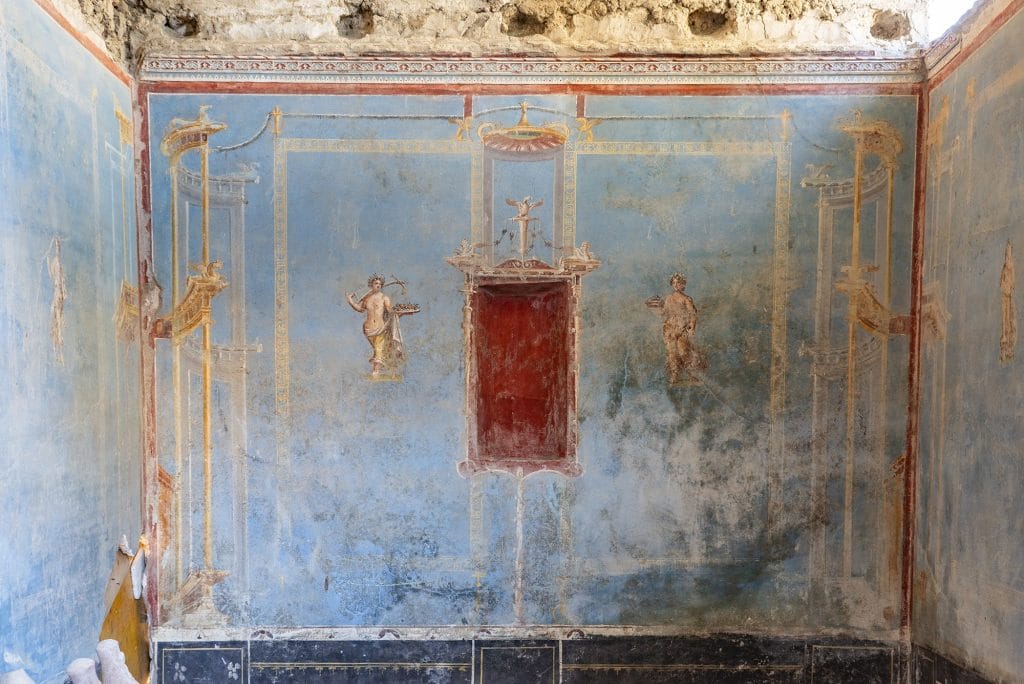
Pompeii’s newly uncovered “Blue Room” shrine was lavishly decorated with the rare and expensive Egyptian blue pigment. Researchers estimate that six to 10 pounds of the material could have cost as much as 90 percent of a soldier’s yearly pay.
Even though the shrine is small within the villa, its costly finishes point to extraordinary household wealth. In Pompeii, such materials carried major symbolic weight, revealing status as clearly as any grand architectural feature.
As any Pompeii guide will tell you, mosaics may draw the eye, but wall paintings were a much greater marker of elite taste. No color was more prized or expensive than Egyptian blue, named for its origins in ancient Egypt, where it had been produced since the late 4th millennium B.C.E. as a cheaper substitute for pulverized lapis lazuli.
During the summer of 2024, archaeologists discovered a domestic shrine room inside a two-story house that once belonged to an exceptionally wealthy Pompeii family. Fifteen tall amphorae lined the walls, and heaps of building materials suggested the house was being renovated when Vesuvius erupted in 79 C.E.
It was the room’s walls, however, that drew the greatest attention. They were coated in Egyptian blue paint and decorated with detailed images of goddesses, sphinxes, and winged griffins, underscoring the luxury of the space and the family that occupied it.