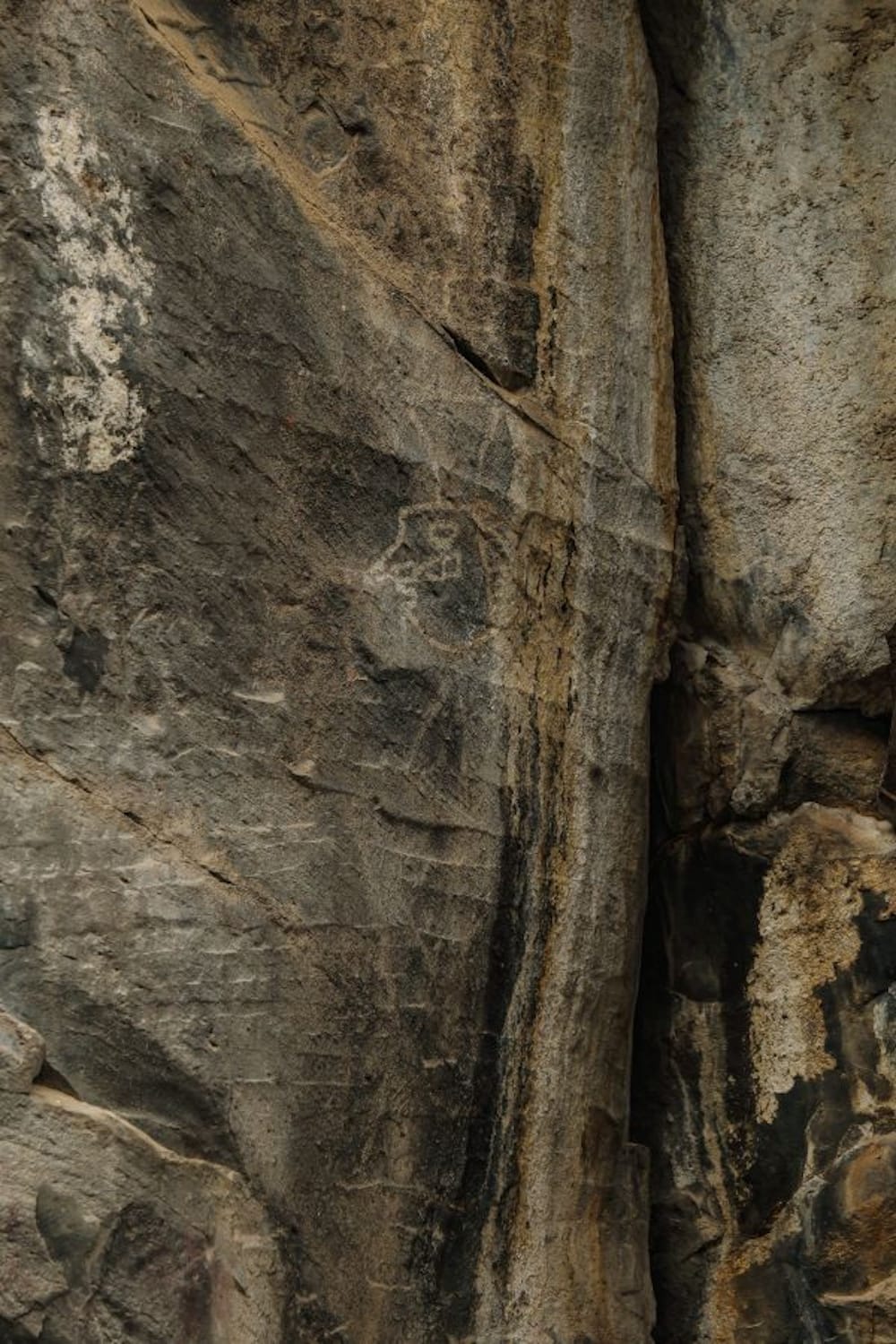
Archaeologists in Mexico have uncovered 16 ancient artworks along the proposed path of a new passenger train linking Mexico City and Querétaro. These artworks, comprising paintings and petroglyphs, emerged during an archaeological initiative backed by the Mexican government and the National Institute of Anthropology and History (INAH). The institute revealed the discovery last week, despite initial findings occurring in January.
In response to these findings, Mexican President Claudia Sheinbaum announced the rerouting of the planned $8 billion train to preserve the historical site. Among the documented artworks on two cliffs in Hidalgo state are rock paintings from the Postclassic period of Mesoamerica, spanning 900 CE to the Spanish conquest in 1521. This era marks the Aztec civilization’s rise and fall. Other figures date back to what INAH refers to as “prehistory,” over 4,000 years ago.
The human and animal-like depictions add to the archaeological discoveries along the train’s anticipated path. In March, INAH reported uncovering an altar with human remains from 900-1150 CE in the vicinity known as Tula Chico. One anthropomorphic figure near La Requena Dam was depicted holding a chīmalli, a detailed Aztec shield, while another featured a headdress and large eyes, resembling the Aztec deity Tlaloc.
An image dating to prehistoric times shows a figure in red holding a snake or lightning. Archaeologist Abel José Romero García indicated these images might be linked to the final phase of the pre-Hispanic Toltec city of Tula. INAH noted that these early artists employed pointillism, a technique typically linked to 19th-century Parisian artists, using natural pigments for their creations.
Before this year’s expedition, local communities and archaeologists had recognized such drawings in the area. The Tula Archaeological Project in the 1970s documented a deer-like figure with potential religious significance nearby. “Through agreements and negotiations between the INAH and the Ministry of Defense, the petroglyphs and paintings are saved,” stated Víctor Francisco Heredia Guillén, the project coordinator, in a press release.