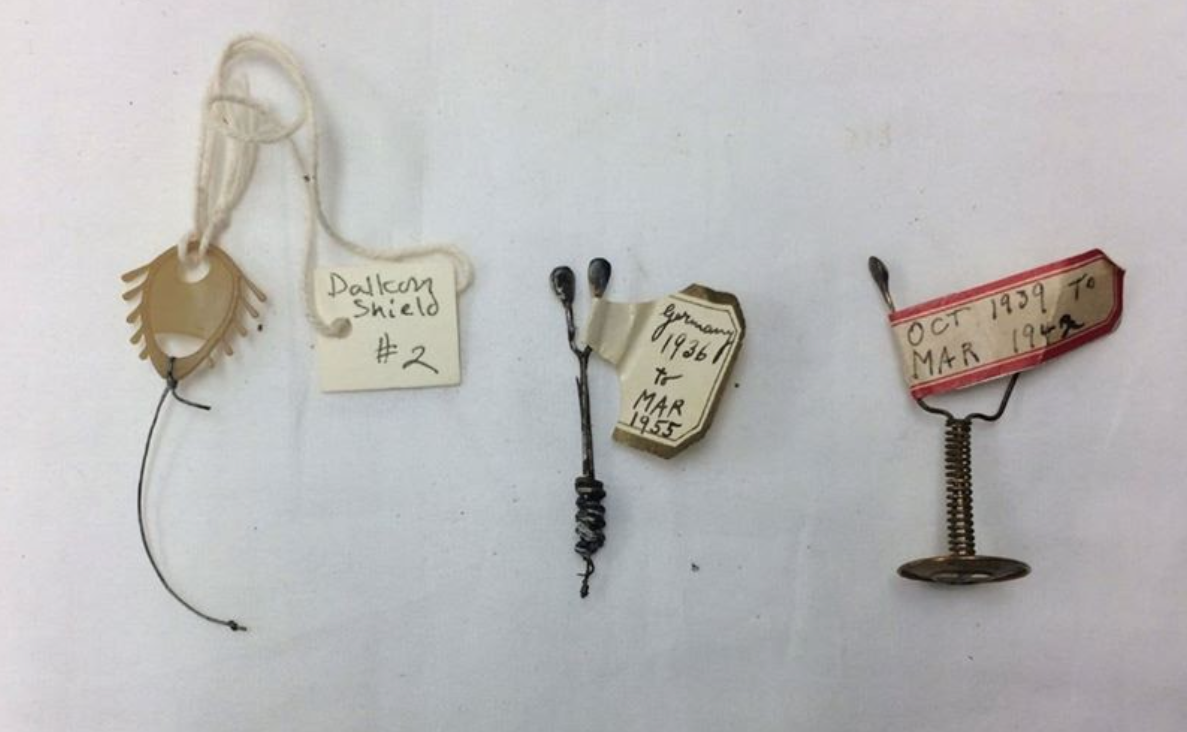
Motherhood, a fundamental rite essential for human survival, arguably stands as a catalyst for countless innovations, though mainstream design history seldom acknowledges this. The Victoria & Albert Museum possesses an early 20th-century breast pump, yet it remains out of public sight. Similarly, historic maternity-wear, like a late-1800s silk burgundy gown housed at the Metropolitan Museum of Art’s Costume Institute, is not displayed. Items such as contraceptives, menstrual products, at-home abortion kits, and baby monitors—some styled by sculptor Isamu Noguchi—play crucial roles in the birth process but are rarely spotlighted in design history education or museum exhibitions.
The introduction to ‘Designing Motherhood: Things that Make and Break Our Births’ (2021) states, ‘Museum collections, fashion and design exhibitions, the mainstream of design scholarship, and many public forums have yet to fully embrace maternity as a topic worthy of serious inquiry.’ This book, which accompanies an exhibition at Philadelphia’s Mütter Museum, seeks to address this oversight. The project, initiated years ago by design historians Michelle Millar Fisher and Amber Winick, began with an Instagram account cataloging maternity-related objects.
The recently published book showcases over 100 items, ranging from medical devices to cinematic portrayals of childbirth, contributed by experts across various fields. Readers might find themselves connecting personally with pieces like gender-reveal cakes or recognizing items from their own experience. The book explores artifacts from a Roman speculum to contemporary objects, including the Finnish Äitiyspakkaus, a box of baby necessities that doubles as a bassinet, credited with lowering Finland’s Sudden Infant Death Syndrome rates.
Highlighting the sari, a flexible Indian garment, the book also delves into the history of home pregnancy tests, developed by New York-based designer Margaret Crane. This innovation shifted diagnostic power from doctors to individuals, enhancing women’s autonomy in reproductive choices. A prototype of Crane’s Predictor test, popularized in the late 1960s, resides with the Smithsonian’s National Museum of American History but is not currently exhibited.
Fisher and Winick revealed that sourcing items for the exhibition proved challenging, with platforms like Etsy and eBay yielding treasures such as a classic Maclaren stroller and a vintage Tassette menstrual cup. The menstrual cup, initially conceived in 1867 by S. L. Hockert and commercially launched in 1935 by Leona Watson, underscores the historical depth of these objects. The book and exhibition, curated by Michelle Millar Fisher, Amber Winick, Juliana Rowen Barton, Zoë Greggs, and Gabriella Nelson, aim to illuminate motherhood as a vital yet overlooked domain. ‘Designing Motherhood’ is available through MIT Press and can be purchased online or in bookstores.