In a 2021 discussion about the film Ana Mendieta: Fuego de Tierra, co-director Nereida Garcia-Ferraz recounted a remarkable moment of finding one of Mendieta’s ‘earth-body’ artworks. ‘Discovering the Black Venus shrouded by nature’s foliage was enchanting. Nature had safeguarded her creation,’ she noted. Garcia-Ferraz refers to ‘La Venus Negra’ (1981), a feminine form engraved in a cave at Cuba’s Jaruco State Park. This artwork is among several displayed in the exhibition Ana Mendieta: Back to the Source at Marian Goodman Gallery, including images from her acclaimed Silueta series (1973–80) and Rupestrian Sculptures (1981).
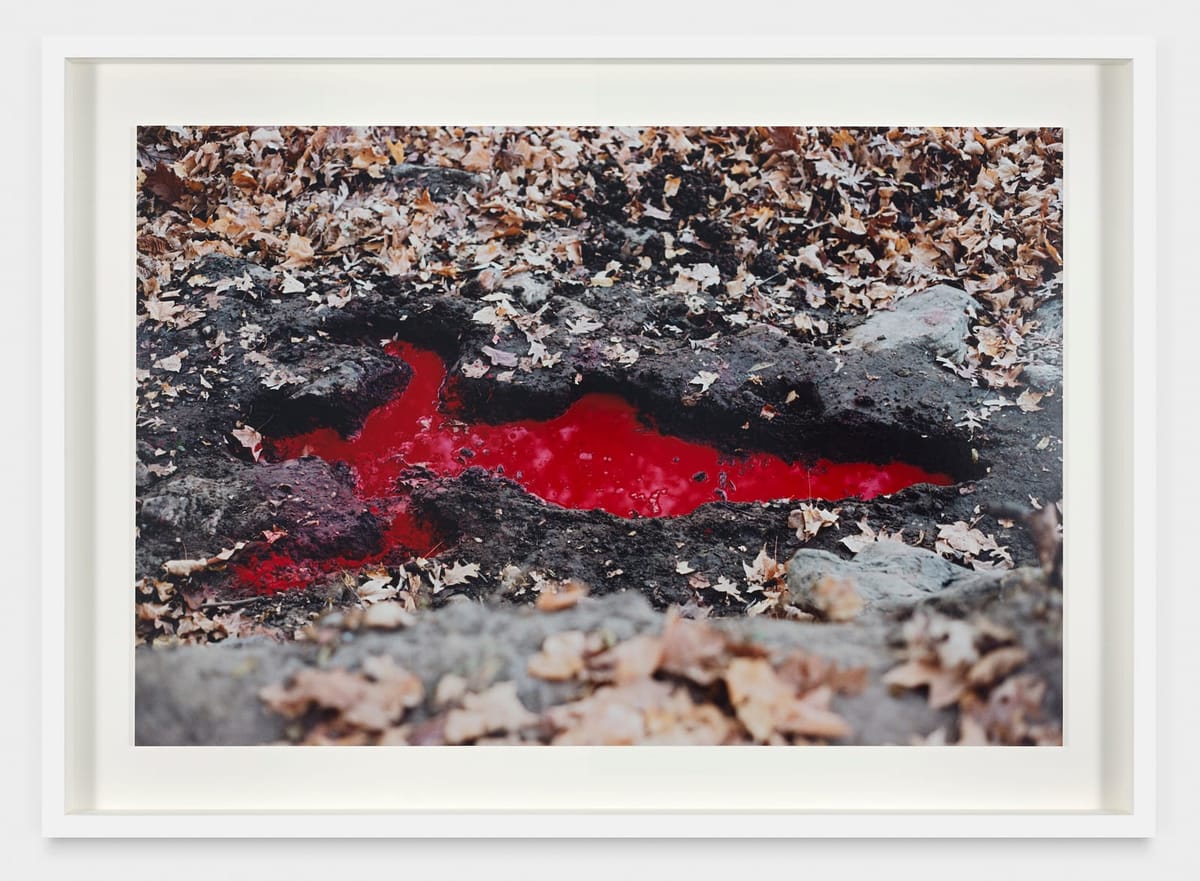
The photographs depict silhouettes formed in a grassy field, suspended in water, or embedded in mud infused with blood-red pigment, evoking a sense of absence. This resonates with Mendieta’s personal history, as she was displaced from Cuba at 12 years old during Operation Peter Pan, which relocated children to the U.S. without their parents. Her journey led her to orphanages and foster care in Iowa, with her only returning to Cuba as an adult. However, Garcia-Ferraz’s tale of finding ‘La Venus Negra’ suggests the enduring presence of Mendieta’s work, leaving behind traces that linger long after her departure.
Mendieta’s influence is pervasive across her creations. In her poignant piece ‘Ñañigo Burial’ (1976), inspired by an Afro-Cuban religious order, 47 black candles outline a feminine figure, gradually melting to fill the form. Although many of her earthworks have faded with time, her interventions subtly influence the natural erosion and growth processes. Her performances were more a dialogue with the earth than solitary acts, as she described the Siluetas, ‘It is a way of reclaiming my roots and becoming one with nature.’
These works also comment on the human impact on the environment, particularly the artificial borders that harm both nature and displaced people. The only boundaries in her art are those defining the body, serving as fleeting marks of human-land interaction. Yet, the political undertones remain significant. For instance, an exhibition text during Mendieta’s life regarding ‘Black Venus’ narrates the tale of a Black woman in 19th-century Cuba who resisted colonial enslavement. ‘La Venus Negra’ and the earlier ‘Black Venus’ (1980) also echo the story of Sarah Baartman and Mendieta’s own childhood exile.
The gallery’s display includes photographs, drawings, installations, and ephemera across two floors, with ten films rotating in two screening rooms, most associated with the Silueta photographs. ‘Grass Breathing’ (1975) is noteworthy as Mendieta is unseen; instead, a patch of Iowa grass subtly quivers, eventually rising as if gasping for breath. While the artist lies beneath it, the piece powerfully symbolizes an ailing Earth. Ana Mendieta: Back to the Source is showcased at Marian Goodman Gallery (385 Broadway, Tribeca, Manhattan) until January 17, curated by the gallery.