Editor’s Note: The following text has been excerpted with permission and adapted from A Fire in His Soul: Van Gogh, Paris, and the Making of an Artist (2025) by Miles J. Unger, published by Pegasus Books and available online.
“I shan’t be asking you whether you approve or disapprove of anything I do or don’t do — I won’t be embarrassed and, if I feel like going to Paris, for instance, I shan’t ask you whether or not you object.” —Vincent to Theo van Gogh, December 6, 1884
For any ambitious artist, Paris stood as an immense challenge and an irresistible promise. It was the culmination of an artistic education, a summit to be reached, and a rite of passage. Even artists such as Millet, who displayed open disdain for the city, built their careers there, aware that fashionable Parisians who would never set foot in a barn would still pay well for paintings of peasants and milkmaids. In Paris, one could encounter both the inherited glories of the past and the living pulse of contemporary art.
Across neighborhoods from Montmartre and Batignolles in the north to the Latin Quarter and Montparnasse in the south, top-floor studios with broad north-facing windows still recall the spaces where painters and sculptors worked in obscurity but not without hope. The city’s art world drew professionals of every kind: a handful of Salon celebrities with international fame and ample fortunes, countless hacks chasing the tastes of a growing middle class, and unruly experimenters who lived for provocation. Thousands arrived to study at the École des Beaux-Arts or in independent ateliers, where discipline remained strict even when the rules were less rigid.
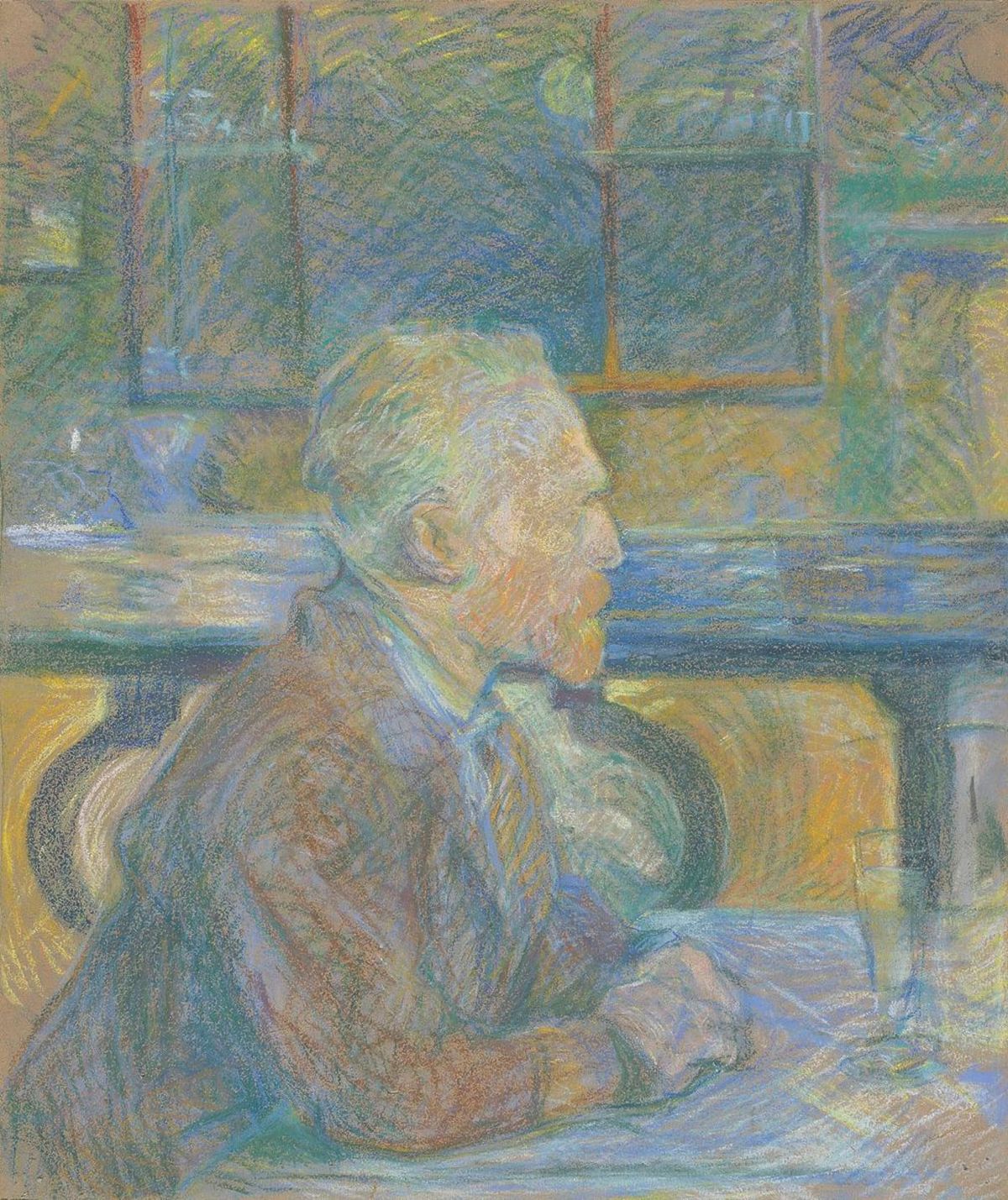
Vincent van Gogh would eventually be drawn there as well. Yet he was deeply ambivalent about Paris, despite spending nearly a year there from May 1875 through April 1876 at a time when he was least able to respond to its attractions. As his career at Goupil’s faltered and he sank into religious mania, the city’s cultural abundance left him unmoved. “Too large, too confused,” he called it on his first visit, and familiarity did not necessarily improve his view. For a while, the arrival of his friend Harry Gladwell eased his loneliness, but Vincent remained out of sync with the city’s joyful, hedonistic spirit.
That changed after the summer of 1880, when he embraced his new vocation and Paris became central to his imagination, if not yet to his life. The idea of living with Theo appealed to him, especially when he felt most isolated. “The thing that attracts me most about Paris,” he wrote from Drenthe, “that would be of most use in my progress, is actually being with you, having that friction of ideas with someone who knows what a painting is, who understands the reasonableness of the quest. I think Paris is all right because you’re in Paris, and if consequently I were less alone I would get on faster, even there.”
For years, Vincent and Theo circled the question of Paris cautiously, each raising it and retreating when it seemed the other might take the idea too far. In 1883, when Vincent was dragging his easel across the moors of Drenthe, Theo urged him back to civilization, while Vincent suggested that Theo come join him on the heath. By late 1884, after a string of crises and failed arrangements, Paris seemed less like a temptation than a refuge, especially since Theo already had independence and material security there. “If I feel like going to Paris,” Vincent warned, “I shan’t ask you whether or not you object.”
The city’s appeal only grew as life at home deteriorated. After the scandal involving Margot Begemann, the rupture between Vincent and his parents widened, and the people of Nuenen became openly hostile. At the same time, his disagreements with Theo over his art deepened. Vincent still preferred dark peasant scenes and bleak depictions of poverty, works that were clumsy, commercially unpromising, and indifferent to current trends, while Theo grew weary of Vincent’s insistence that his brother was doing too little to promote his work in Paris.
Even so, Vincent himself was changing. Beneath the surface, he was undergoing an internal revolution that would later emerge in the radical innovations of his Paris years. Conflict with his father sharpened his worldview and intensified his hatred of the suffocating degelijkheid of his upbringing. His ideas about art, politics, and the modern world evolved as his reading shifted from the sentimental works of Dickens, Hugo, and Harriet Beecher Stowe to the sharper urban realism of de Maupassant, the Goncourt brothers, and especially Émile Zola. Zola’s method, with its factual, unsparing presentation, appealed to Vincent’s growing interest in modern life and social truth.
As he absorbed the literature of Paris, the city itself became the center of his thoughts. The trials of recent years had hardened him, and though he still identified with the less fortunate, his sympathy had become more confrontational. Failed love and family conflict fed his hostility toward hypocrisy, while arguments over money with Theo were recast as battles between the haves and the have-nots. He increasingly described social tensions in ideological terms, framing his own struggles as part of a larger conflict between bourgeois respectability and the forces of Truth and Beauty.
This shift had major consequences for his art and for his decision to go to Paris and align himself with the avant-garde. Once he had viewed France mainly through the lens of modern superficiality, seeing only glitz and empty vanity. Now he discovered another Paris: radical, socially conscious, and subversive, one that shared his disdain for high society. The more alienated he became from his family, the more he was drawn to that world. Modern capitalist society, he began to believe, was not only oppressive but also the engine of a new future. “One feels instinctively that a tremendous amount is changing, and everything will change,” he said. “We’re in the last quarter of a century that will end with another colossal revolution . . . but the next generations will be able to breathe more freely.” That faith in modernity would remain in tension with his older, more romantic devotion to the countryside and the peasant as a source of virtue, a contradiction he never fully resolved.