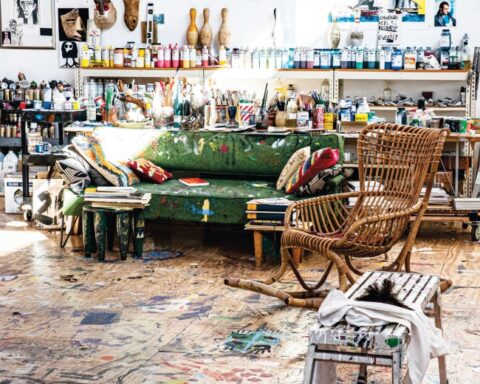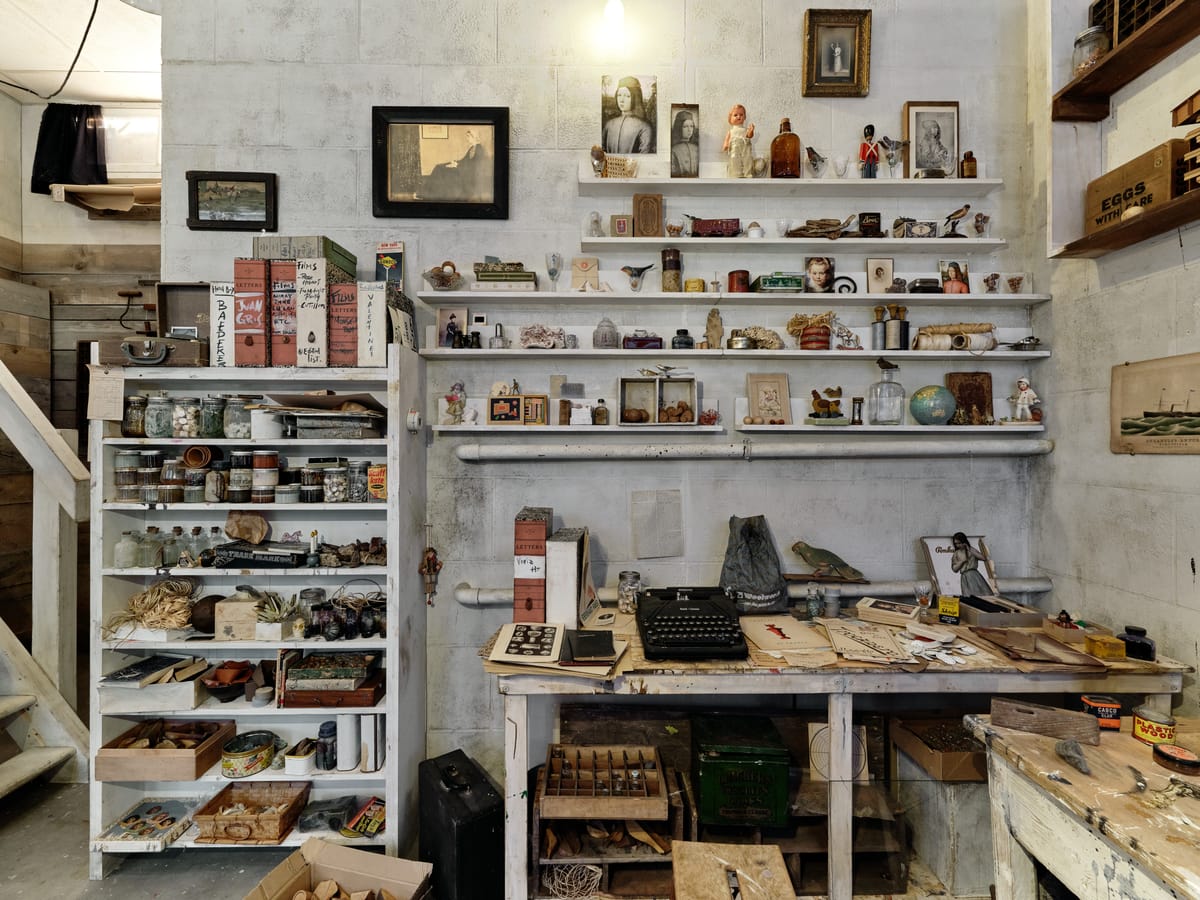
Joseph Cornell, despite lacking formal training in art, excelled as a collector and curator of found items and curios. His iconic shadow boxes—carefully assembled from keepsakes, curiosities, images cut from various sources, and everyday objects—formed intricate worlds that laid the groundwork for assemblage and installation art. These items, once stored in boxes or scattered across nearly every surface in Cornell’s basement studio on Utopia Parkway in Queens, are now gathered in a new exhibition that reconstructs the artist’s workspace. This display, crafted by Gagosian curator Jasper Sharp and filmmaker Wes Anderson, is housed at the gallery’s storefront in Paris, a city Cornell yearned for but never visited. Sharp remarked, “The location itself could not be more fitting: Paris was a place Cornell dreamed of his entire life.”
In an essay about the exhibition, Sharp recounted one of Cornell’s initial meetings with Marcel Duchamp, where they discussed Parisian landmarks like the Louvre Museum and Place de l’Opéra. It wasn’t until the end of their conversation that Cornell revealed he had never actually been to the city, a revelation that left Duchamp at a loss for words. Although many of Cornell’s shadow boxes and collages are housed in institutional collections, his sister donated his collected materials, letters, journals, and personal effects to the Smithsonian American Art Museum in 1978, six years after his death. Through Anderson’s meticulous vision and exhibition designer Cécile Degos’s skills, The House on Utopia Parkway brings together some of Cornell’s most significant shadow boxes with a carefully recreated studio environment containing over 300 original objects he gathered throughout his life.
Pieces such as “Pharmacy” (1943), “A Dressing Room for Gille” (1939), and “Flemish Princess” (c. 1950) dominate visitors’ attention, displayed on rustic wooden tables at the front. In the backdrop, a towering bookshelf is packed with cardboard boxes labeled in Cornell’s own painted script. Another corner of the studio features a table cluttered with inspirational items, including a typewriter, wood glue, ink jars, and a painted wooden parrot, beneath shelves filled with collected curios. Cornell dedicated numerous boxes to close friends, artists, and women he admired deeply. Ultimately, The House on Utopia Parkway itself becomes a shadow box, viewed solely through the windows of Gagosian’s softly illuminated storefront. The exhibition is open to the public free of charge at Gagosian’s rue de Castiglione location in Paris’s 1st arrondissement.