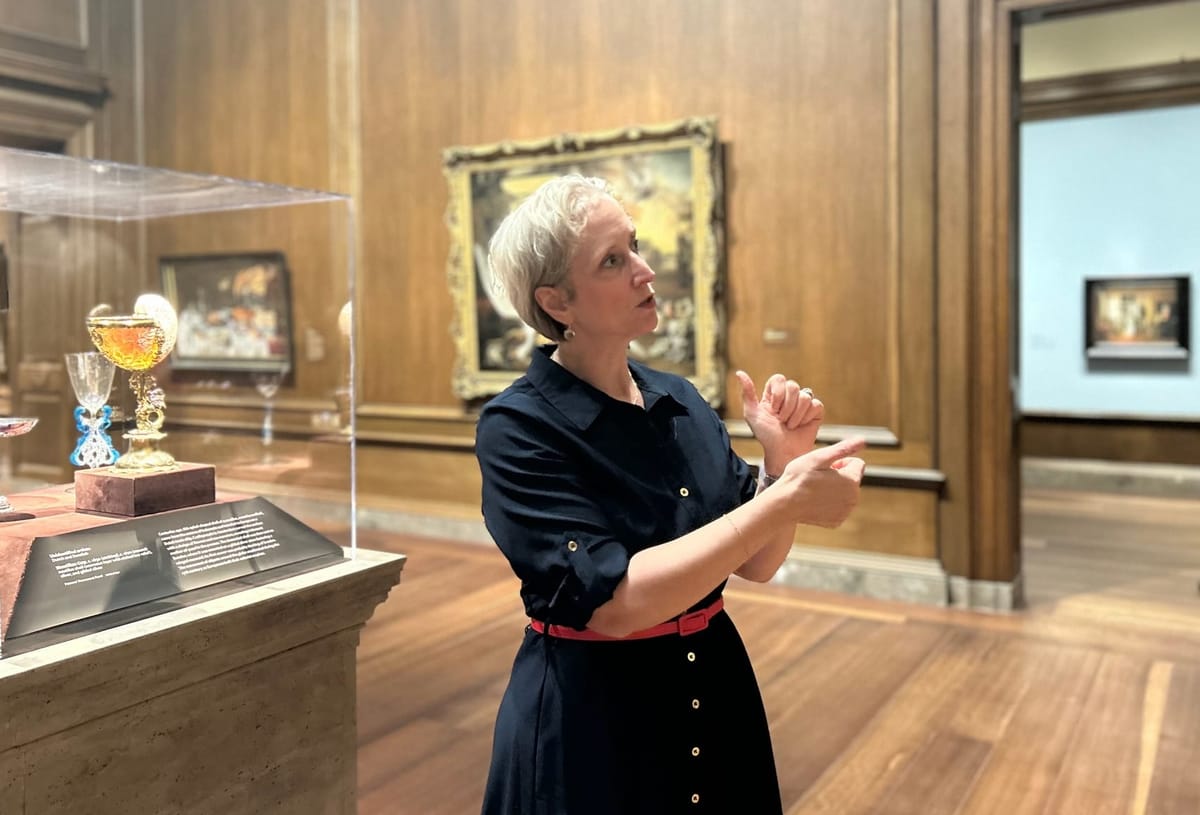
WASHINGTON, DC — Originally aspiring to become a speech-language pathologist, Lorena Bradford discovered a passion for art history, eventually earning a PhD in 17th-century Dutch and Flemish print-making. Her journey into arts accessibility began in 2010, two years after she started her role as an educator at the National Gallery of Art (NGA) in Washington, DC, when she attended her first Leadership Exchange in Arts and Disability (LEAD) Conference.
Reflecting on her early assumptions, Bradford admitted over a Zoom call in January, “I was confronting my own assumption that speaking equals engagement.” This realization came as more autistic children participated in gallery visits through school programs, prompting her to explore how to design programs specifically for disabled individuals. Subsequently, she became the NGA’s inaugural head of Accessible Programs.
Unlike many institutions that consolidate accessibility and ADA compliance roles, Bradford concentrated on crafting programs that catered to individual needs. “I was a sub-department of one,” she quipped. Her initiatives included monthly American Sign Language tours led by deaf guides and the Just Us program for those with memory loss and their caregivers, which was active from 2017 to 2024.
Among her significant projects was the Short Description Project, which took accessibility to a new level by offering detailed online descriptions of art, free from any paywalls. Launched during the COVID-19 pandemic, this initiative developed a systematic approach for creating comprehensive written art descriptions accessible to online audiences.
Despite the Trump administration impacting progress in diversity and inclusion efforts, Bradford’s commitment to accessibility never wavered. After reducing her hours due to cancer treatment, she left the NGA in July but continues her advocacy as an audio describer at the Kennedy Center and as a contributor to LEAD conferences. Bradford envisions a future where arts accessibility becomes a recognized educational path, emphasizing, “[Art is] a universal language, and everyone should have access to it.”